Laundry Sink Storage: Soak Bay Under the Basin
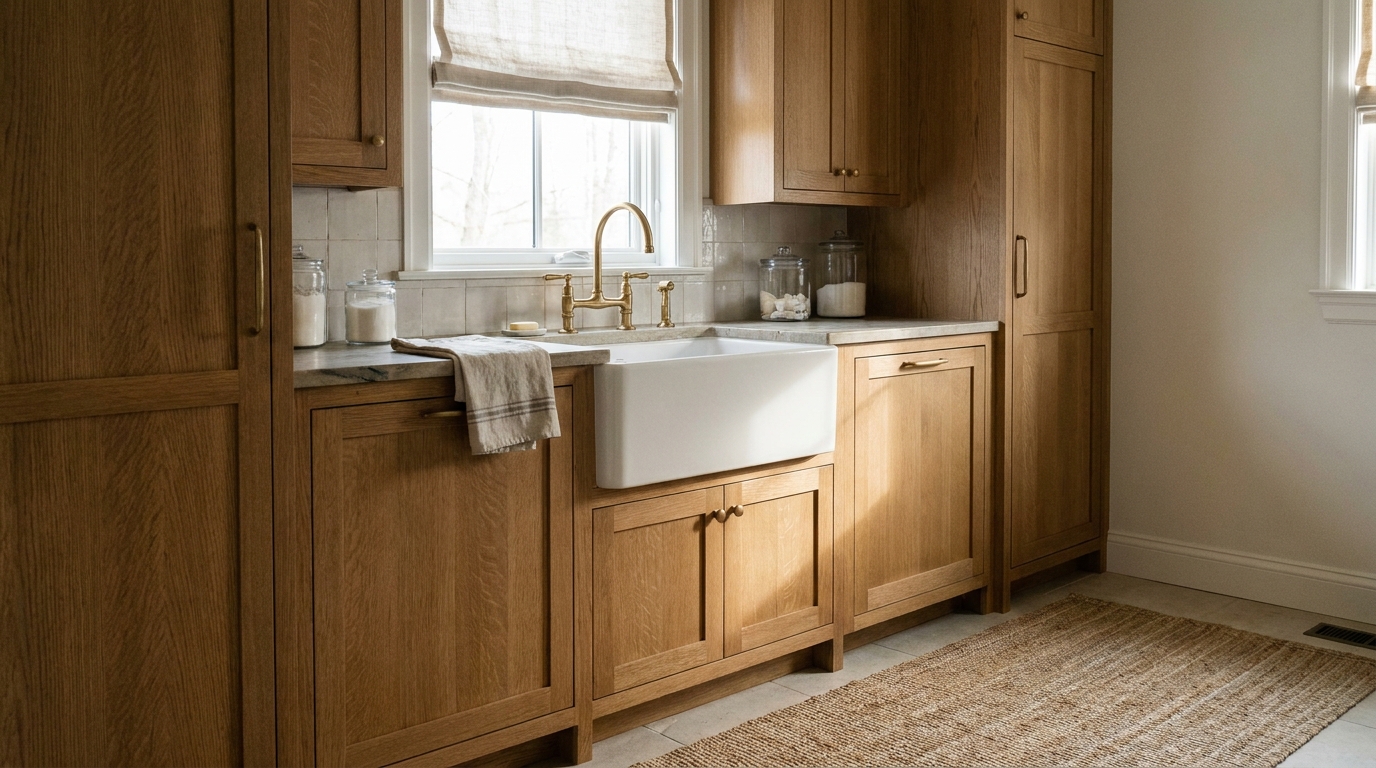
A laundry sink earns its place when a stain needs time in water, whether that is mud, a blood spot, or a drink spill. The closed cabinet under the basin holds the gear for that soak: wash basins, gloves, and dry tools. Detergent, bleach, and stain chemicals do not belong in that cabinet. They live in a higher closed cabinet, and they come down only for the minutes you are using them.
1. The sink is a soak bay, not a shelf
Give the stain a basin and some time. A washer is a poor place to discover that hot water has already set a spot. Iowa State University Extension, in a May 14, 2024 article on sport stains, groups blood, sweat, grass, mud, and most dirt as protein stains, and it notes that those stains usually take soaking time [1]. Pre-soak them in cold to lukewarm water, less than 100 degrees F, with an enzyme product [1]. Hot water, an iron, or a dryer can set a protein stain, because heat cooks the protein and makes it hold between the fibers [1].
University of Georgia Extension says to treat blood on apparel immediately, because heat-set stains are hard to remove [2]. Rinse a fresh stain in cold running water, then soak in cool water for 30 minutes or longer [2]. If it remains, that page calls for a second soak in lukewarm water with an enzyme pre-soak, then detergent, a full rinse, and laundering [2].
Mississippi State University Extension also says to soak fresh blood stains in cold water for 30 minutes before detergent and a wash [3]. A beverage stain on that page starts with a cool-water soak [3].
Read the label before the water goes in. Read the care label first, and skip any step it prohibits [2]. Name the fiber and the stain before you treat [1]. Polyester holds oil-based stains and can shrink with heat, and spandex may not take a harsh treatment [1]. Test a new product on a hidden spot [1].
A wash basin set in the utility sink holds one shirt or a pair of pants without filling the whole sink. When the soak is finished, empty it, rinse it, and dry it. It does not go back under the sink with water in it. This cabinet is not a rod for damp delicates, and it is not a cubby for clean folded clothes.
2. Closed storage under the basin
Stock the base with gear you can dry. Laundry sink storage, in the way we build it, is a closed base with three kinds of items.
- Hard wash basins that nest or stand, empty and dry.
- Gloves you can wipe dry: rubber, vinyl, or nitrile.
- Dry tools, especially a scrub brush.
Iowa State's notes on red clay include a scrub after a warm soak: pretreat, soak in warm water, scrub with a brush, and launder [1]. A dry brush has a job at this sink. It does not need to live in a bottle.
Gloves belong here because some sink jobs call for them, and they are not the chemical. CDC's February 16, 2024 cleanup page says to wear non-latex, vinyl, nitrile, or rubber gloves, and not to touch mold with bare hands [5]. If you use bleach, the September 26, 2024 overview adds rubber gloves and goggles [4]. University of Georgia Extension says to wear rubber gloves for washing soda, which that page calls highly toxic to skin [2]. The gloves stay in the base. The washing soda, the bleach, and the detergent do not.
Leave these out of the base.
- Laundry detergent, bleach, enzyme pre-soaks, and stain removers.
- Laundry packets, in a pouch or loose.
- A basin that still holds water, and gloves that are still wet.
- Damp rags, cardboard boxes, or a pile of paper towels.
- Clean laundry waiting to be put away.
Cardboard and paper are a poor match for a cabinet beside plumbing. CDC says mold grows on paper, cardboard, and fabric, and that it grows where there is moisture, including around leaks in pipes [4]. A hard basin and a pair of dry gloves are a different inventory than a damp cloth shut in the dark.
3. Bottles do not live under the sink
A low door is an easy door. The sink base sits where a child can reach the handle. That is a useful height for a basin. It is a poor height for a cleaner.
CPSC's poison prevention page, written around National Poison Prevention Week (March 16-22, 2025), reports an estimated 67,000 emergency department-treated injuries in children under 5 in 2023, a slight decrease from an estimated 68,600 in 2022 [6]. On that same page, CPSC says nearly seven out of 10 poisonings occurred in the home, and it tells caregivers to keep hazards out of a child's sight and reach [6]. For cleaning supplies, keep chemicals in a locked cabinet or box, out of reach, and in their original child-resistant containers [6]. Laundry packets stay in their original containers, out of sight and reach, and children should not handle them [6].
Those figures are not a count of laundry bottles alone. The page also covers medicines and batteries [6]. A child-resistant cap is still not a reason to park a bottle behind a low, unlocked door.
EPA's household hazardous waste page, updated June 1, 2026, says some leftover products can catch fire, react, or explode, or are corrosive or toxic [7]. Paints, cleaners, oils, batteries, and pesticides are the examples, and they can harm children and pets if left around the house [7]. Follow the label, keep the original container, never move a hazardous product into a food container, and never mix leftovers, because incompatible products might react, ignite, or explode [7].
Use it, then put it back. When a soak calls for detergent or an enzyme product, bring it from the higher closed cabinet, use what the labels allow, and return it. The under-sink cabinet is not an overnight spot. University of Georgia Extension says to store stain products as recommended and out of children's reach [2]. EPA says improper disposal can include pouring these products down the drain, onto the ground, or into storm sewers [7]. The laundry sink is not a disposal point.
Those bottles get a higher closed cabinet elsewhere in the room, locked when children live in or visit the house. A latch on the low door can keep it from becoming a toy. It does not make the base a safe place for bleach. CPSC still wants cleaning supplies in a locked cabinet or box, out of reach [6].
4. Keep that cabinet dry
Close the door on dry things only. A laundry sink will splash, and a supply line or a drain can drip. CDC says mold grows where there is moisture, including around pipe leaks, and that you have to clean the mold and fix the moisture problem [4].
On the September 26, 2024 page, keep indoor humidity as low as you can, no higher than 50 percent, all day long [4]. Fix plumbing leaks [4]. After a flood, dry the home within 24 to 48 hours [4]. Be sure the clothes dryer vents outside, and do not use carpet in rooms that may stay moist [4].
A closed base hides a slow drip if the floor is packed solid. We leave a clear view of the plumbing area, and we do not set cardboard or a fabric hamper on that floor. If a glove or a basin is wet at the end of a soak, it dries in the open first. Then it goes in. A wet pile behind a shut door is the moisture problem CDC describes [4].
Know the bleach limits before it reaches the sink. Bleach stays in the higher cabinet. If a job calls for it, use no more than 1 cup of household laundry bleach in 1 gallon of water [4]. Never mix bleach with ammonia or any other cleanser [5]. That mix produces a poisonous gas [4]. Open windows and doors, and follow the product label [4].
Some stain steps use ammonia before any bleach. For an old blood stain on apparel, University of Georgia Extension says a few drops of ammonia, then a wash, and bleach only if necessary [2]. That page says ammonia damages silk and wool. If you use it on those fibers, dilute it and use it sparingly [2]. Rinse until the ammonia is gone before any bleach [2]. Do not put bleach and ammonia in the basin together [2][4].
People with allergies, asthma, COPD, immune suppression, or underlying lung disease should not be the ones cleaning mold [5]. If you see or smell it, remove it and fix the water. CDC does not recommend mold testing as the way to decide [4]. The bottle still stays up. The gloves, dry, stay below.
5. A soak order that matches the cabinet
Match the water to the stain, then stop before the dryer. The cabinet works only if bottles go back and dry gear is what the door closes on. This is the order we walk through.
- Check the care label, and name the fiber and the stain, before you fill the basin [1][2].
- For fresh blood, rinse in cold water. Soak 30 minutes or longer in cool water [2], or 30 minutes in cold water [3]. Keep a protein pre-soak cold to lukewarm, less than 100 degrees F [1].
- If you need detergent or an enzyme product, bring it from the higher cabinet, use it, and put it back [2][6].
- On team uniforms, get to the stain quickly, wash like colors, turn the garment inside out, and air dry [1]. That article also says to avoid chlorine bleach on those uniforms [1]. If a grass, blood, or sweat stain remains, that article points to an American Cleaning Institute suggestion: bleach only if the fabric allows it [1]. Red clay is different. Chlorine bleach may set that stain or make it permanent [1].
- Do not use the dryer until the stain is gone [3]. Dryer heat can set a protein stain [1].
- Empty and dry the basin, the gloves, and the brush. Then close the cabinet.
Grass instructions do not match across the extension pages, so the care label wins. Iowa State warns that hot water sets the protein in grass, and it also treats some grass marks as a chlorophyll dye [1]. Mississippi State University Extension allows the hottest water safe for the fabric after an enzyme soak, with a bleach the fabric can take [3]. Test a hidden spot before you commit [2]. The brush goes back only when it is dry. The pretreat bottle goes back up.
6. What we plan in the room
We size the base around the soak you actually do. On a visit we look at the sink, the door swing, and the walk from the washer. In Charlotte and Fort Mill homes, a normal week often means a child's uniform, a work shirt, or a kitchen towel that should not go straight into a hot wash. That changes how many basins you need. It does not change the rule about bottles.
The base gets a shelf or a divider so a basin does not crush the gloves, plus a hook so gloves can finish drying before the door stays shut. We fit the sink to the person who will stand there. One height does not fit every house.
If the cabinet already smells musty, the first job is the leak, not a new shelf of supplies. The humidity limit, the 24 to 48 hour drying window, and an outside dryer vent are part of that check [4]. If children live in or visit, detergent, bleach, stain products, and laundry packets need a locked place up and out of reach before we call the base finished [6].
Sorting, a folding surface, and a rod for things that should hang are separate from this cabinet. You can see how we split those stations on our laundry room storage page. The sink cabinet is the soak bay, with closed storage under the basin for basins, gloves, and dry tools.
Practical takeaways
- Use the laundry sink for timed soaks. Fresh blood and other protein stains start in cold or cool water, not in a hot wash or a dryer [1][2][3].
- Keep wash basins, dry gloves, and a dry scrub brush in the closed cabinet under the basin.
- Keep detergent, bleach, enzyme products, stain removers, and laundry packets in a higher closed cabinet, locked and out of a child's reach [6].
- Return every bottle when you are done. Do not leave it under the sink, and do not pour leftovers down the laundry sink [7].
- Never mix bleach with ammonia or other cleaners. If a stain step used ammonia, rinse it out before any bleach [2][4][5].
- Dry the basin, the gloves, and the brush before you close the door. Fix leaks, and keep indoor humidity no higher than 50 percent [4].
- Skip the dryer until the stain is gone [1][3].
How we can help
Have more questions or want to get in touch?
Phone: (704) 604-3870
Email: design@theclosetrehab.com
Our team designs the sink base around the soaks you run and the dry gear you need within reach. Bottles stay in their own higher cabinet. If you want that split built into the laundry room, call, email, or send a note through the contact page. A designer will follow up about an in-home visit.
Citations
- Iowa State University Extension and Outreach, "Dealing with Sport Stains" (2024)
- University of Georgia Extension, "Remove Stains From Blood" (undated)
- Mississippi State University Extension Service, "How to Remove Pesky Stains" (2024)
- Centers for Disease Control and Prevention, "Mold" (2024)
- Centers for Disease Control and Prevention, "Mold Clean Up Guidelines and Recommendations" (2024)
- U.S. Consumer Product Safety Commission, "Poison Prevention" (2025)
- U.S. Environmental Protection Agency, "Household Hazardous Waste (HHW)" (2026)