Garage Cabinet Clearance for Charger and Driver Door
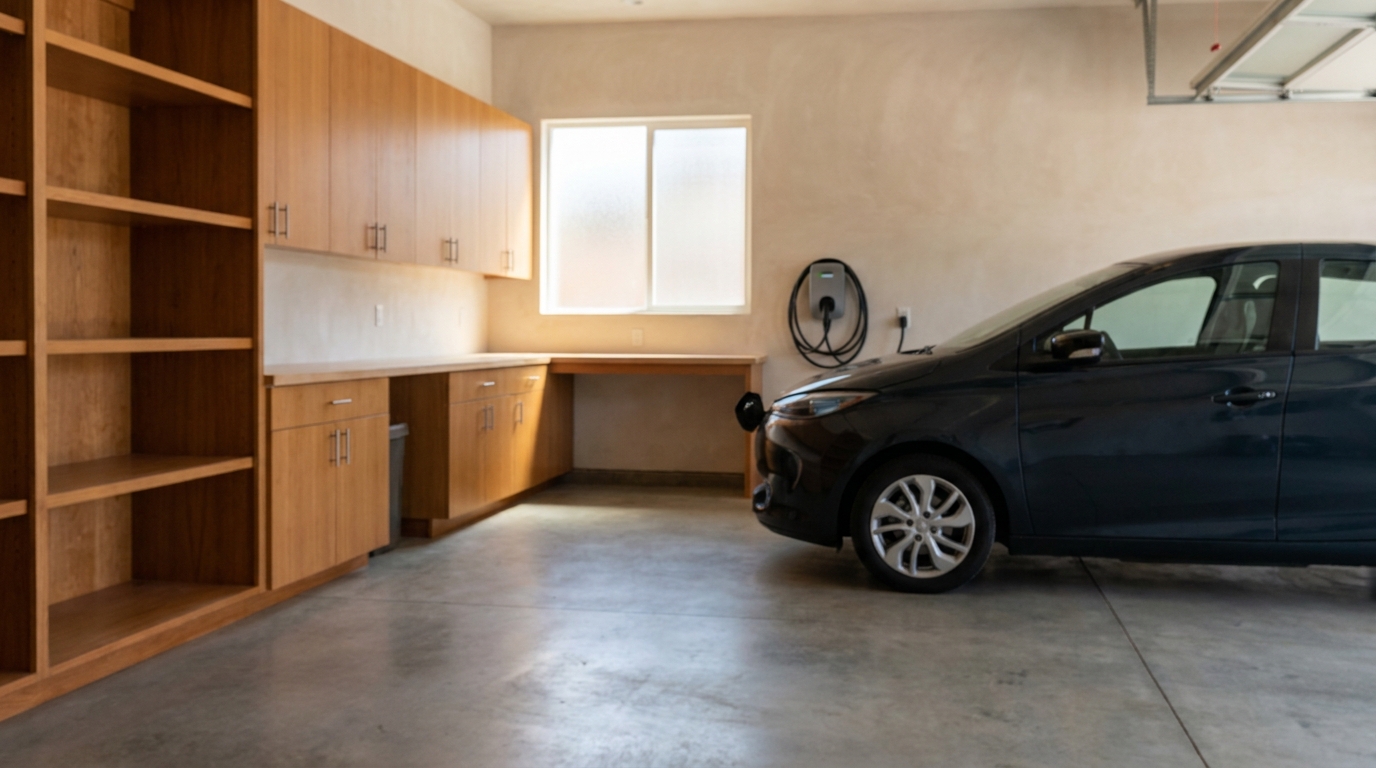
Garage cabinet clearance is the space you leave so cabinets do not trap the driver door or the charge cable. The Closet Rehab marks door arcs and the bumper line before drawing the run.
Home Organization Expert
The Closet Rehab provides custom closet design and home organization solutions in Charlotte, NC.
Garage cabinet clearance is the space you leave so cabinets do not trap the driver door or the charge cable. The Closet Rehab marks door arcs and the bumper line before drawing the run.
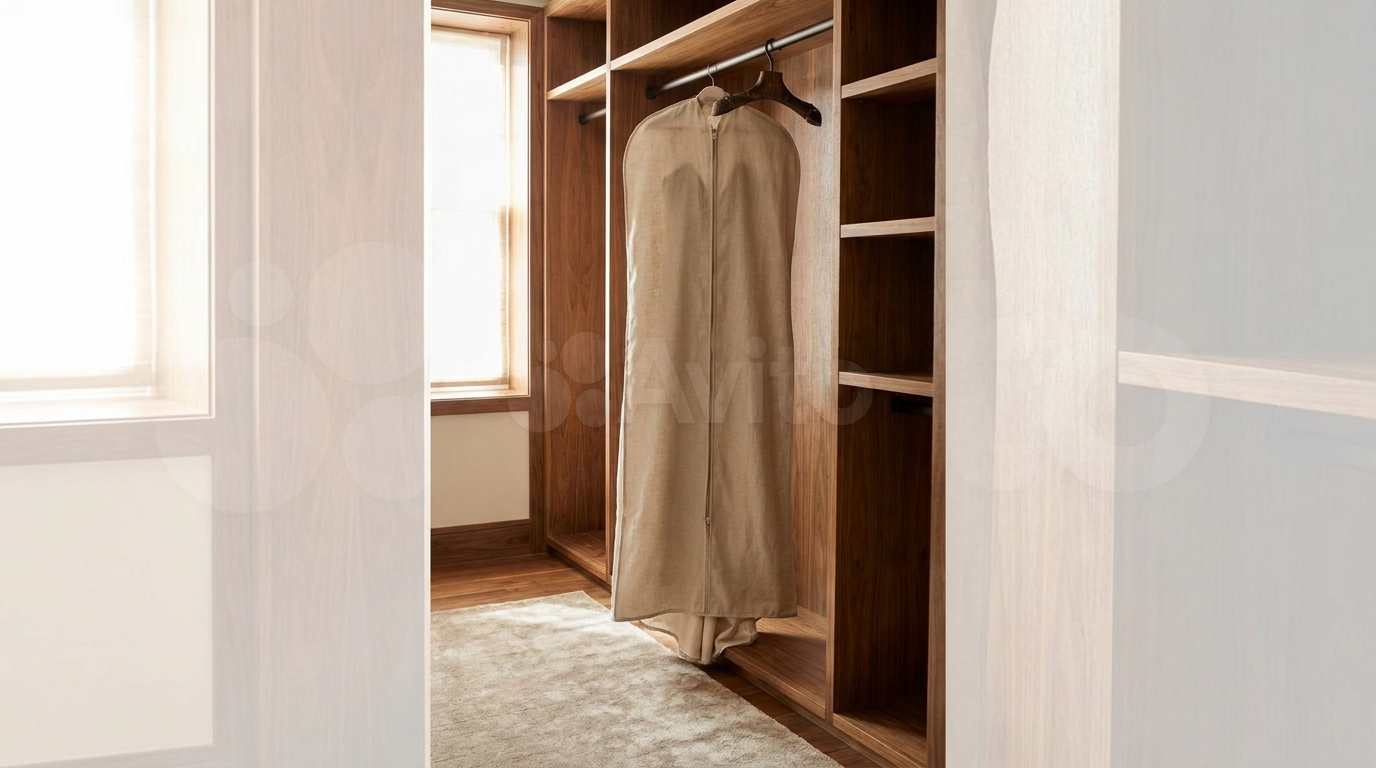
Gowns and bagged suits get one long-hang bay so the hem stays off the floor. Hang sound pieces on a padded hanger under a loose cloth cover, and take the cleaner bag off.
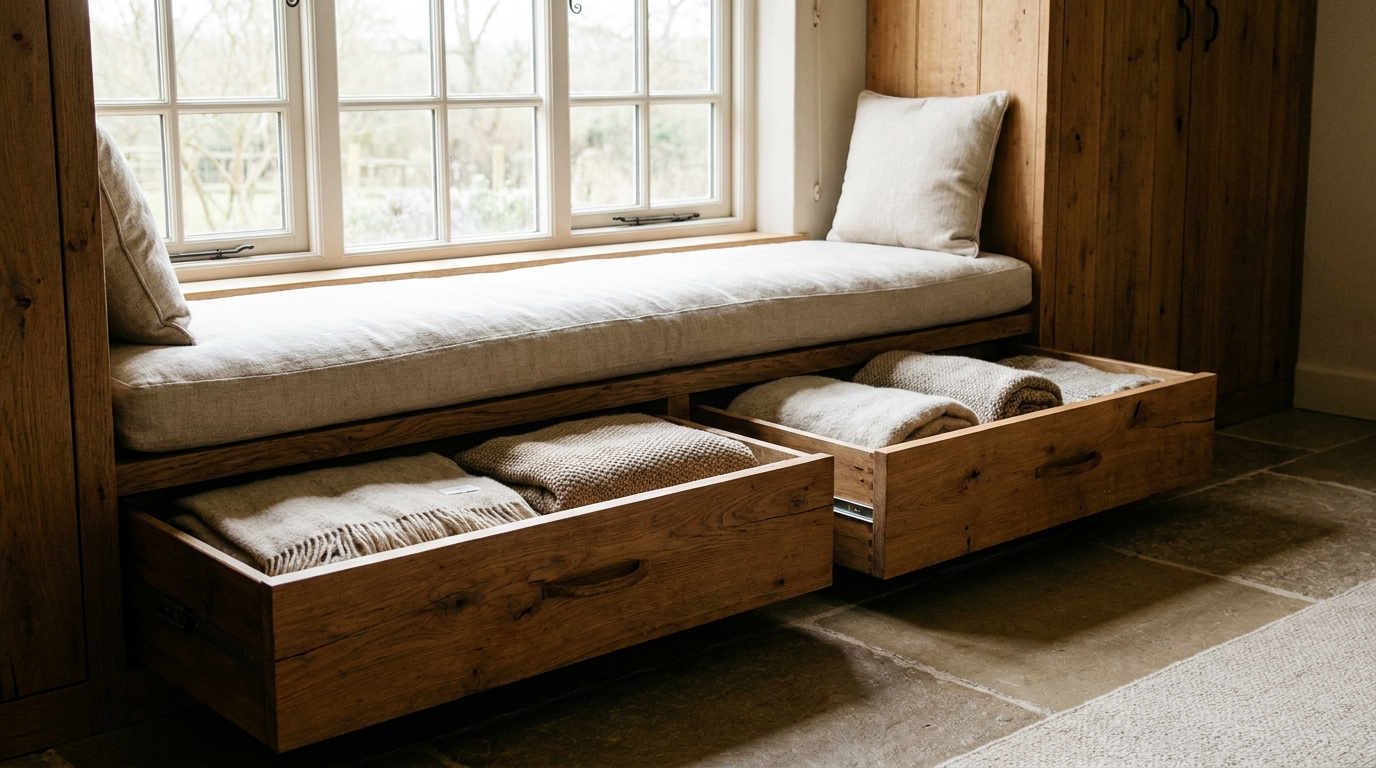
Window seat storage can be a row of drawers or a hinged lid. Drawers keep throws, kids' books, and a few games in separate bays, and either version should leave a walk path when it is open.
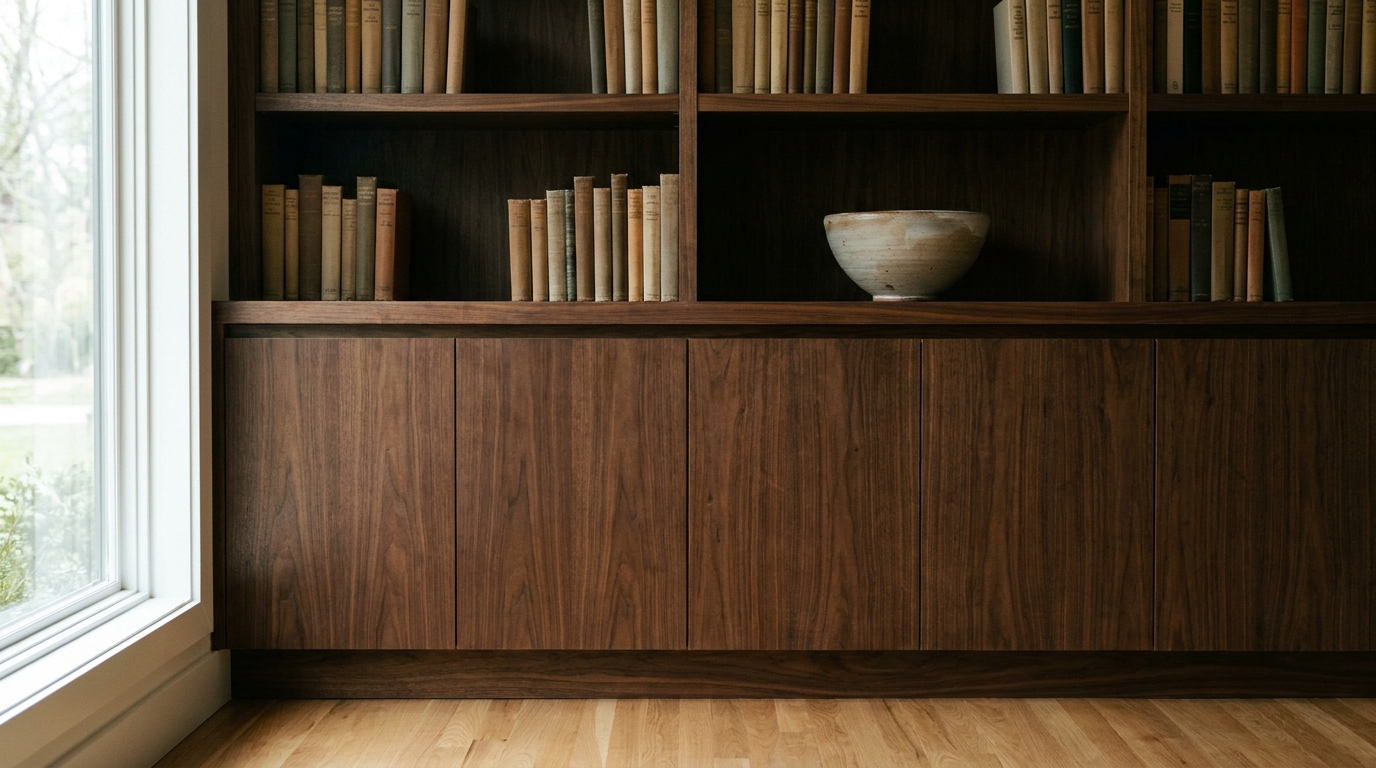
Bookcase built-in storage is a living room or study wall with closed cabinets below and open shelves above, not a wall built around a television. Games, blankets, and books stay off the floor.
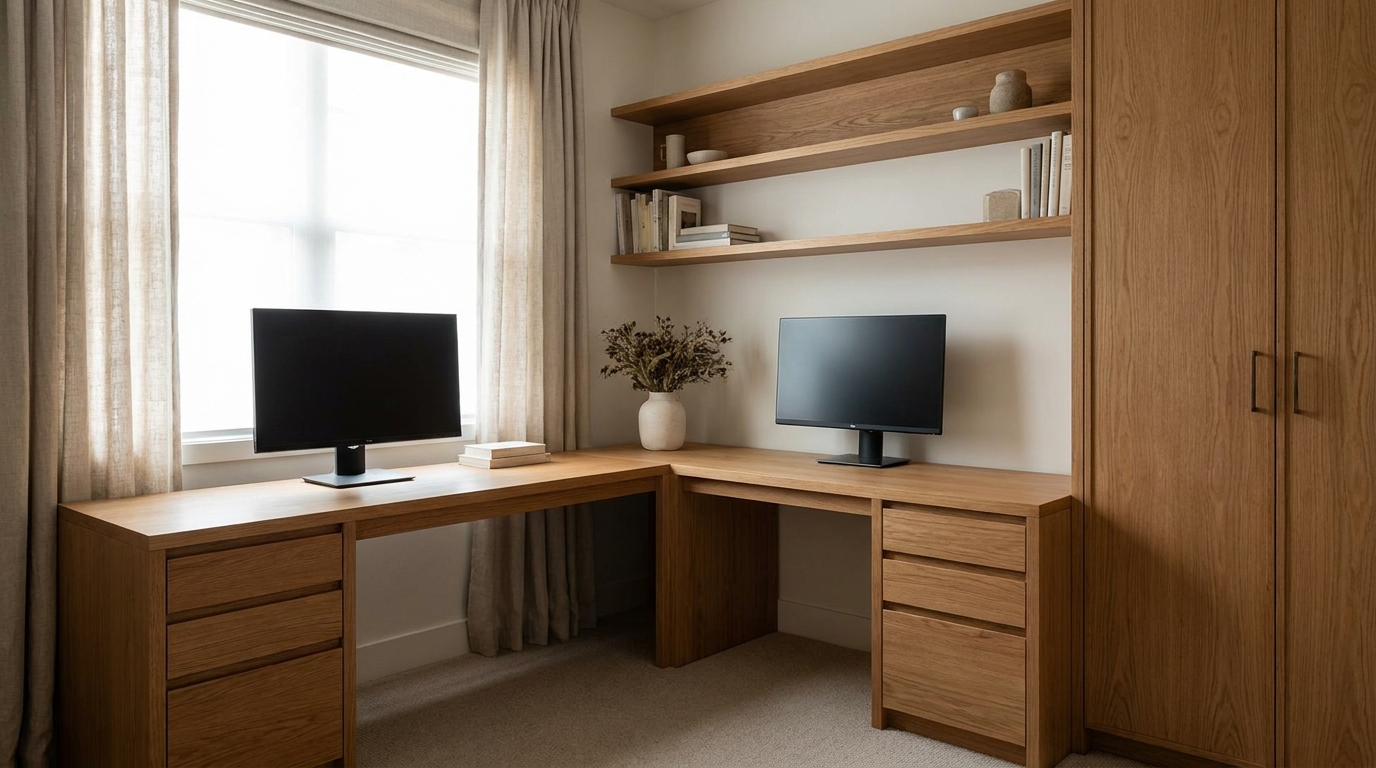
Each adult gets a desk and a file bay, and the household keeps one cabinet for shared paper and supplies. The printer stays off the center of both desks, and cords drop behind the work surface.
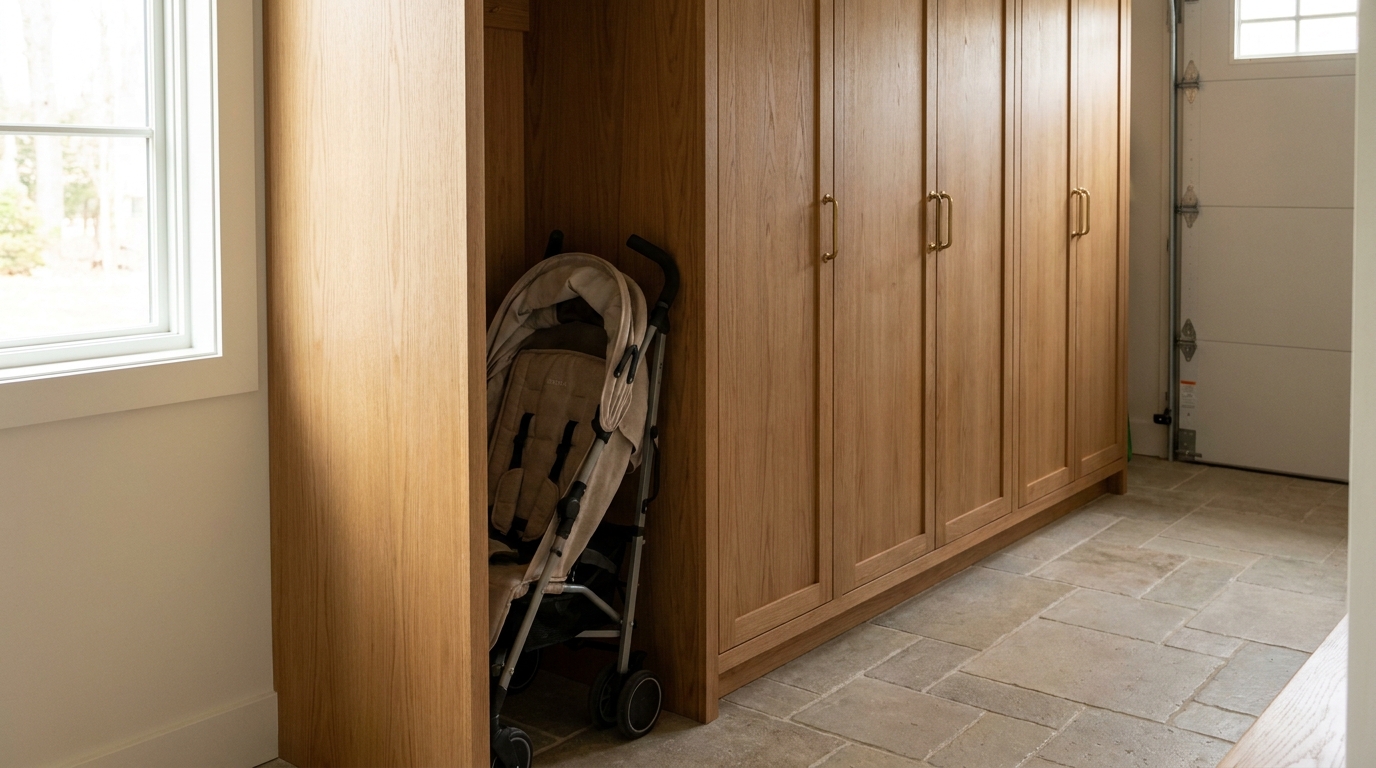
Stroller storage built-ins give the stroller, the infant carrier, and the folded play yard one niche at the garage door or the mudroom door. The opening is sized to that gear, and a wet stroller can dry before it is folded tight, so the walk from the door stays clear.
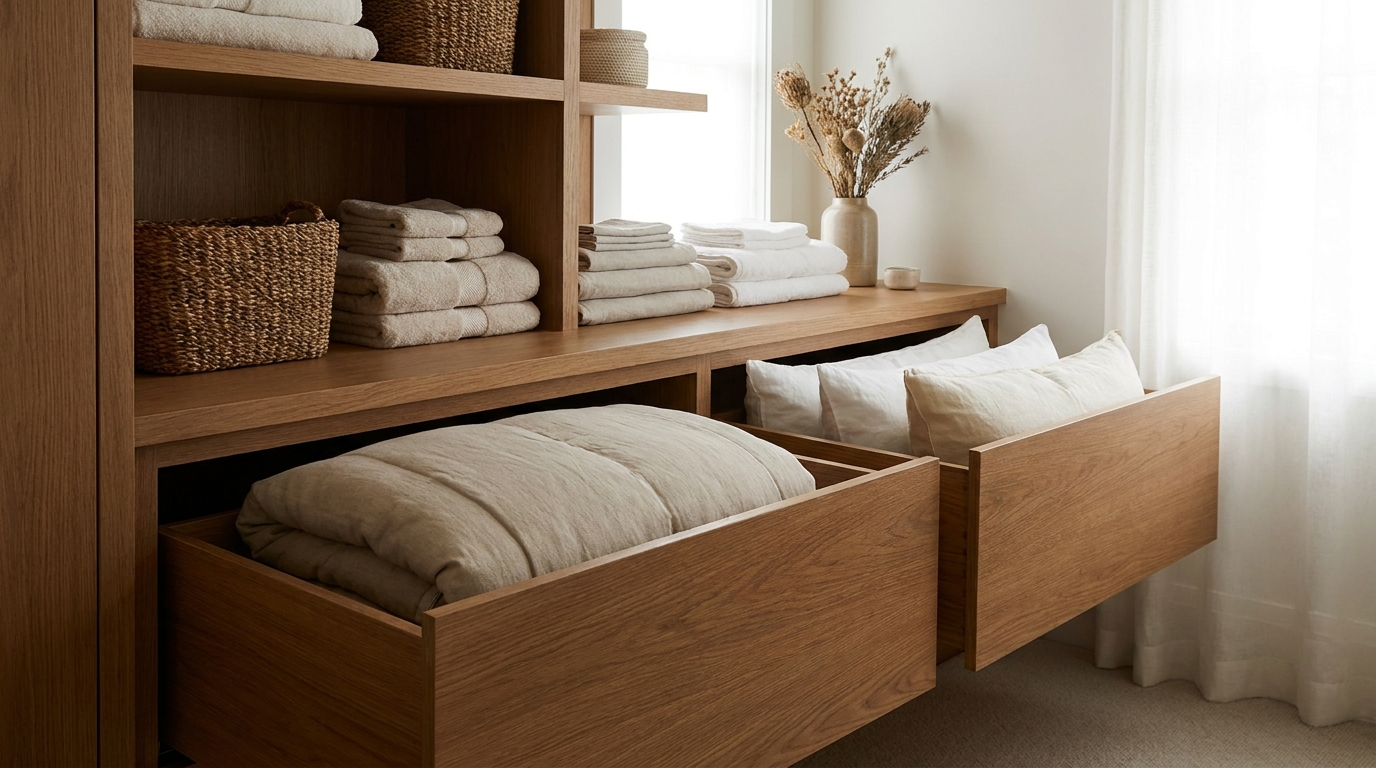
A king duvet, spare pillows, and a sleeping bag should not share one open shelf. Separate deep drawers, each sized to the folded piece, keep bulky bedding from turning into a crushed stack.
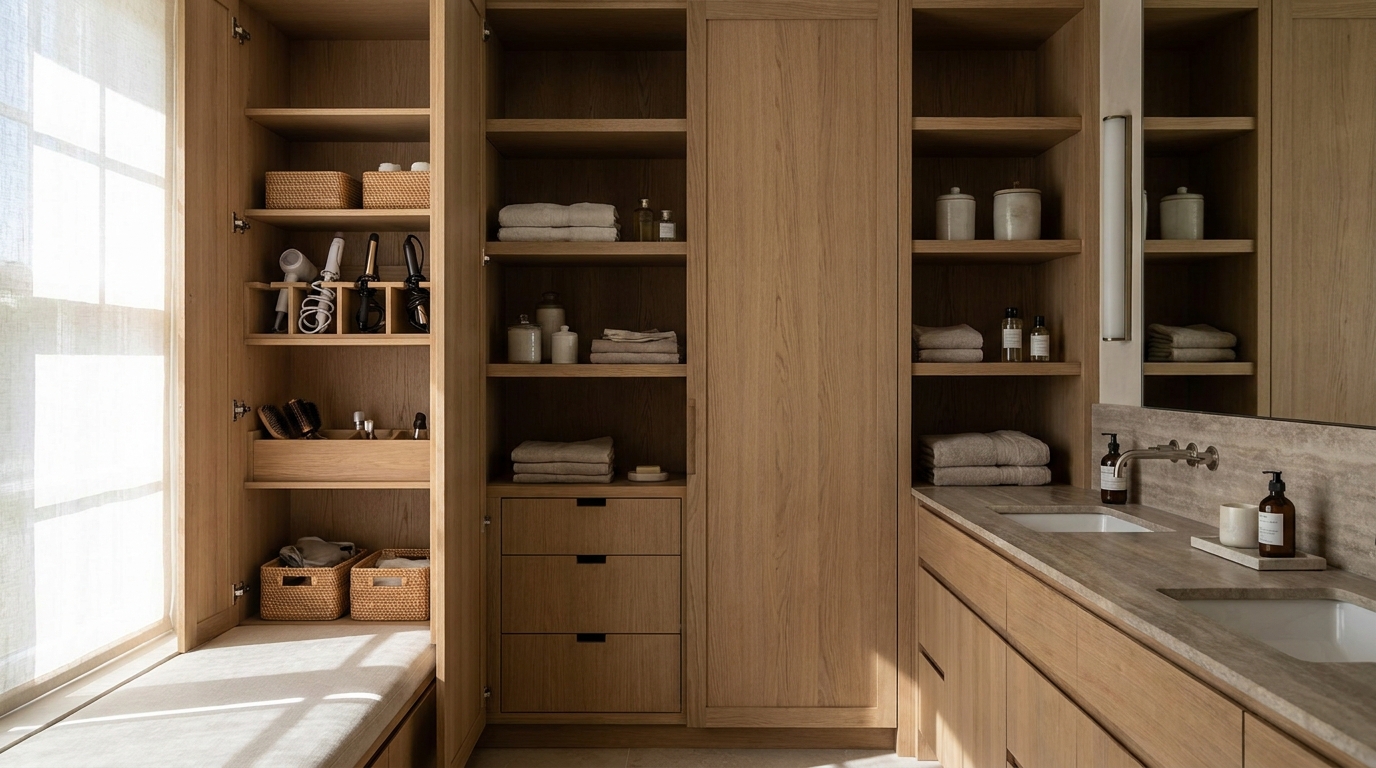
A bathroom cabinet or one bay in a linen tower can hold a dryer and iron after they are unplugged and cool. Keep the bay dry, leave the cord loose, and cool hot tools on a heat-resistant surface first.
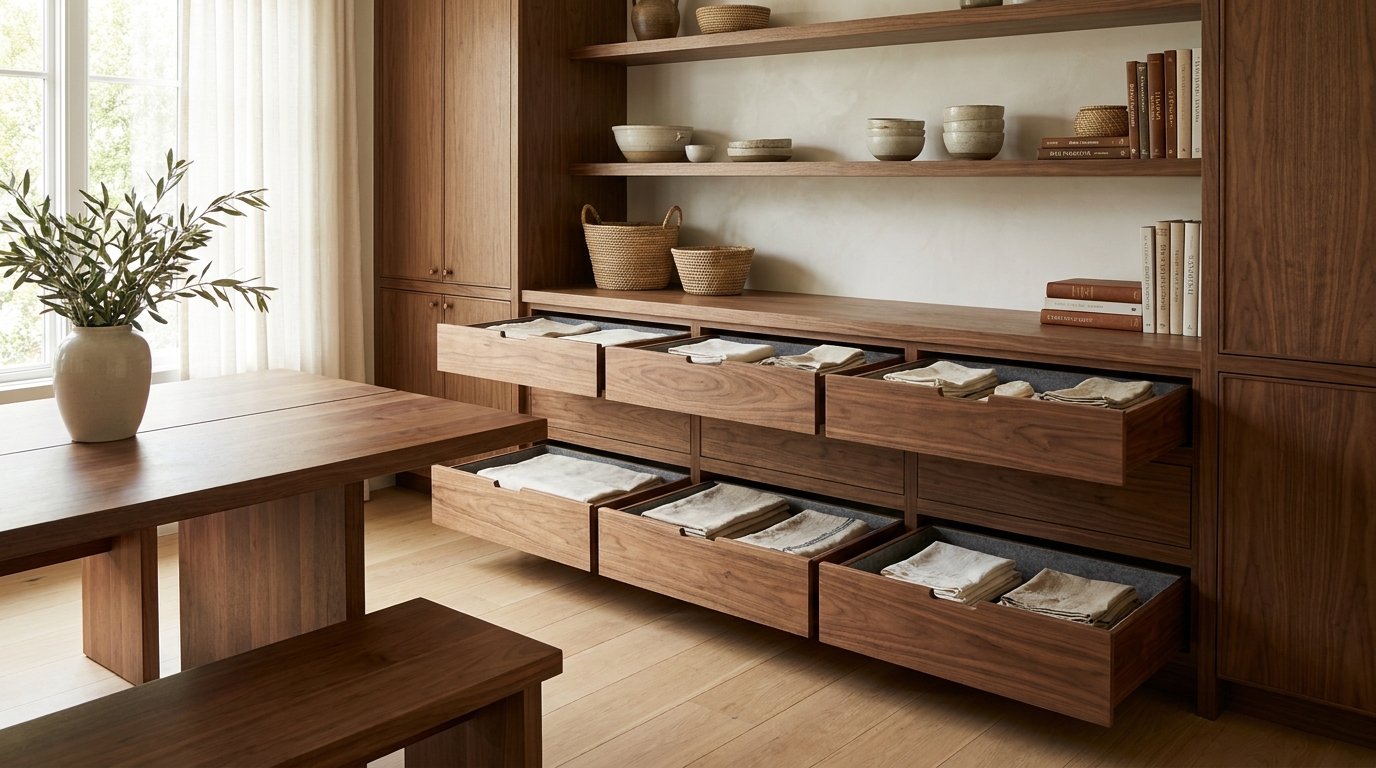
Give tablecloths, runners, and napkins their own shallow drawers. Store cloths as flat as the drawer allows, keep napkins in a tray, and put linens away only when they are clean and fully dry.
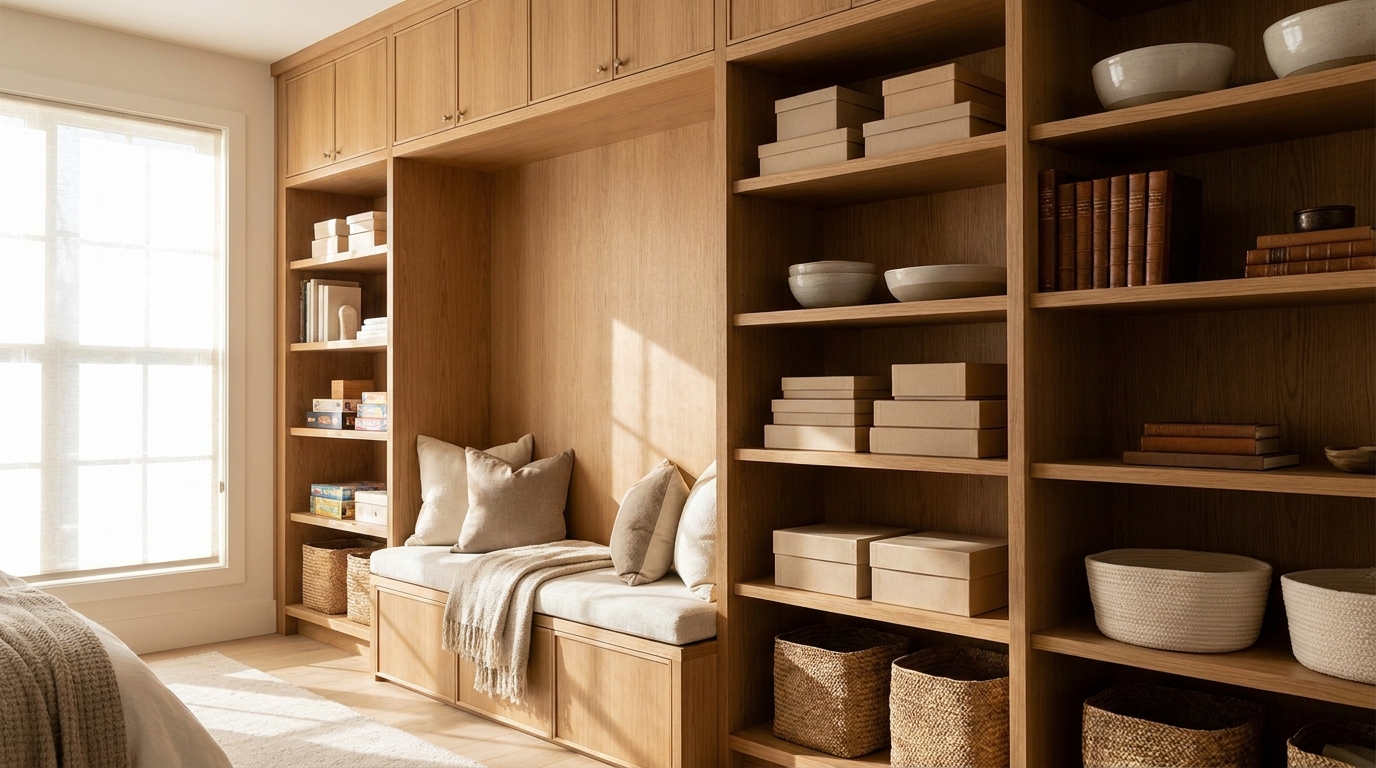
Closed base cabinets sized to the board-game boxes and puzzle stacks you own keep family room game storage off the floor and leave the coffee table clear for play.
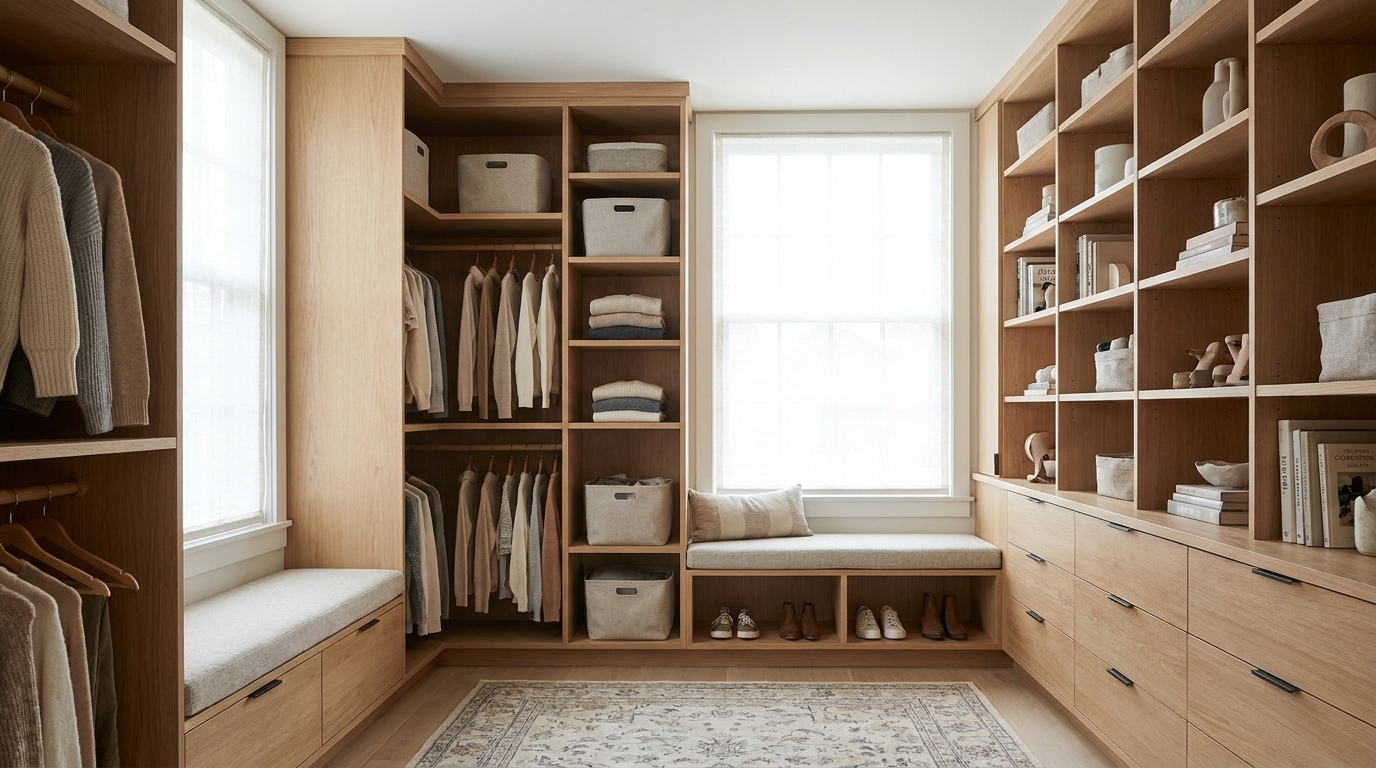
Teen closet organization means retiring the short child hang and toy bins. In their place, use a long hang, one open shelf for a backpack and sports bag, a few shallow drawers, and a clear floor.
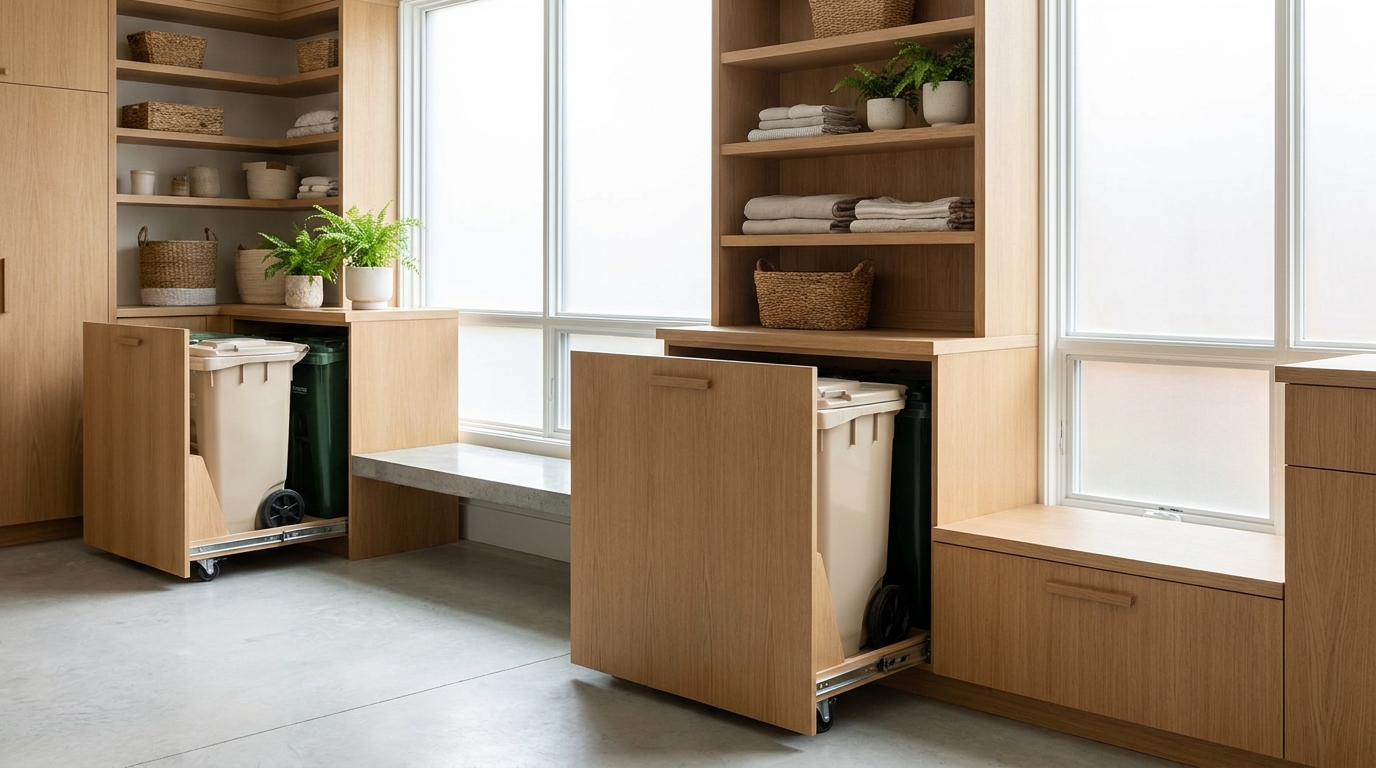
A garage trash cart corral is a short walled bay that holds wheeled city carts, leaves the lid free to open, and keeps the stall clear for a car. Size the bay to the carts in the garage, because Charlotte and Fort Mill do not use the same carts or recycling lists.
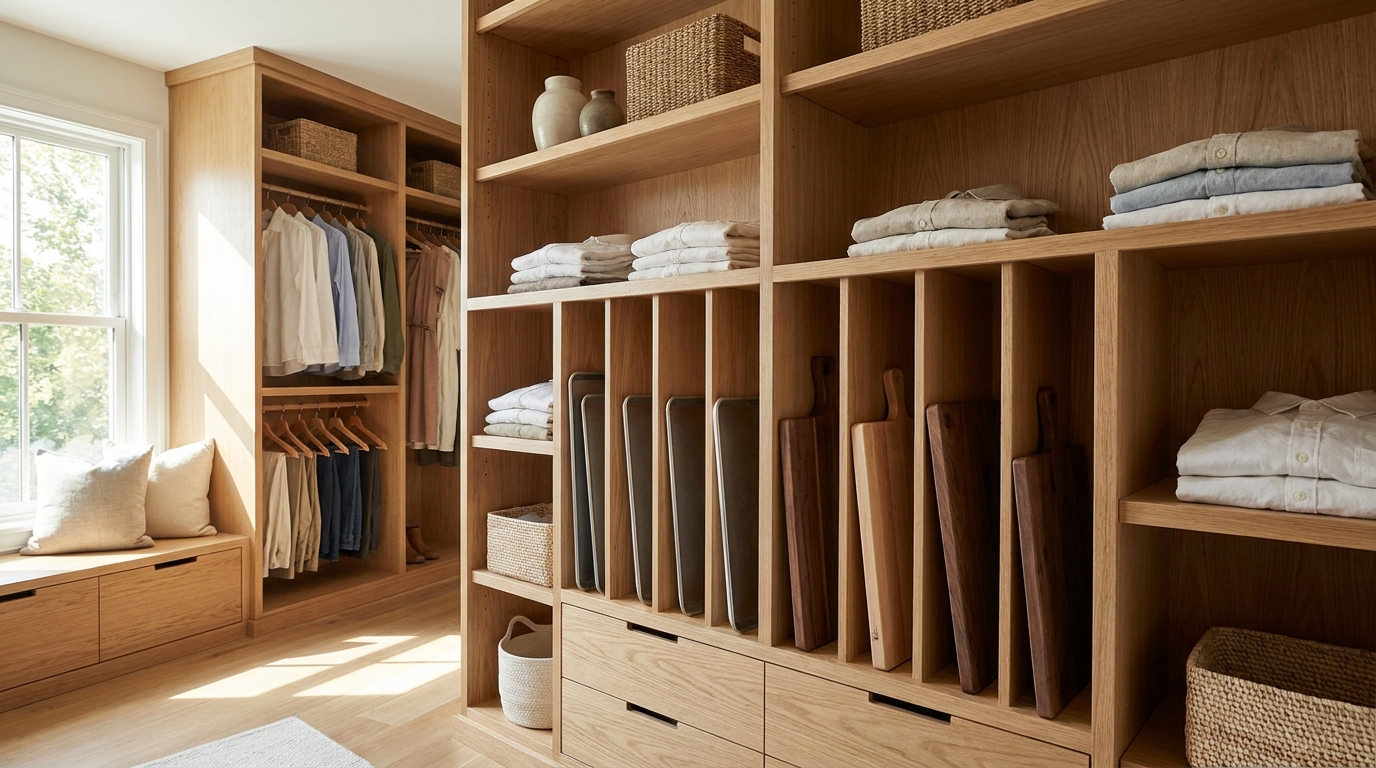
Store sheet pans, cutting boards, and platters on edge in a narrow vertical bay beside the range or in the pantry. Give each piece its own dry slot so the counter stays clear and the raw-meat board stays apart from produce and bread.
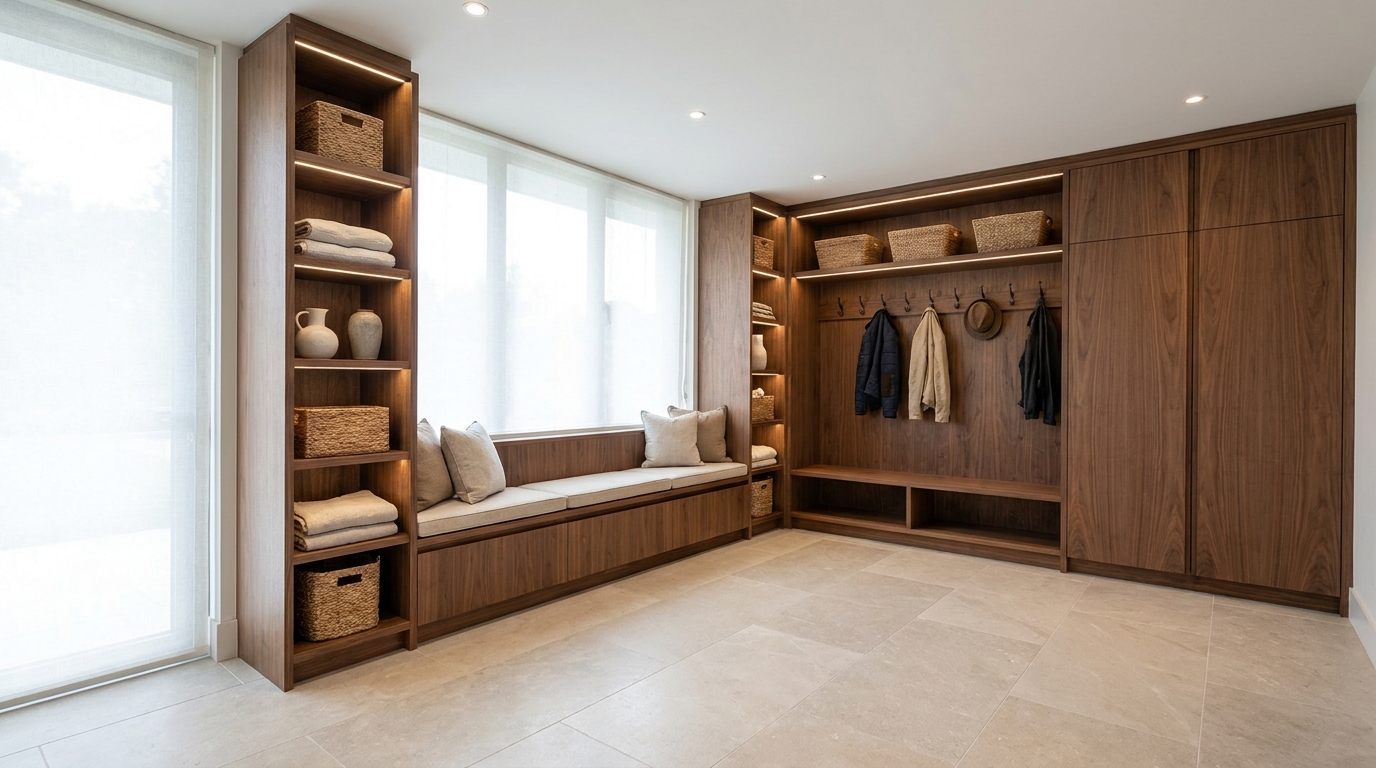
Garage entry storage works best as a shallow landing at the door between the garage and the house. Reachable hooks, a short bench that leaves the door free, and a boot tray or mat that can dry cover a weekday.
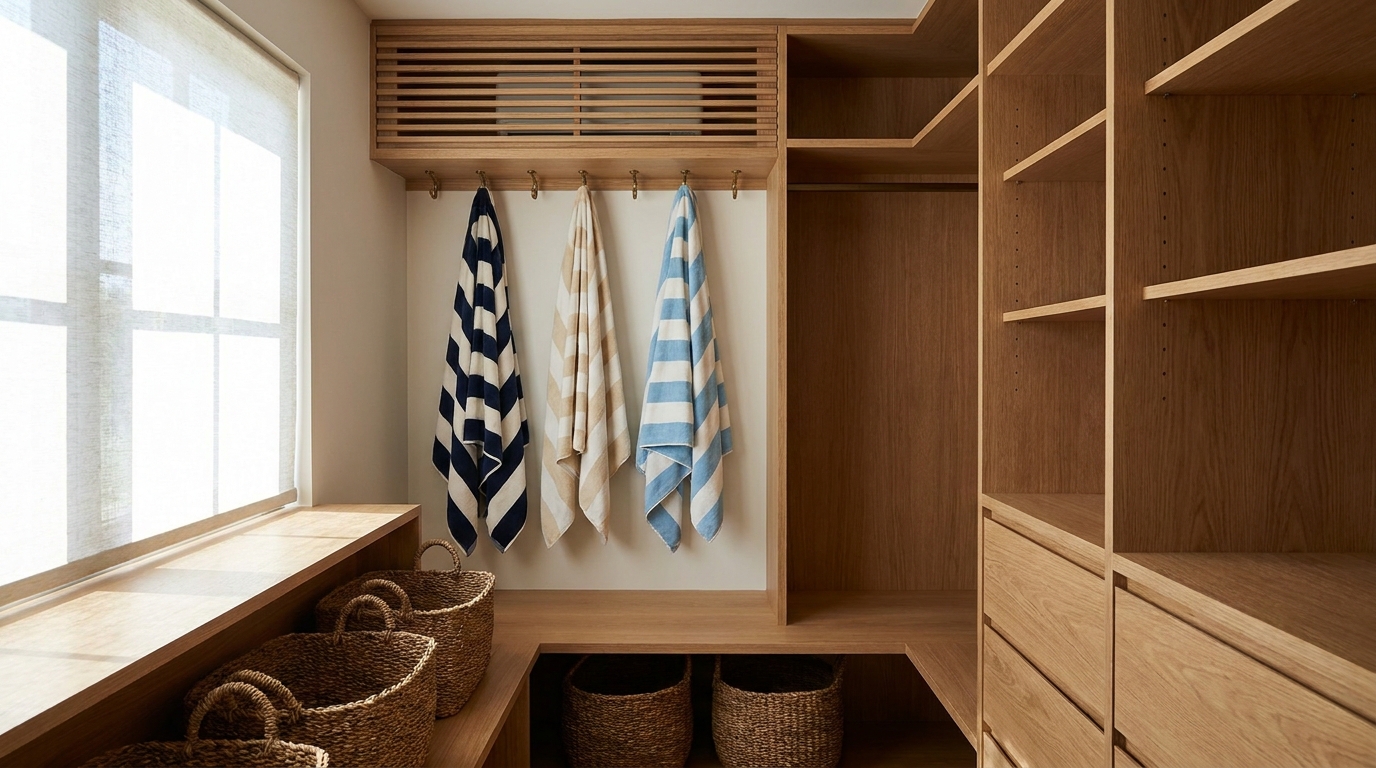
Pool towels, lake towels, life jackets, and sunscreen need their own vented bay. They should not land on the washer or share the everyday bath linen closet.
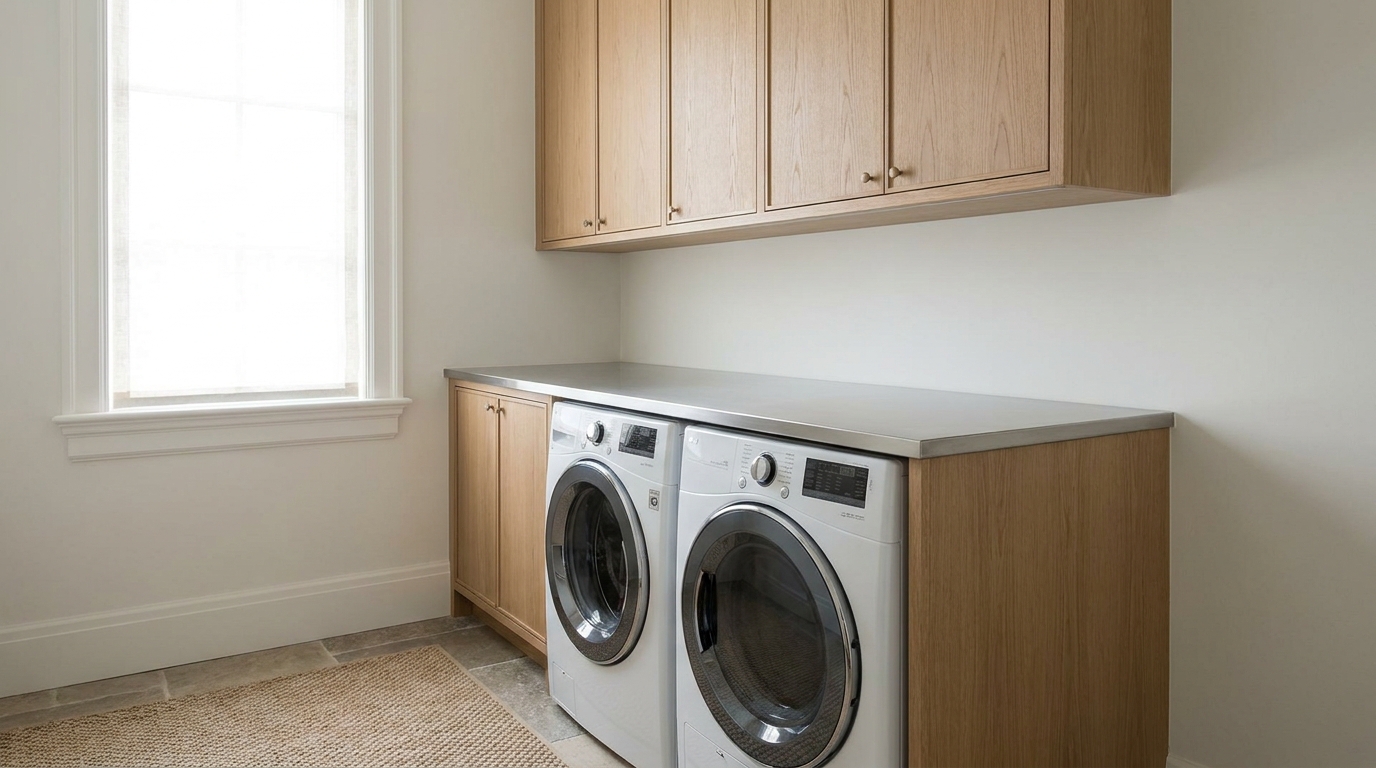
Detergent, bleach, and stain kits do not belong on the dryer. A closed cabinet, set higher on the wall with a latch that stays shut, keeps those products off the machine.
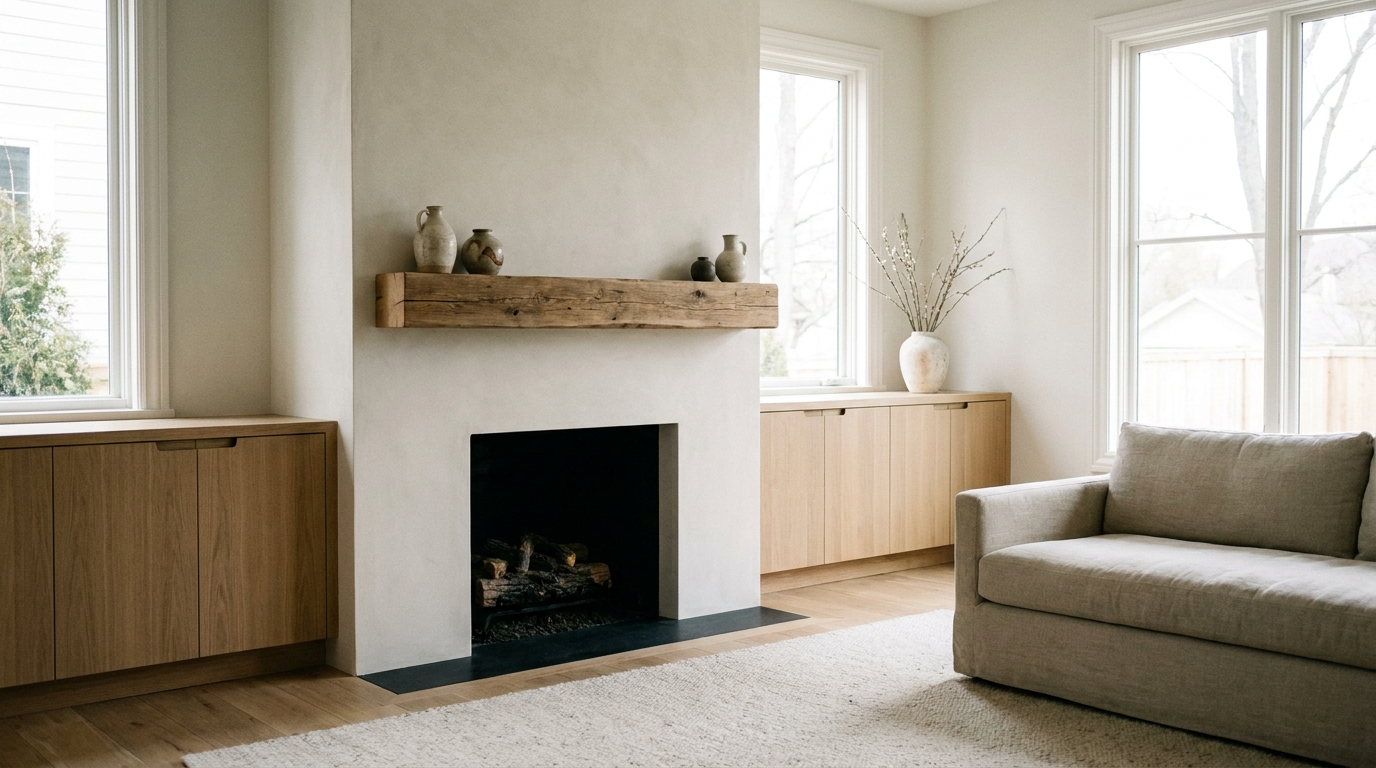
A pair of fireplace built-in cabinets, one on each side of the hearth, holds blankets, games, and seasonal decor behind doors so the mantel stays mostly clear. The pair is sized to the room and kept outside the clearance that applies to that fireplace.
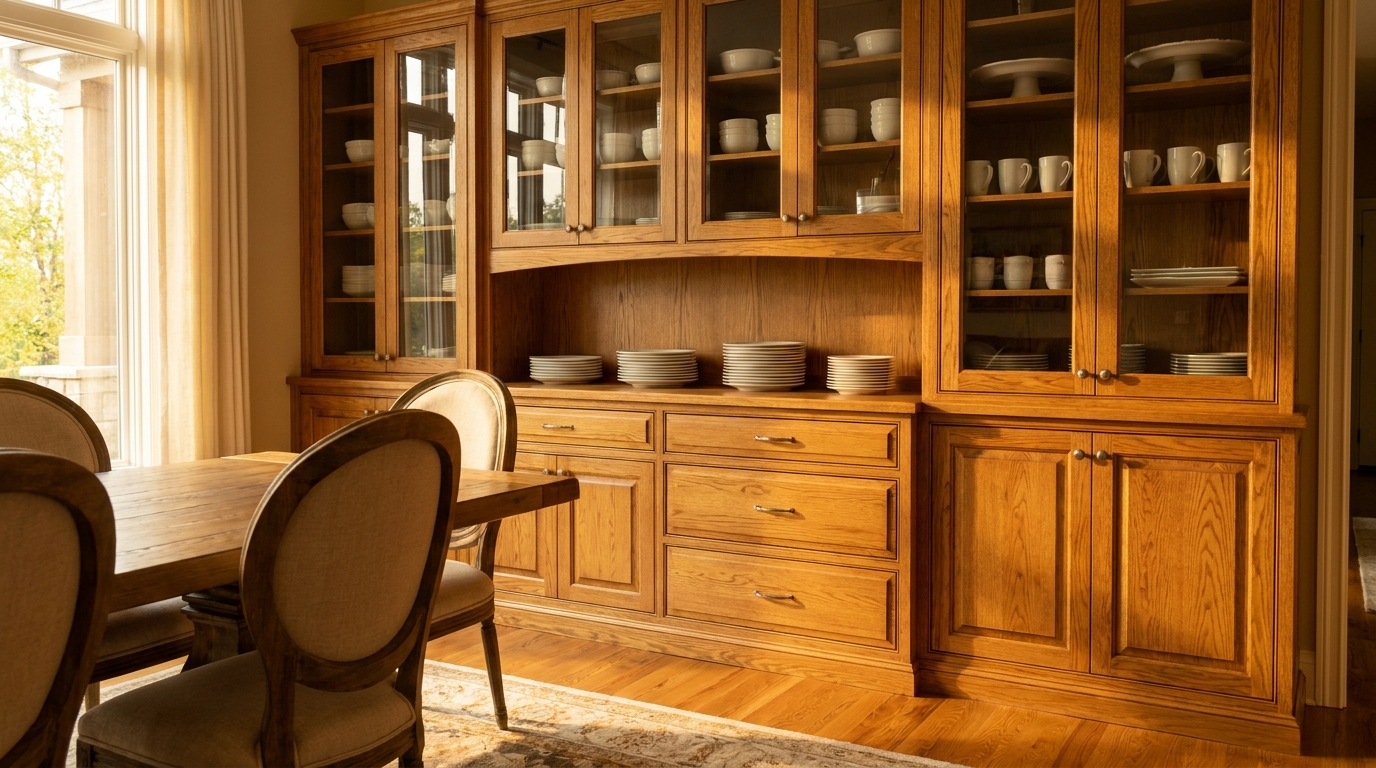
Weeknight plates belong on an open shelf you can reach. Good china, extra crystal, and silver belong behind closed doors on a hutch fastened to the wall.
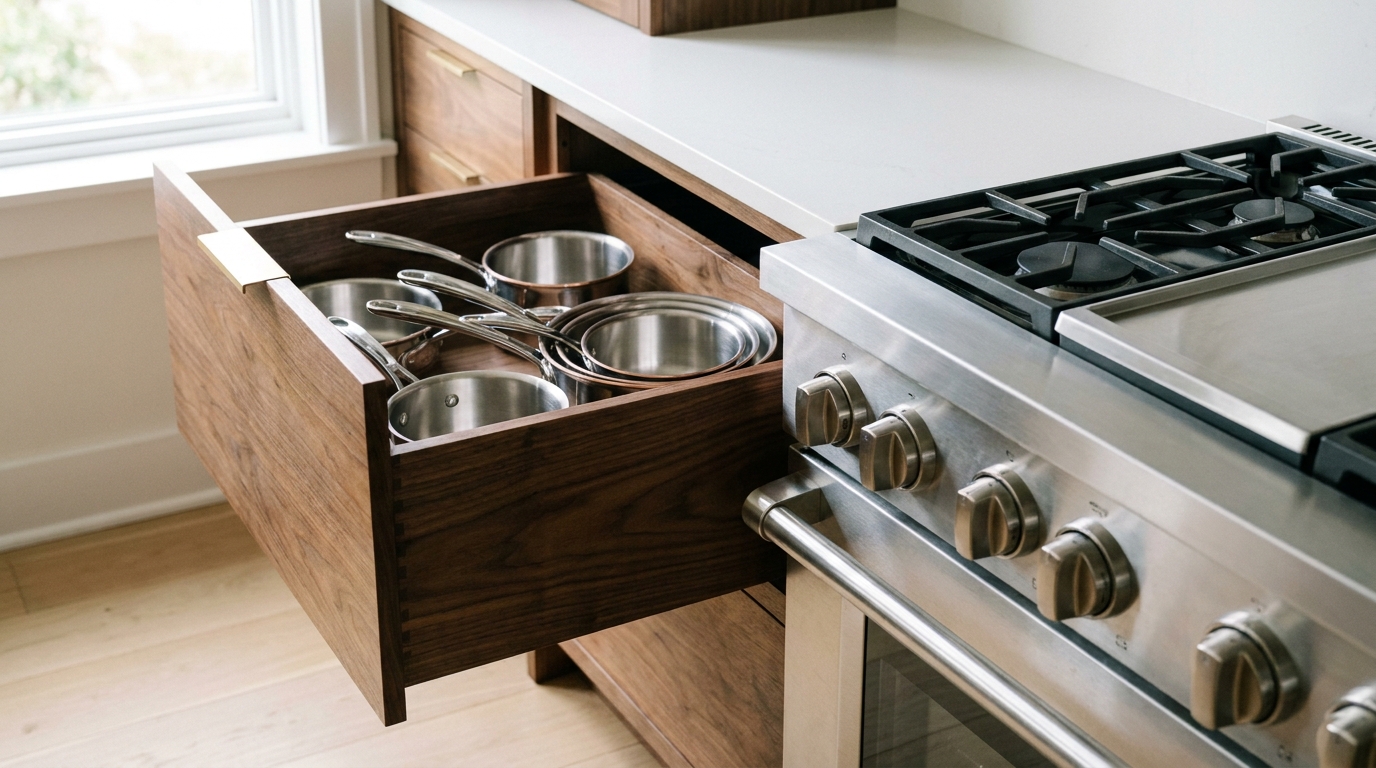
Nightly pans belong in a deep drawer beside the range, with lids standing in their own slots, so the cooktop stays clear. The bay is planned around the pieces you actually lift, inside the cabinets you already have.
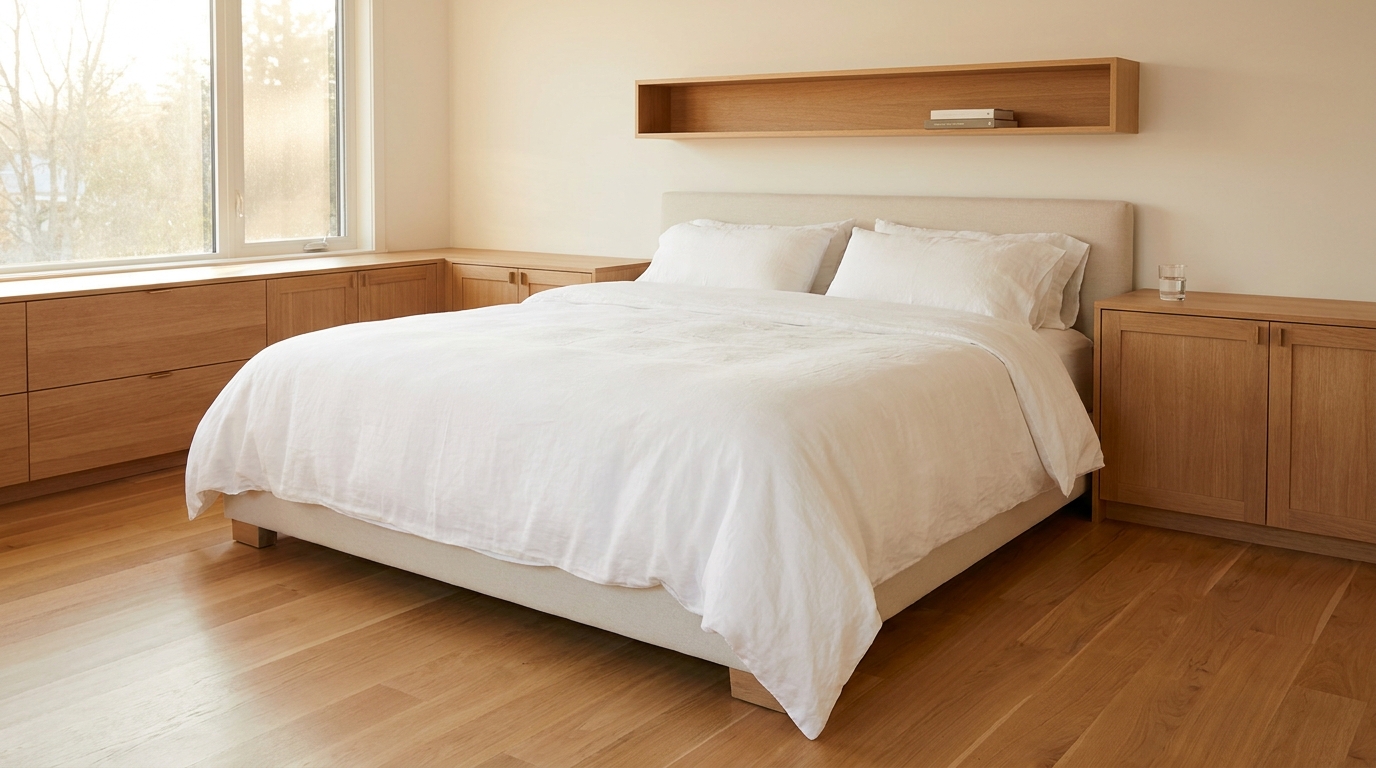
Low cabinets and a shallow shelf at the head of the bed can replace nightstands. Books, a water glass, and a charger have a fixed home, and the floor stays clear.
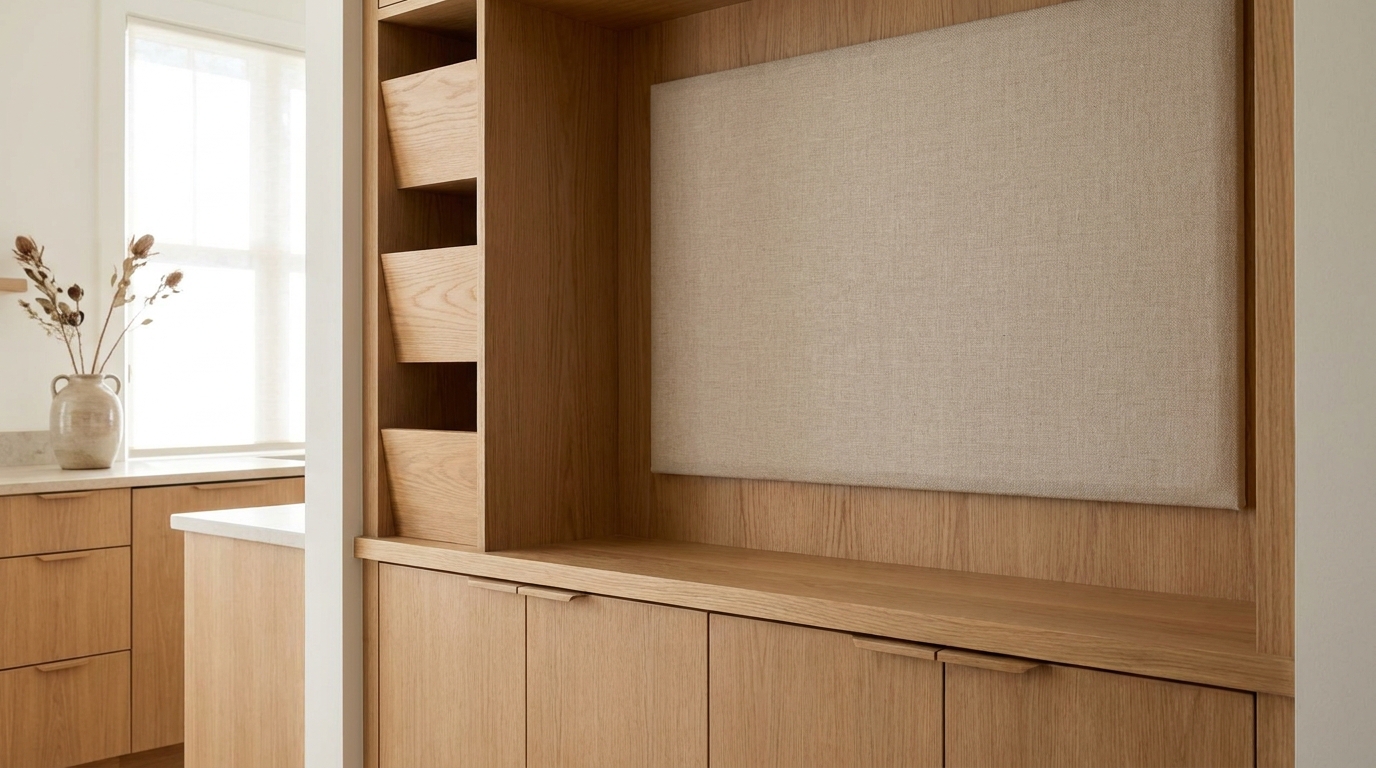
A family command center built-in is a shallow wall station just off the kitchen for the day's mail, one household calendar, and a charging shelf. It stays thin on purpose and does not hold long-term files, coats, or sports bags.
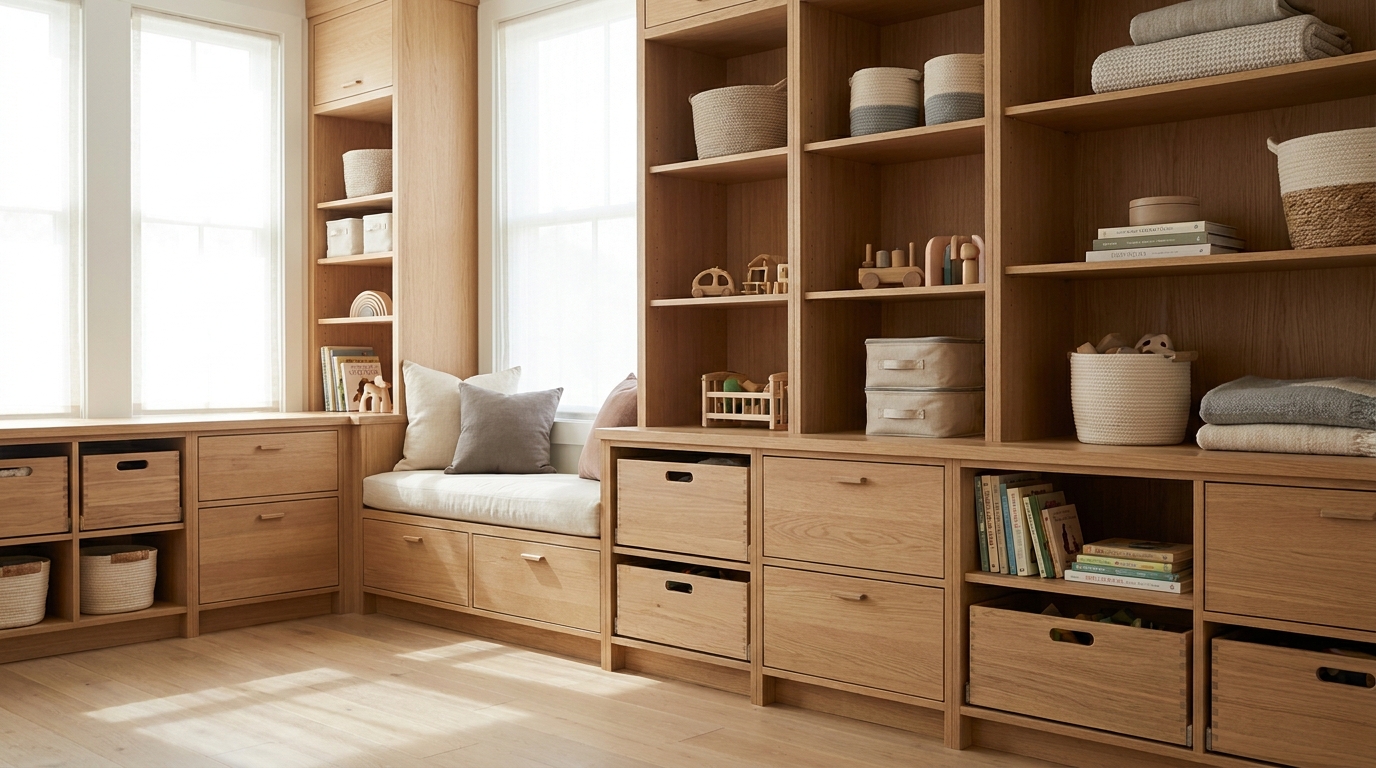
Playroom built-in storage is a closet-style wall for toys: labeled bins at kid height, closed overflow, limited display, and wall-attached cabinets so the floor stays a play path. It is not a kids bedroom wardrobe or a free-standing dresser.
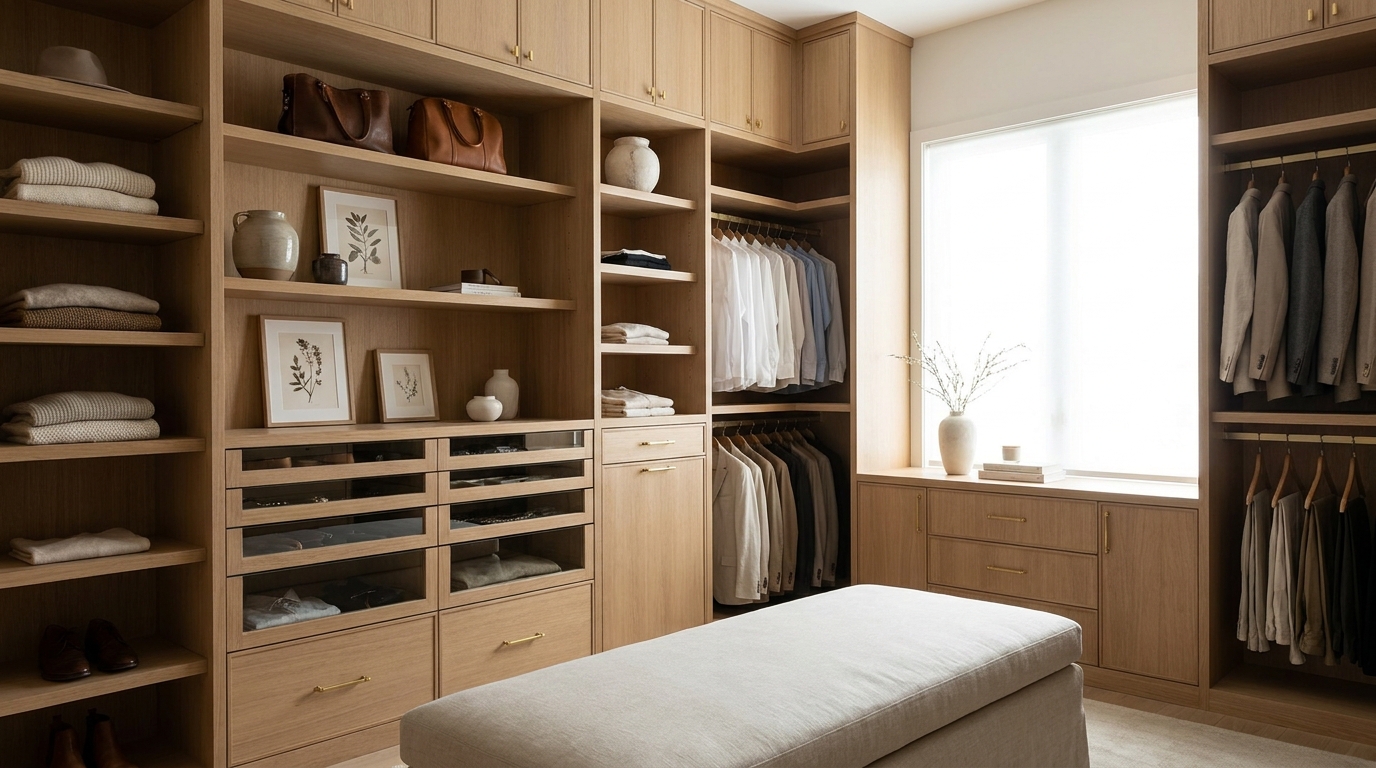
A work uniform closet keeps scrubs, badges, and tomorrow's clean set in their own bay so they do not share a rod with weekend clothes. Double-hang, a labeled tomorrow hook, a smalls tray, and a ventilated hamper make the next-shift grab simple.
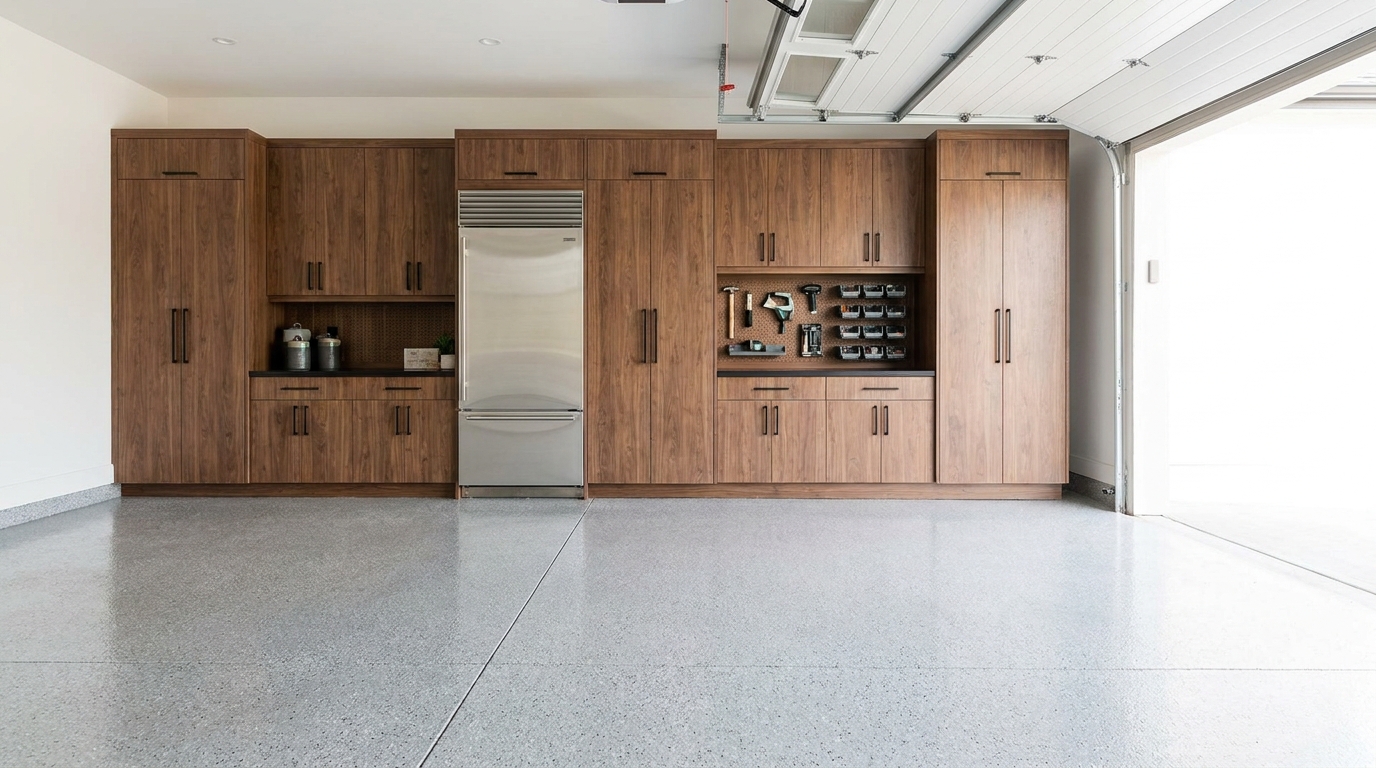
A garage refrigerator cabinet is a shallow, vented cold bay beside the parking stall so a fridge or freezer can hold drinks, overflow groceries, and bulk frozen goods without taking a parking space. Store perishable food there only if the unit can hold 40 F or below in the fresh-food section.
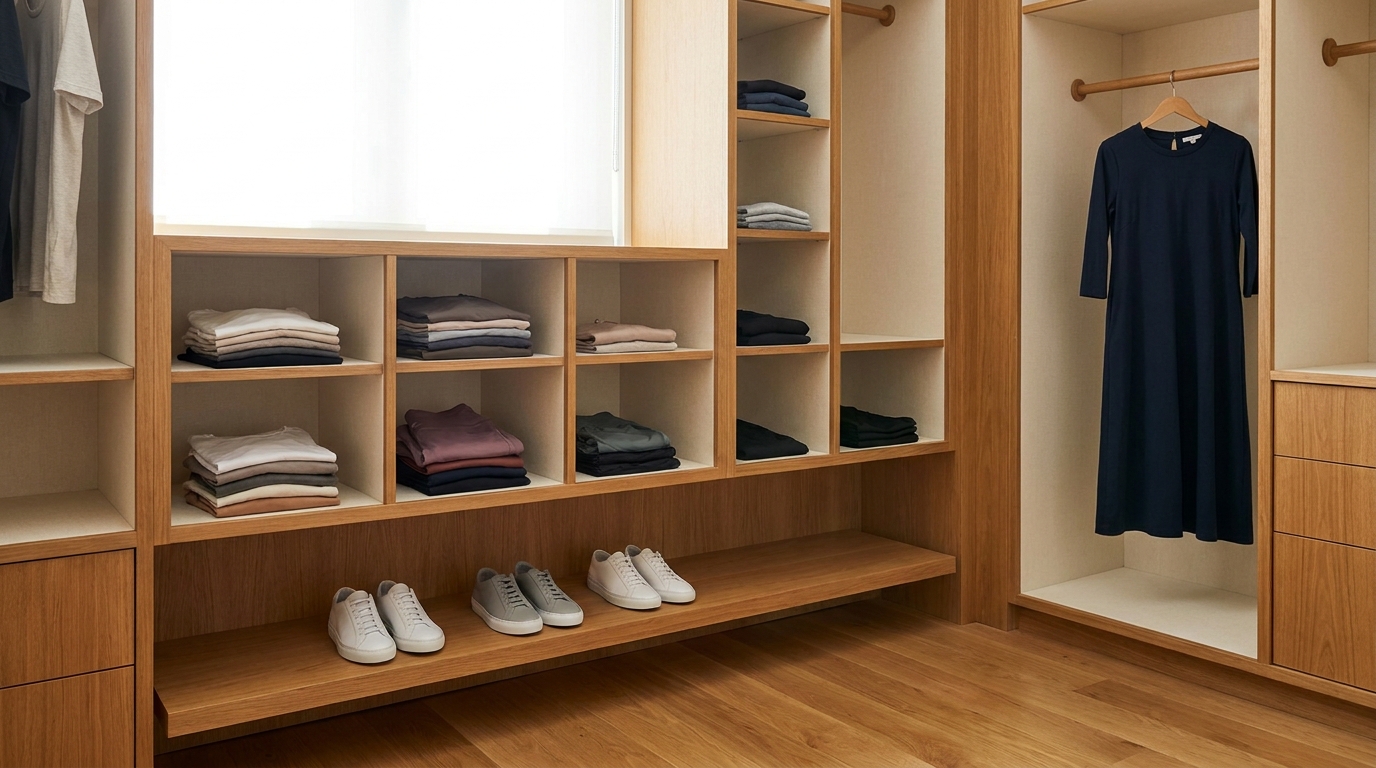
A planned athletic wear closet storage zone keeps gym clothes, one gym bag, and one or two daily sneakers in a ventilated pocket of the master closet so sweat gear never shares a rod with dress clothes. Damp kits belong in a breathable dirty bin with a short path to the washer.
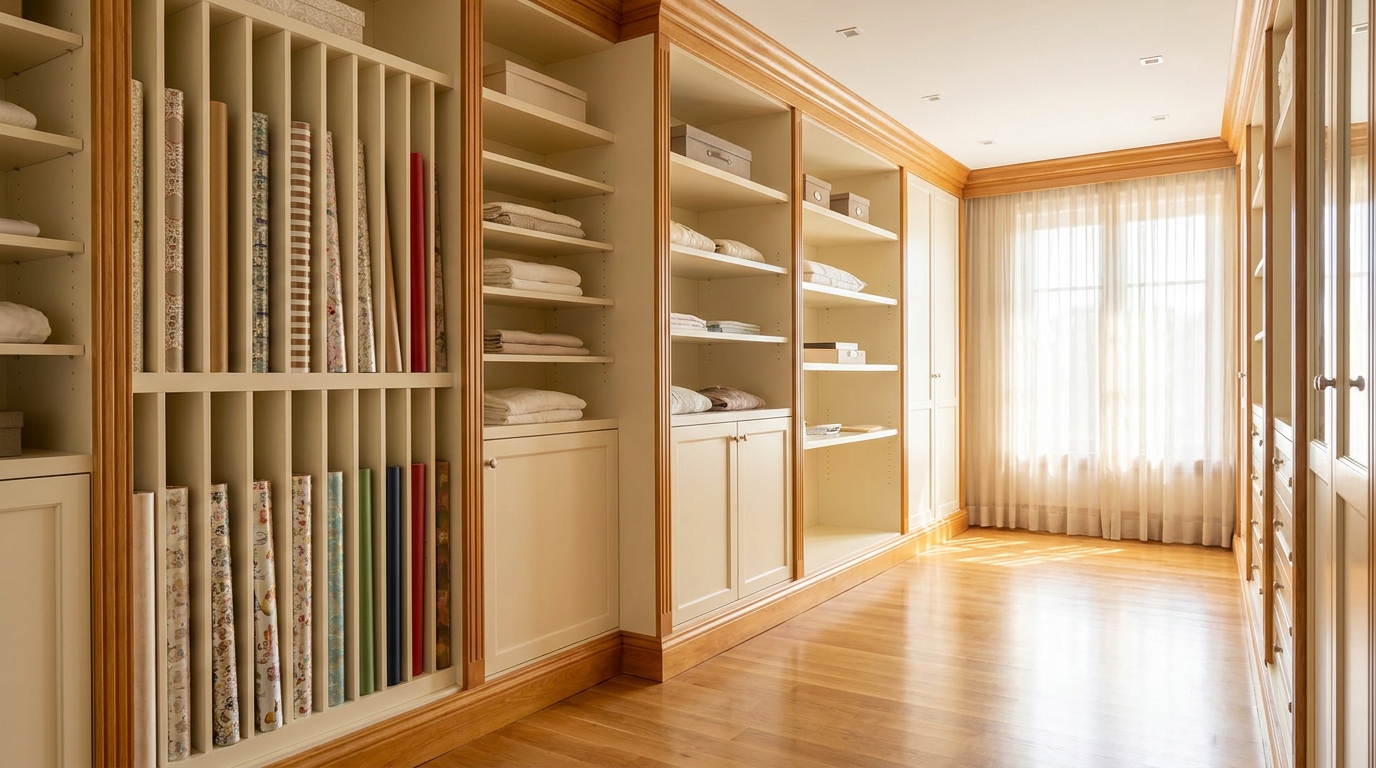
A holiday storage closet is a year-round home for wrapping paper, ribbon, tape, and labeled decor bins, not a January dump in the garage. Stand paper on end so rolls stay round, park ribbon in shallow drawers, and close bins by holiday so December does not spill into the rest of the house.
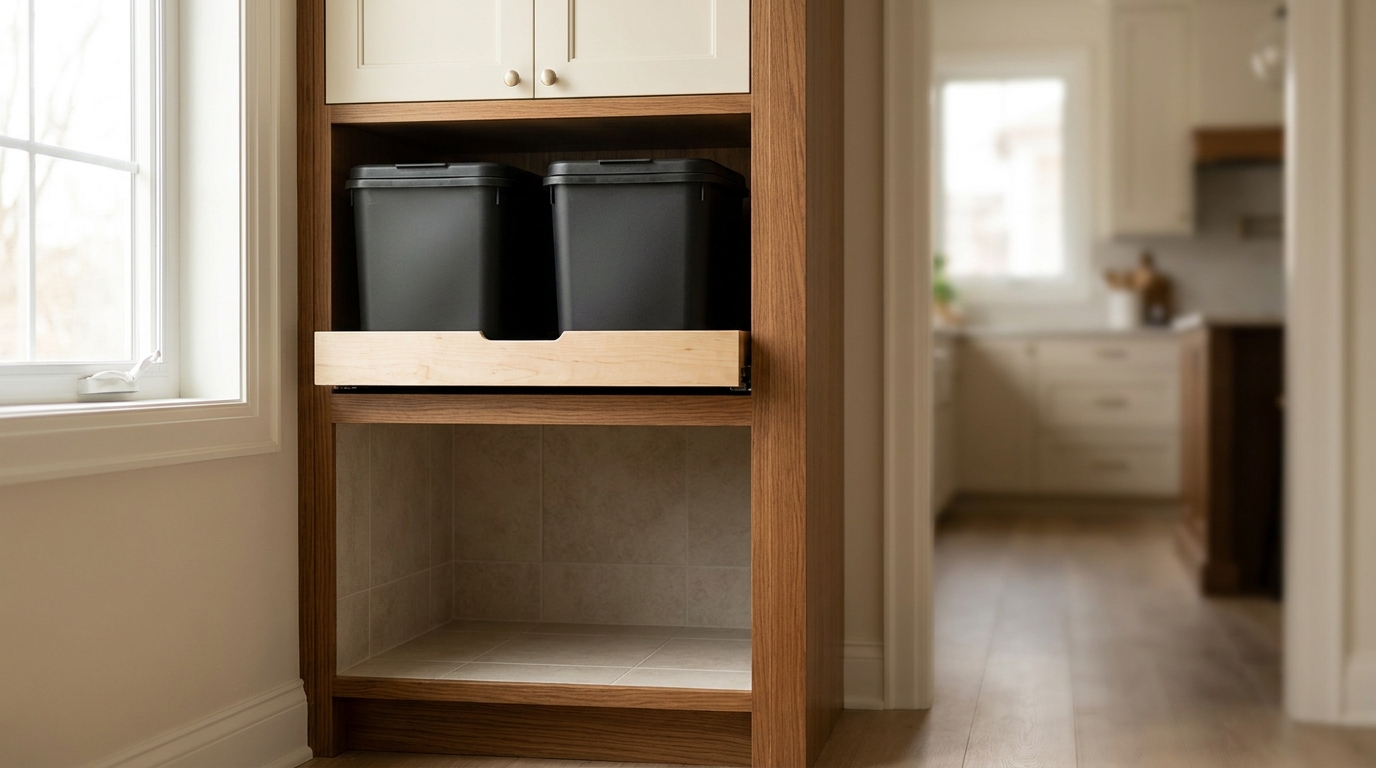
Kibble bags, leashes, and grooming bottles do not belong on the kitchen floor. A pantry-adjacent or mudroom-adjacent built-in gives pet supply storage sealed bins, a wipeable feeding nook out of the walking path, dedicated leash hooks, and a latched cabinet for medicines and cleaners.
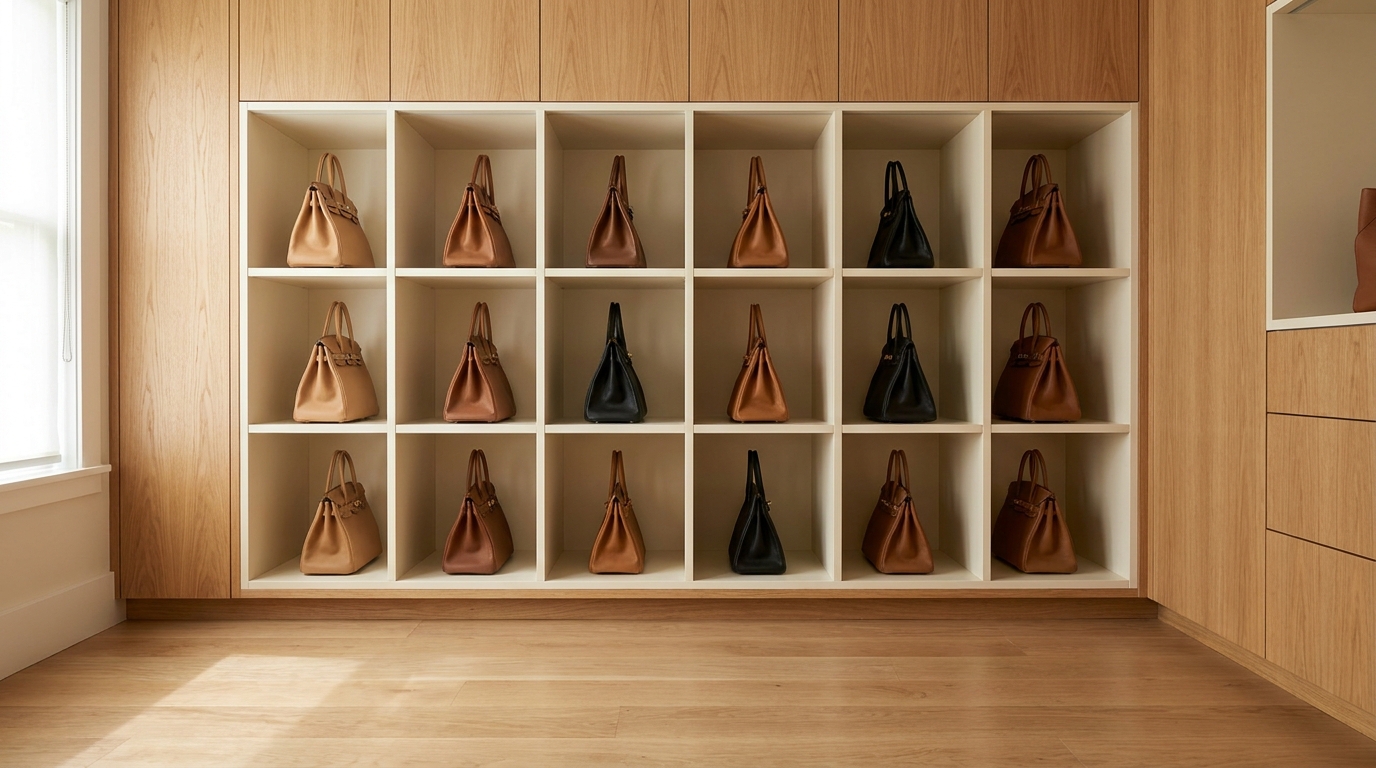
Closet handbag storage works as a dedicated bag wall, not a pile on a high shelf. Size cubbies to the largest bag, hang daily totes on pegs, and cover structured leather with breathable fabric.
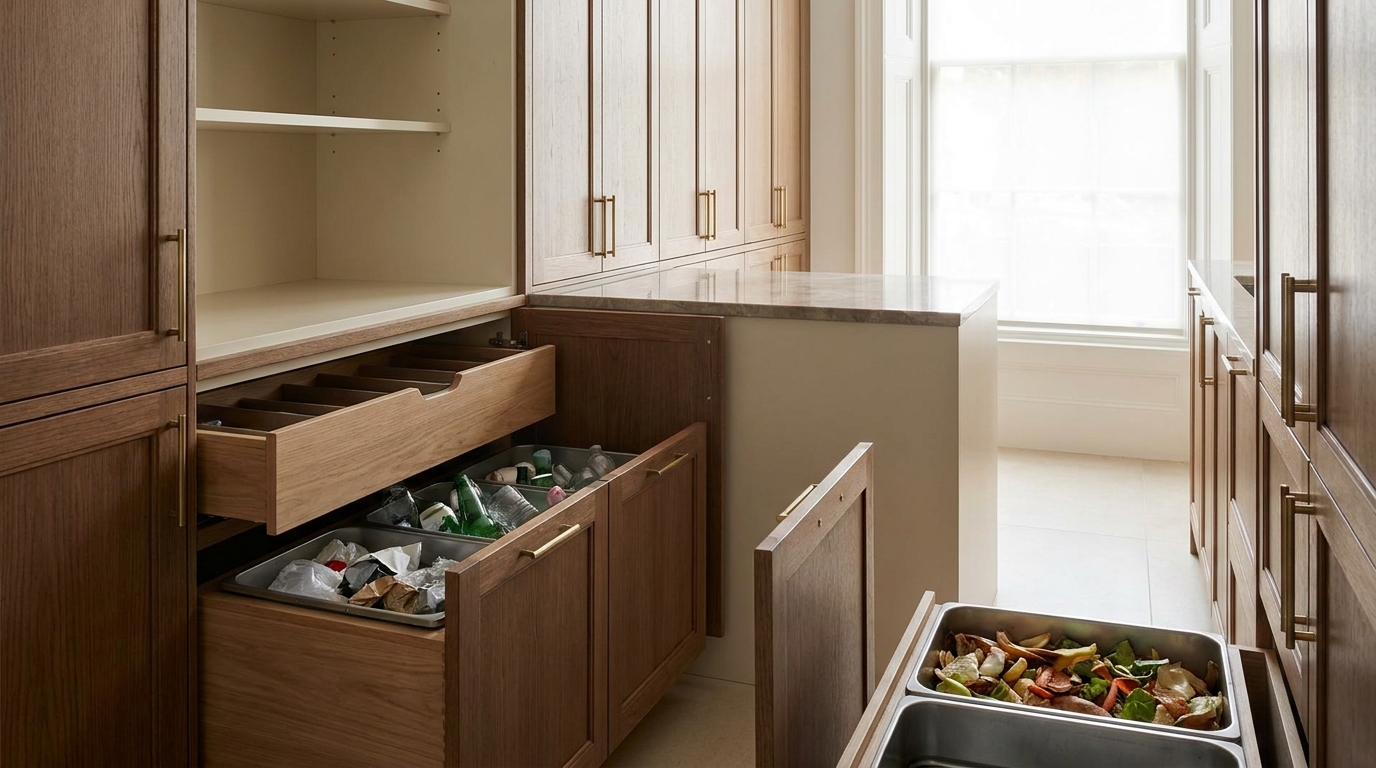
The kitchen island is a poor place for trash, recycling, and compost. Dedicated pantry recycling storage uses labeled pull-out bays so those bins stay behind a closed door.
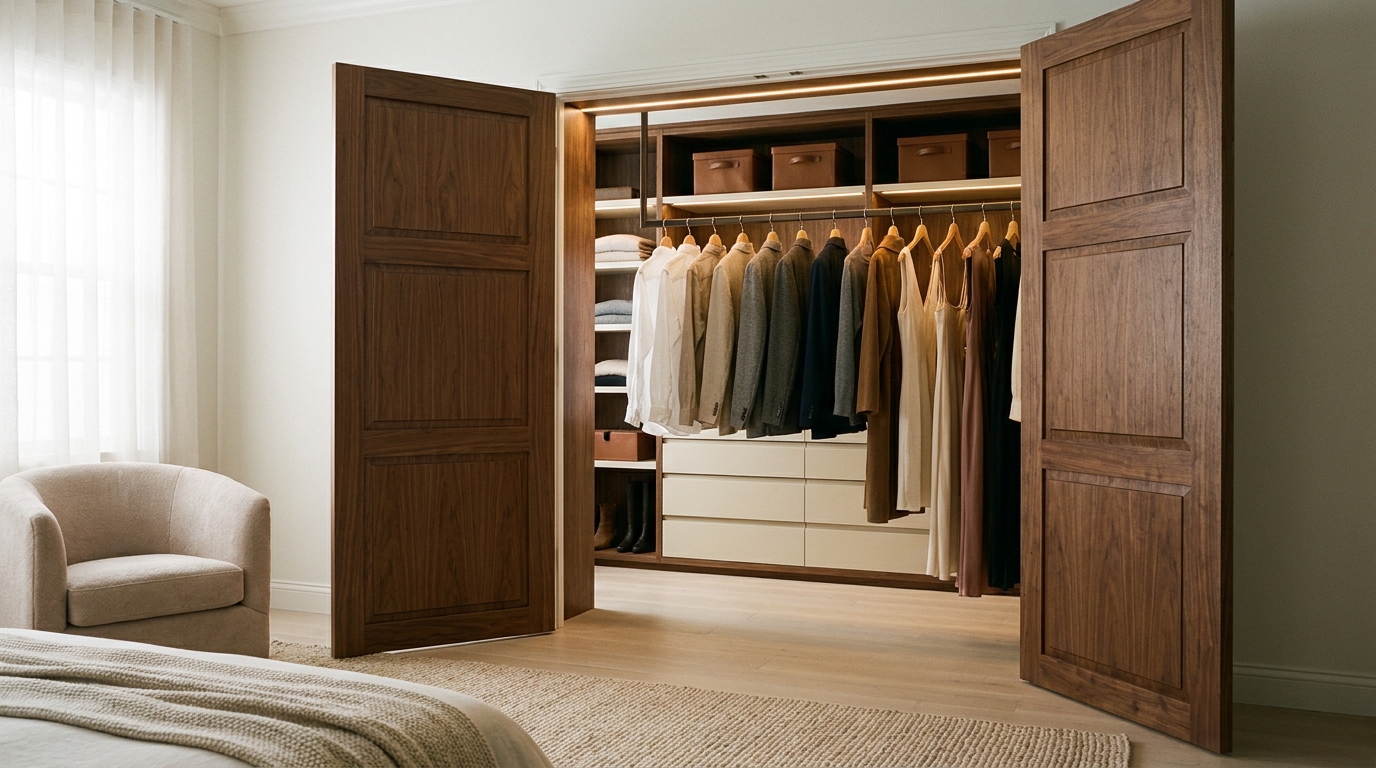
Reach-in closet depth is the front-to-back measurement that decides whether hanging clothes sit square or get crushed at the door. Plan hanging bays at about 24 inches, keep shelves at a one-hand reach, and do not treat a 12-to-16-inch rod-and-shelf as a smaller version of the same closet.
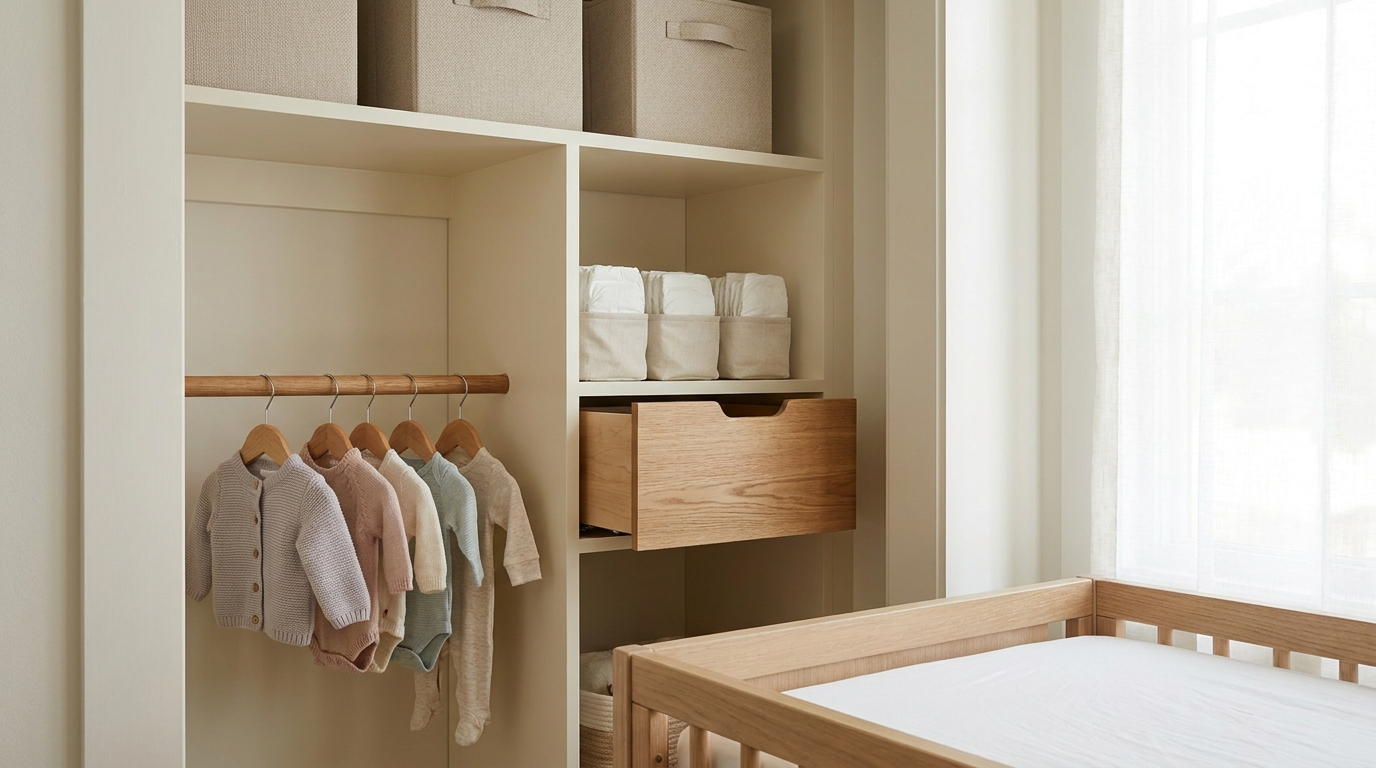
Nursery closet storage works when current-size outfits and the day's diapers sit in an easy-reach band, and next-size grow-out bins stay labeled up high. A fold surface in the closet keeps the changing table clear, and the crib stays empty except for a fitted sheet.
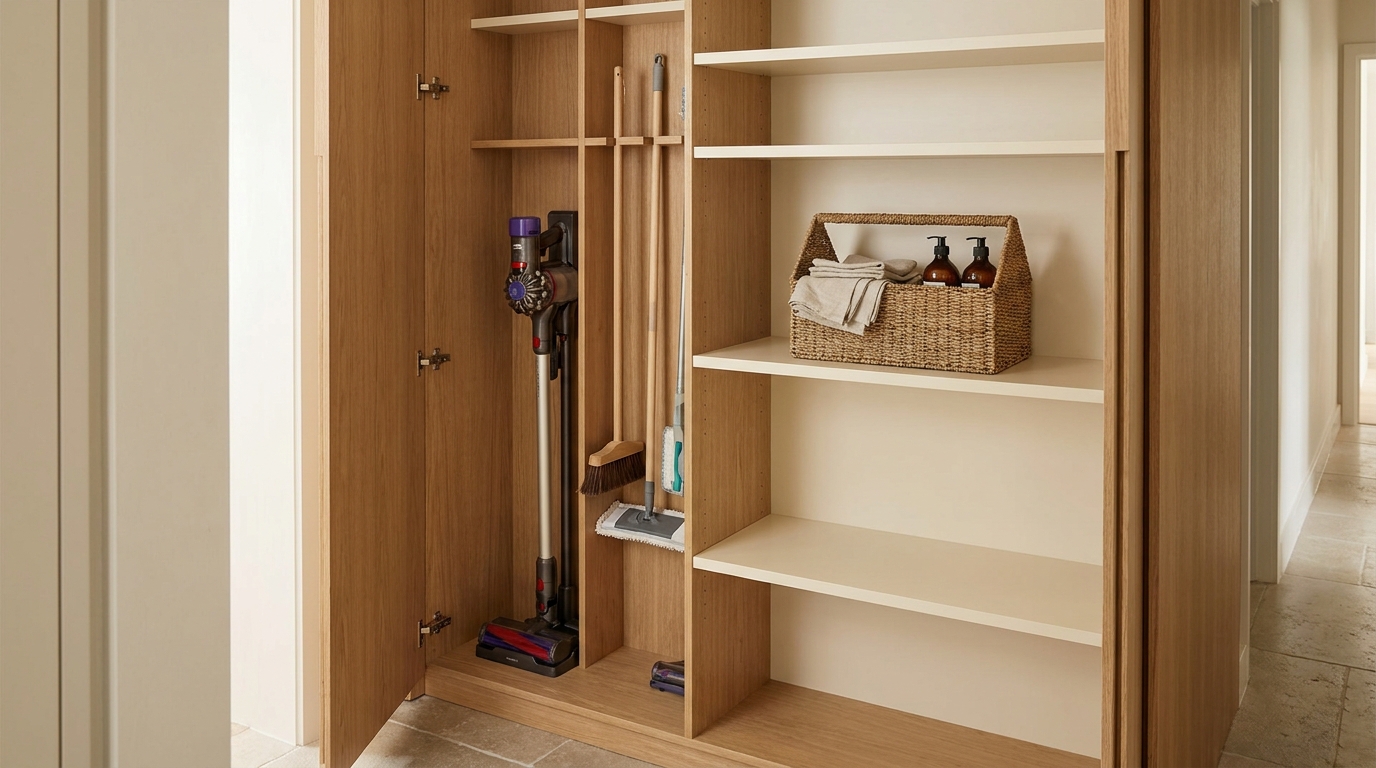
A hall broom closet becomes useful utility closet storage when it works as a small utility bay: a vacuum dock, tall slots for brooms and mops, and a caddy you can grab without hunting. Keep concentrated cleaners locked, give wet mops air to dry, and park the vacuum on a dedicated receptacle instead of running a cord under the door.
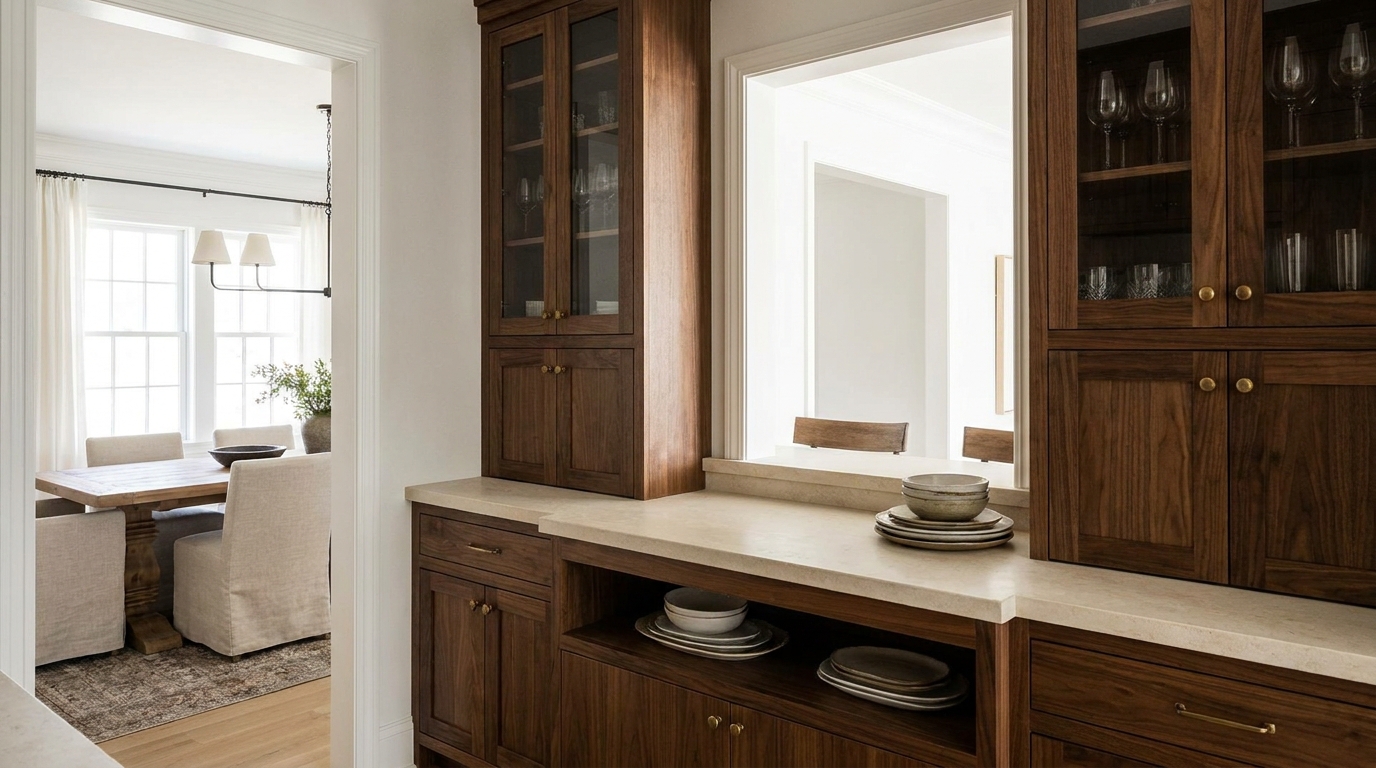
A butler's pantry is a serving and staging room between the kitchen and dining room. Butler pantry storage keeps glassware, serving pieces, and table linens behind closed doors and gives you a pass-through work bay for plating.
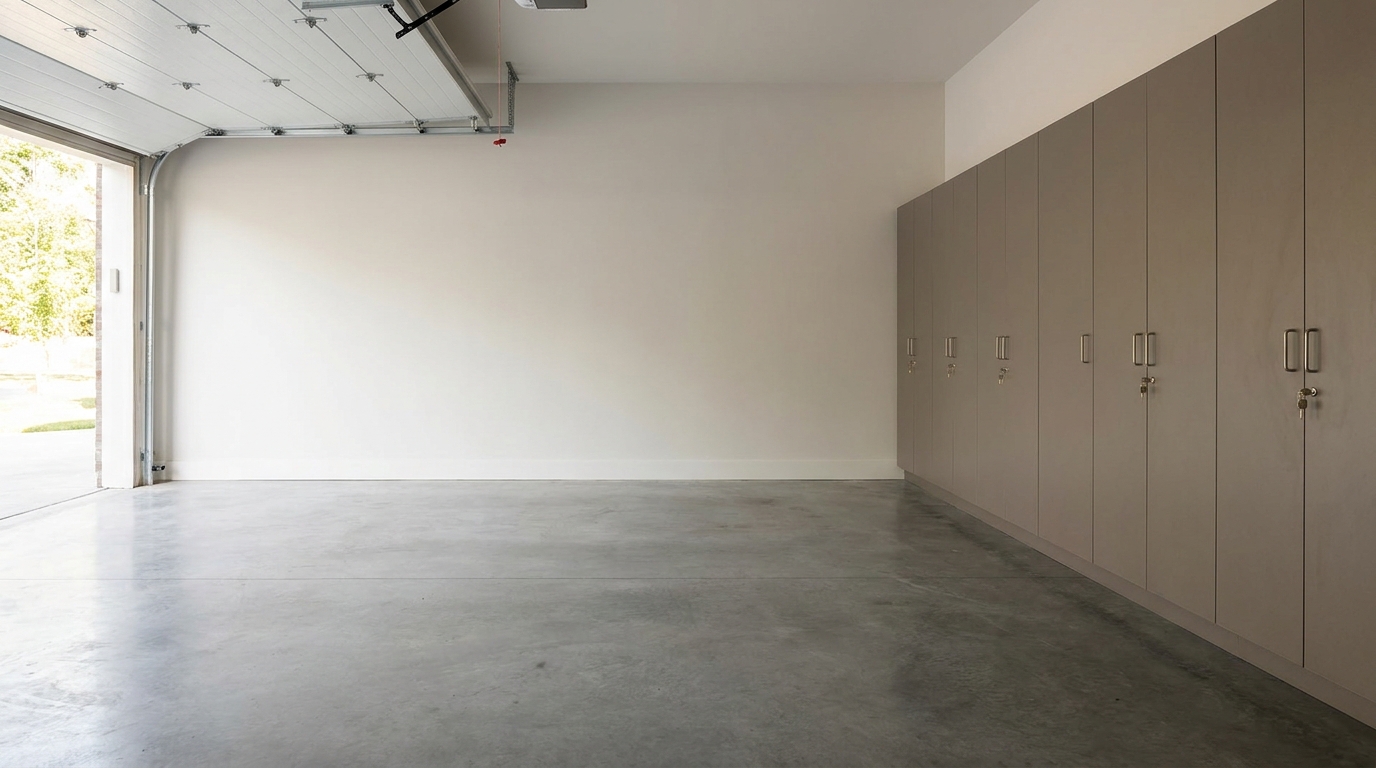
Paint, auto fluids, and cleaners belong in closed, lockable garage cabinets on the wall, not on the floor or an open shelf. A lock plus height keeps kids and pets out, and the parking stalls stay clear for cars.
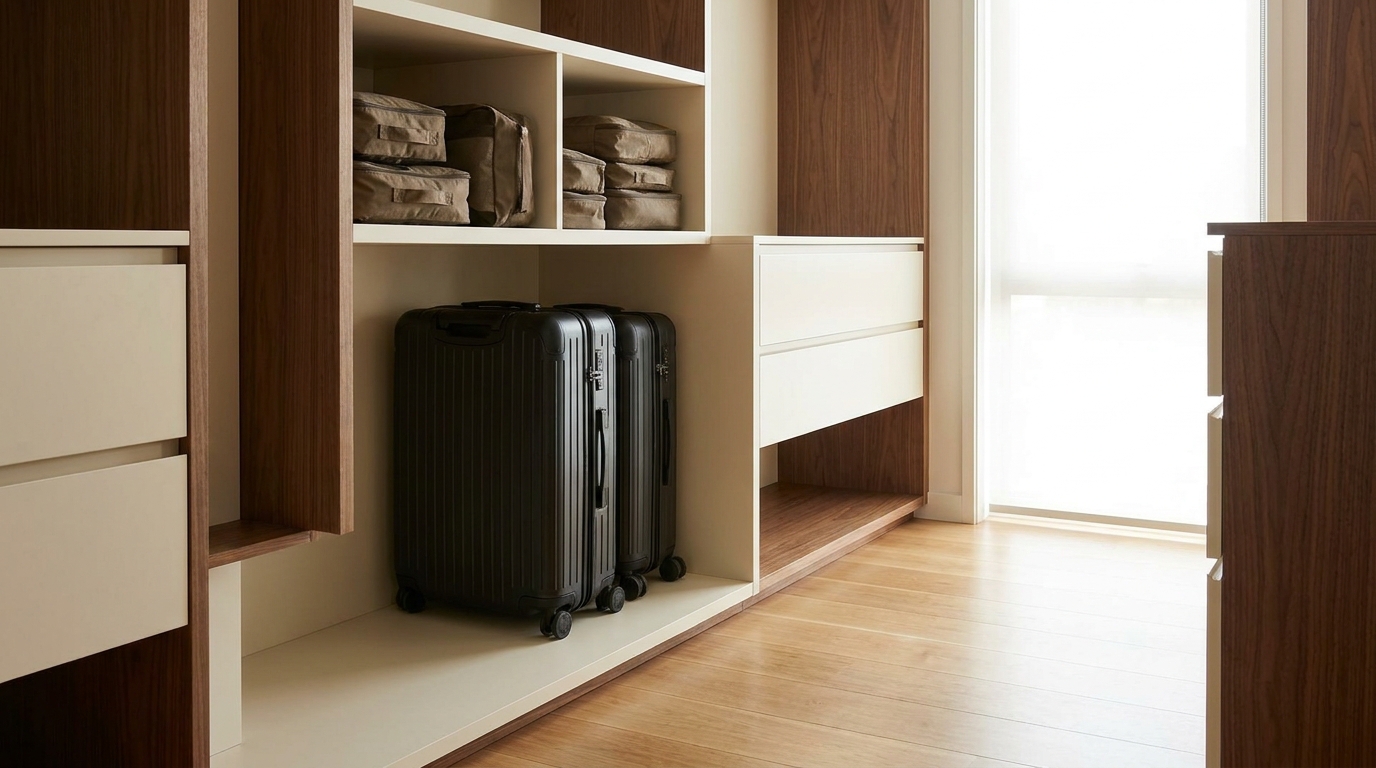
A dedicated master-closet travel bay puts suitcases on packing shelves, stages packing cubes and toiletry kits in cubbies, and keeps the floor clear so packing happens at standing height. Fasten the run to the wall and park the bags you use most often in the 15-to-48-inch reach band.
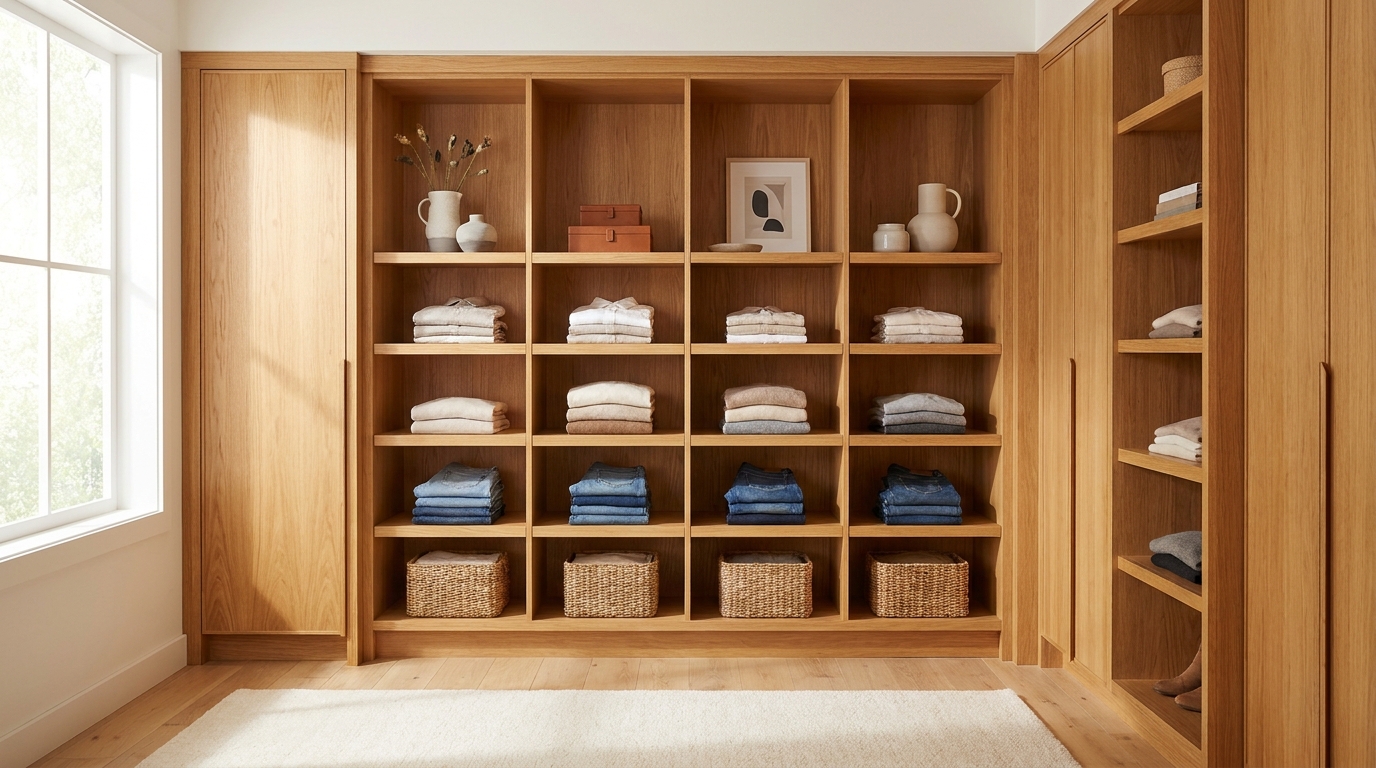
Reach-in closet shelving for folded clothes works when shelves match a short stack and stay about 12 to 16 inches deep, one row only. Park weekday tees and jeans between about 24 and 48 inches so the top item lifts with one hand.
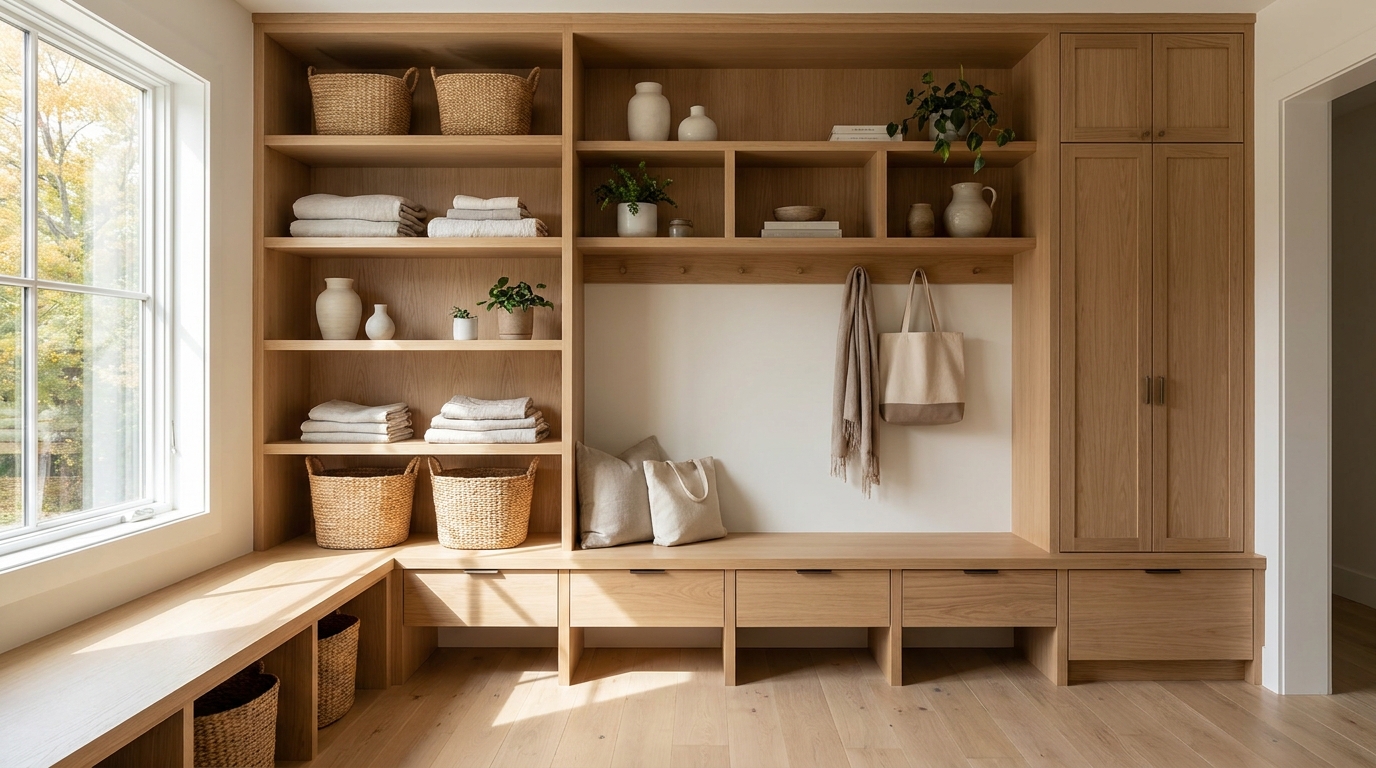
When a house has a front hall and no mudroom, a shallow locker bank, hooks, and a boot tray can still make a working drop zone. Keep the remaining hall about 36 inches clear, put wet jackets on open hooks, and fasten tall lockers to the wall.
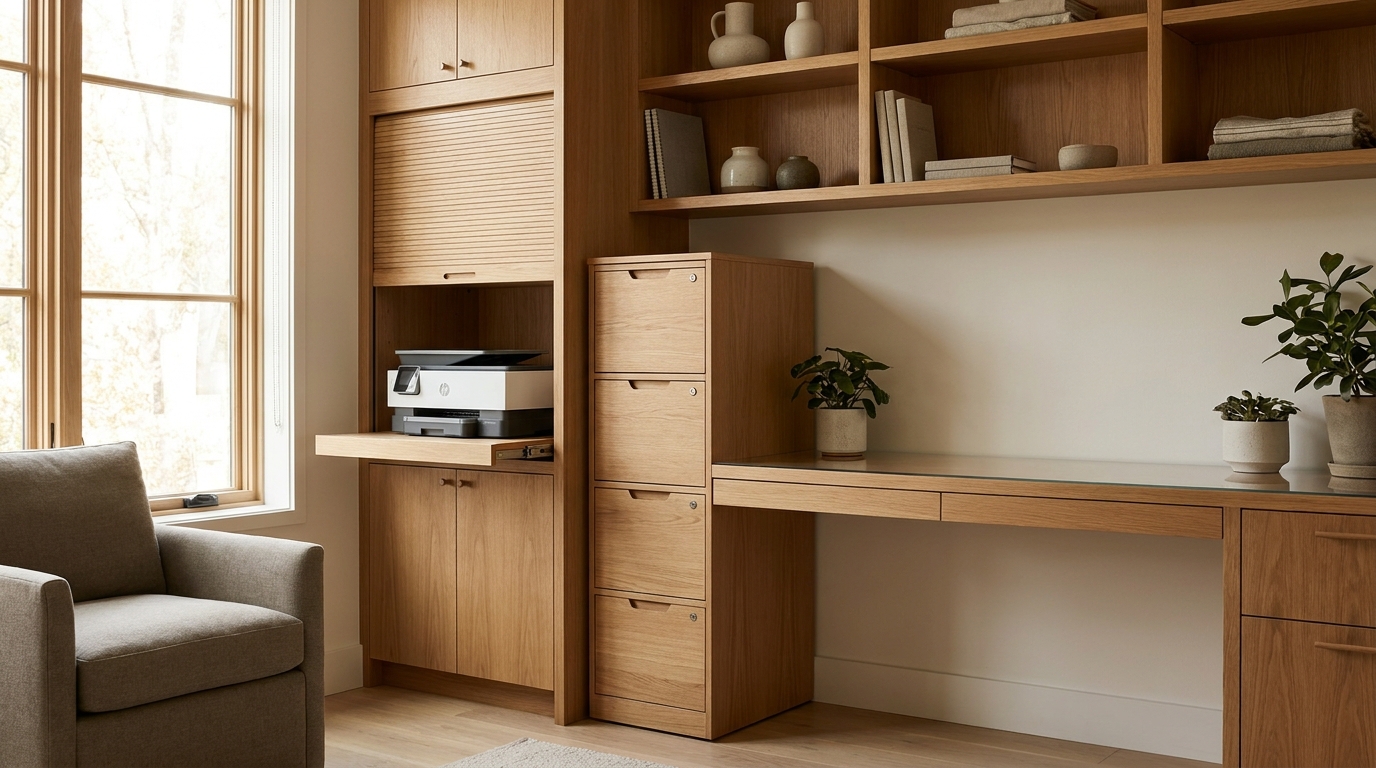
A printer garage and a lockable file tower keep the printer, paper, and records off the desk so the work surface stays a keyboard and mouse. Close the garage when idle, ventilate it while printing, lock identity documents, and anchor a tall file unit to the wall.
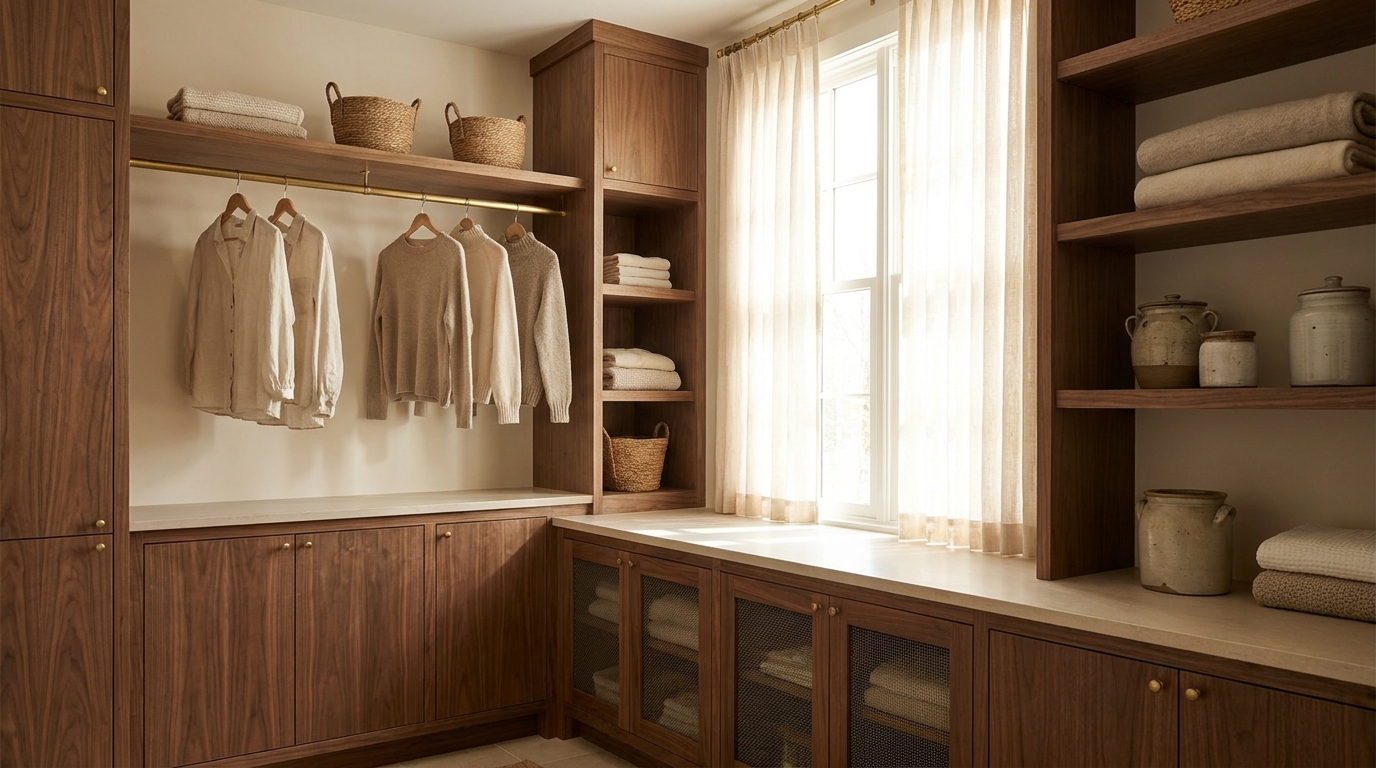
A planned hang rod or open cabinet in the laundry gives sweaters and silk a place to air-dry without blocking the door. Keep the bay ventilated, follow care labels, and keep humidity in check.
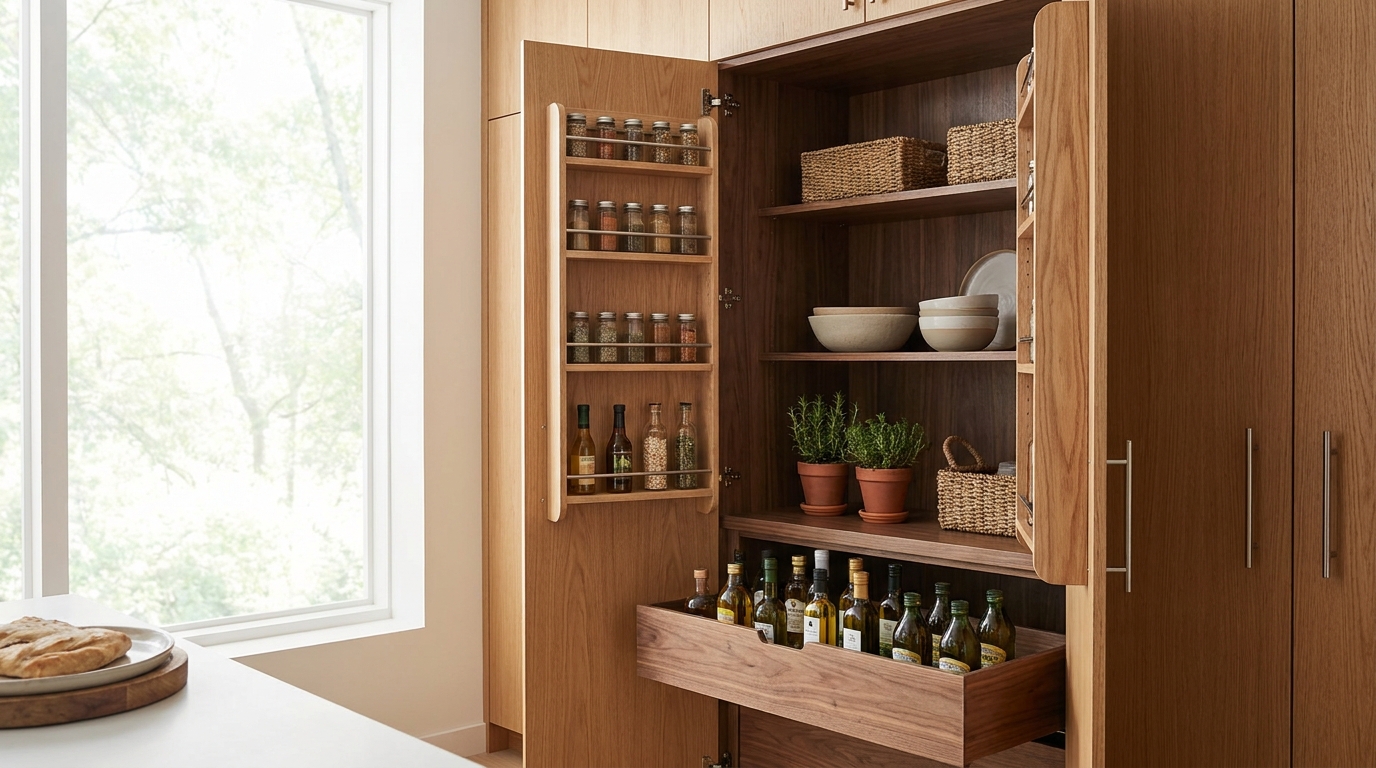
Spices and cooking oils belong in a one-layer pull-out or shallow drawer at cooking height, closed against heat and light. Keep homemade garlic oil in the fridge, not in the pantry drawer.
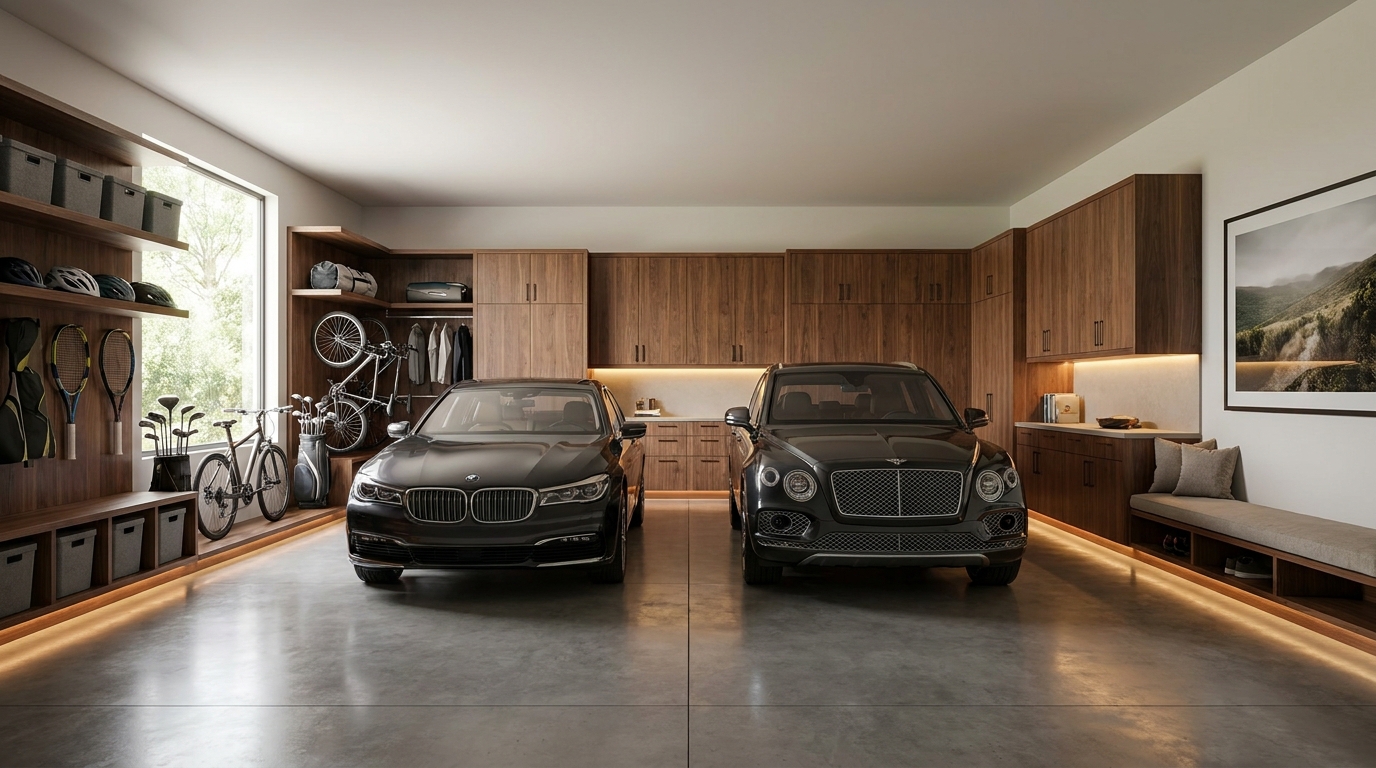
Bikes, golf bags, bats, and balls belong on dedicated wall racks so both parking stalls stay empty. Size the bays first, keep the walk to the house door clear, and keep fuels and chemicals off the sports wall.
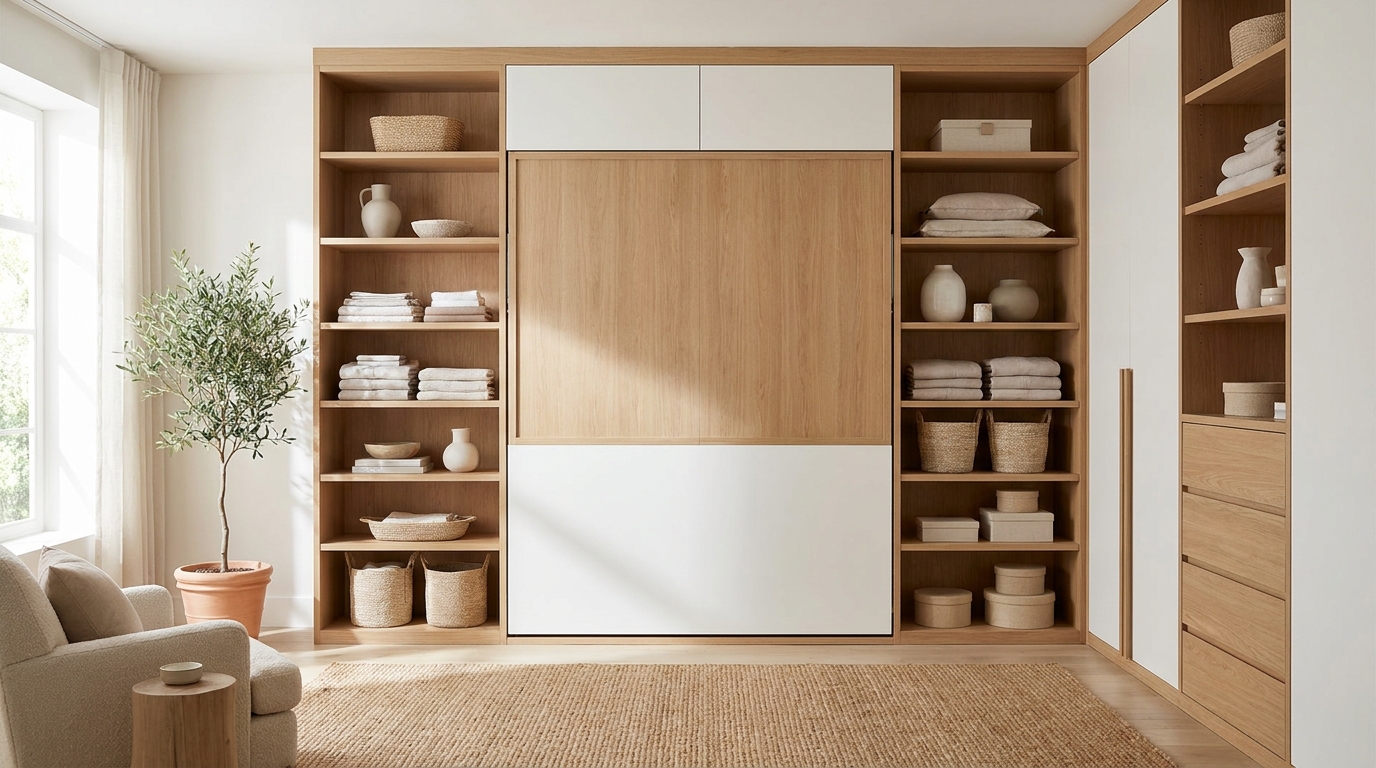
Side cabinets next to a wall bed should hold the guest sleep kit so a bonus room can stay a den by day. Plan a clear walk when the mattress is down, keep everyday linens in easy reach, and fasten tall cases to the wall.
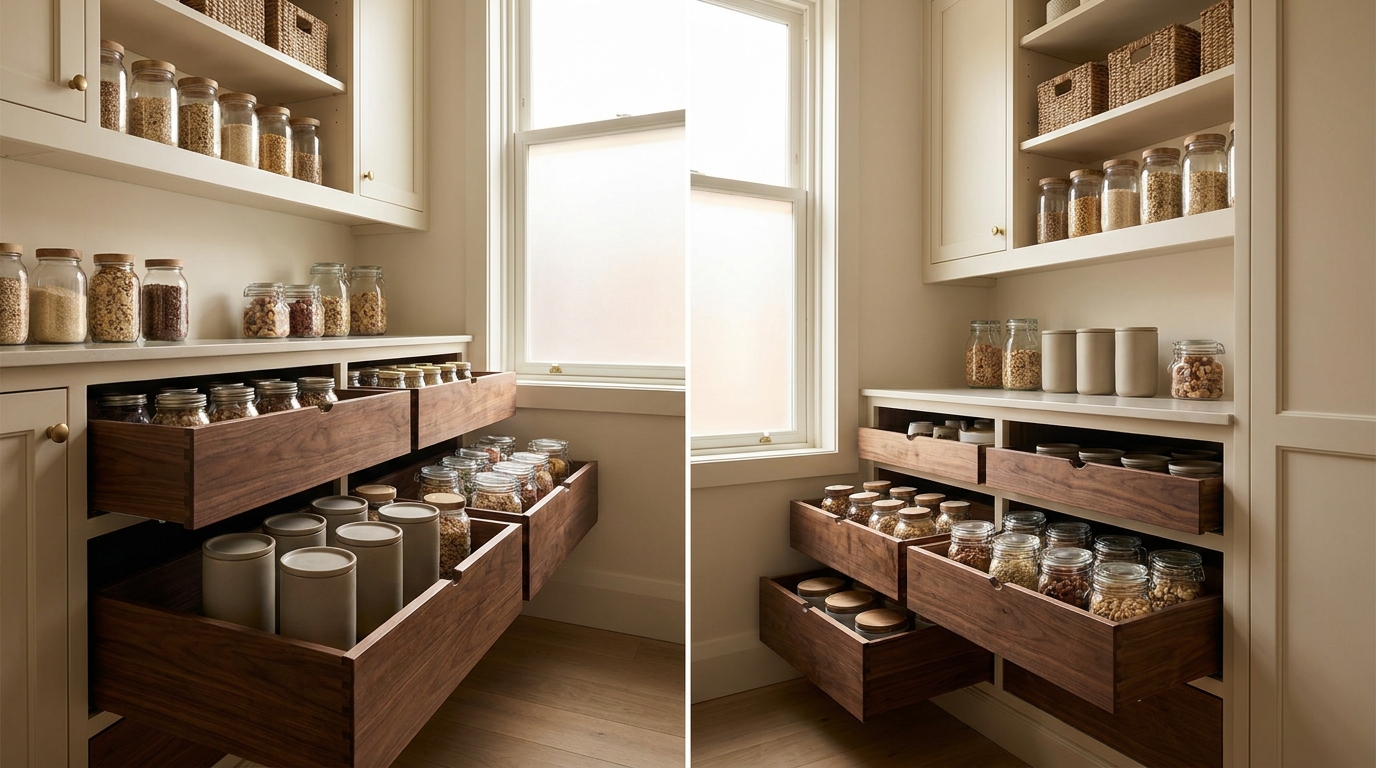
Bulk pantry storage is the deep bay that absorbs a warehouse-club run without burying last month's cans. Full-extension drawers, can risers, and a weekday-front zone make first-in, first-out rotation visible.
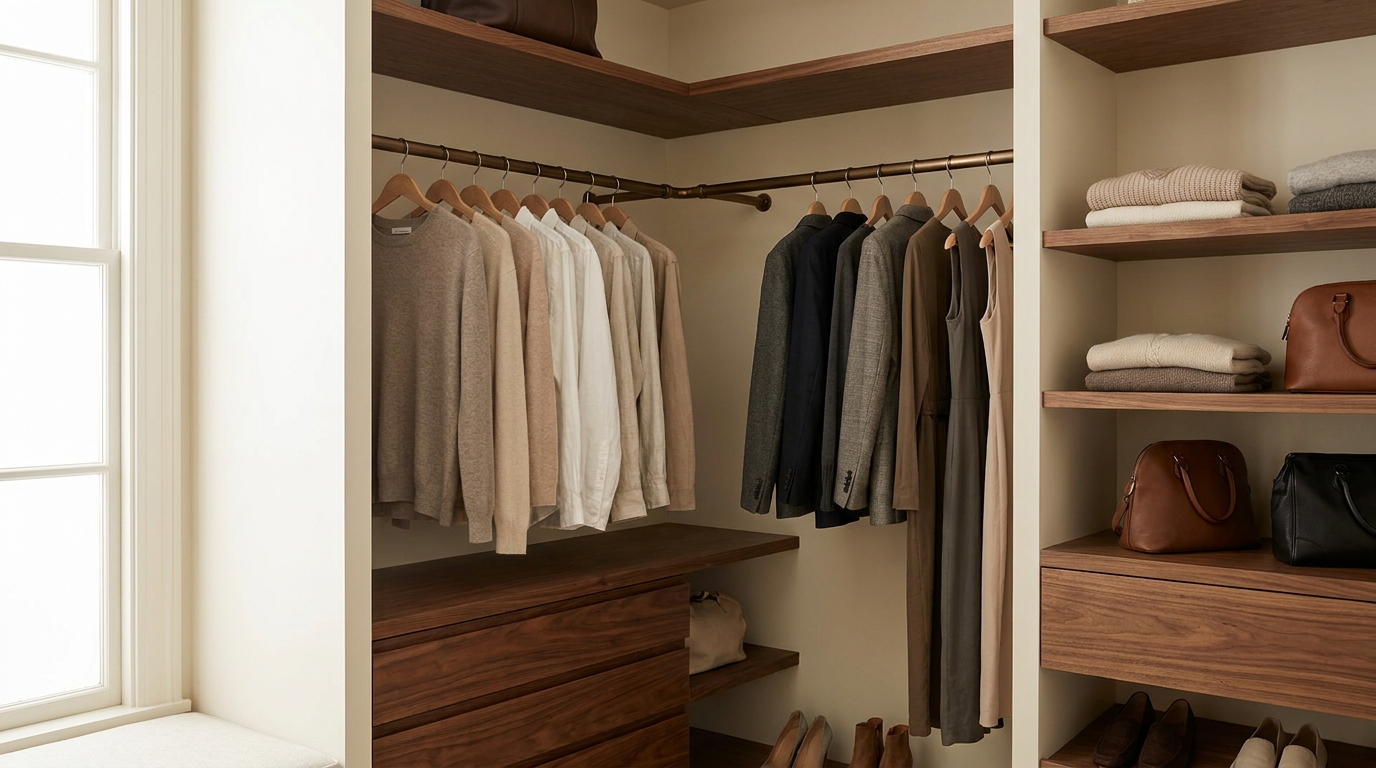
Corner closet storage is the 90-degree leftover inside a rectangular reach-in or walk-in that a straight rod cannot serve. Stop hanging short of the inner corner, then use pie-cut shelves and pull-outs so you can see, grasp, and put items back.
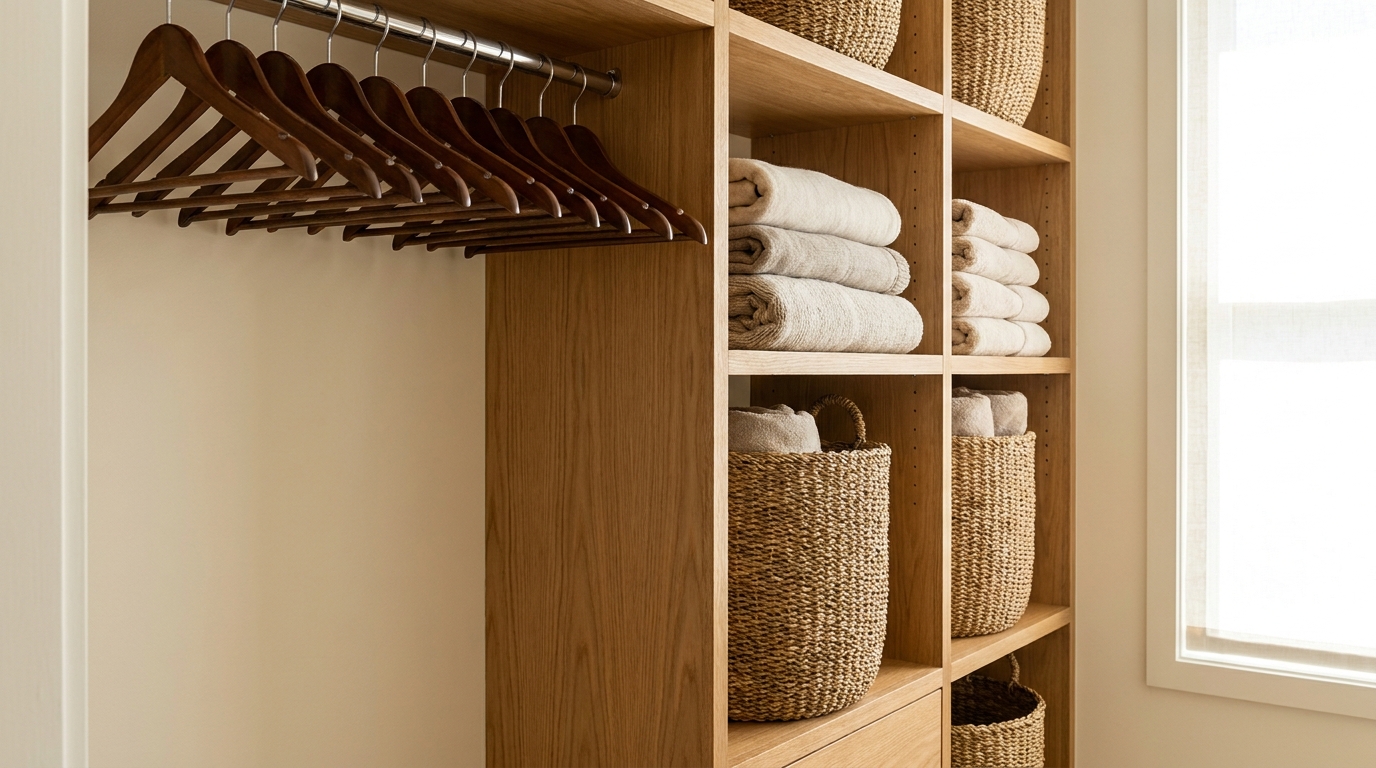
Good guest closet storage splits a spare-room closet into two jobs: a hanging bay for overnight bags and empty hangers, and a labeled overflow zone for extra linens. That keeps holiday sheets and luggage off the guest bed.
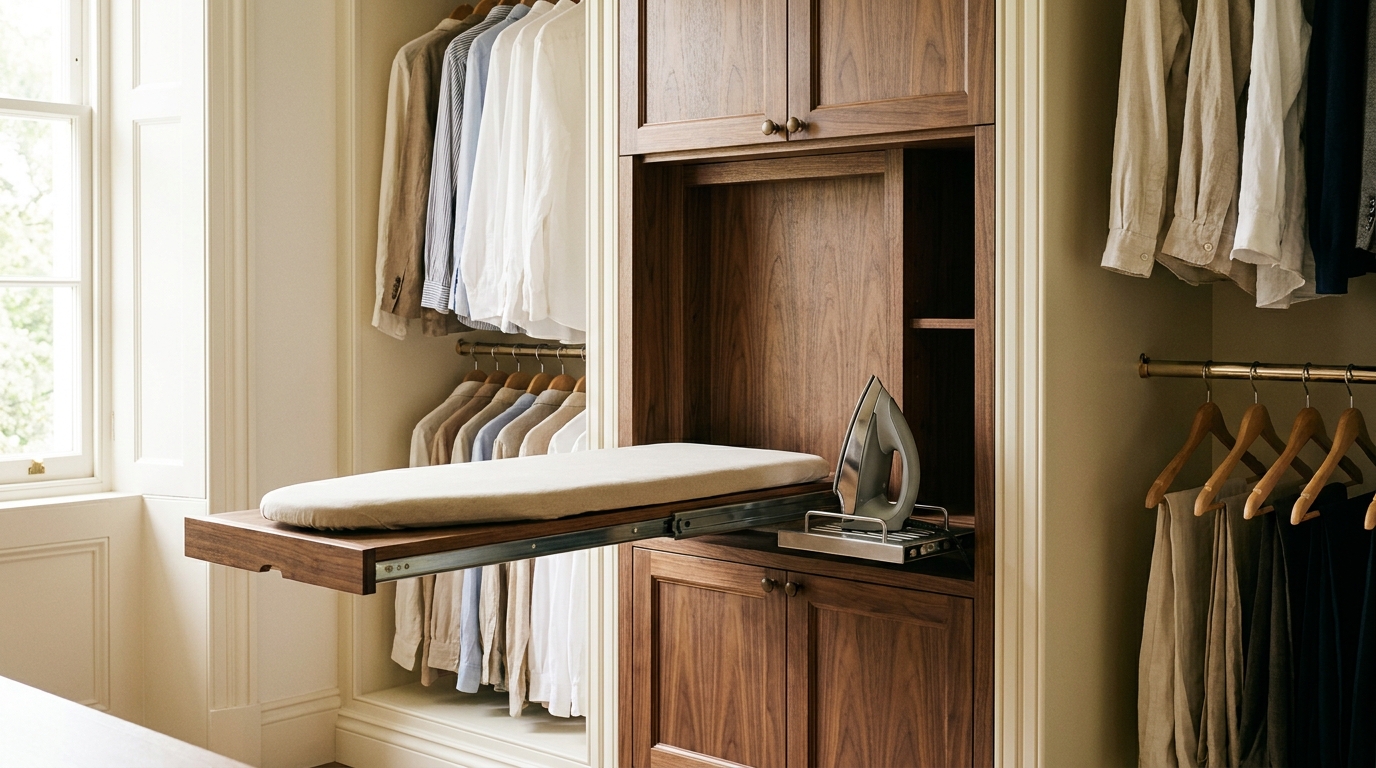
A closet ironing station is a fold-away press bay in the wardrobe: a pull-out or fold-down board, a heat-safe rest, a steamer hook, and a hang-to-cool rod. The bay parks vertically so it does not take hanging space from jackets, dresses, and shirts.
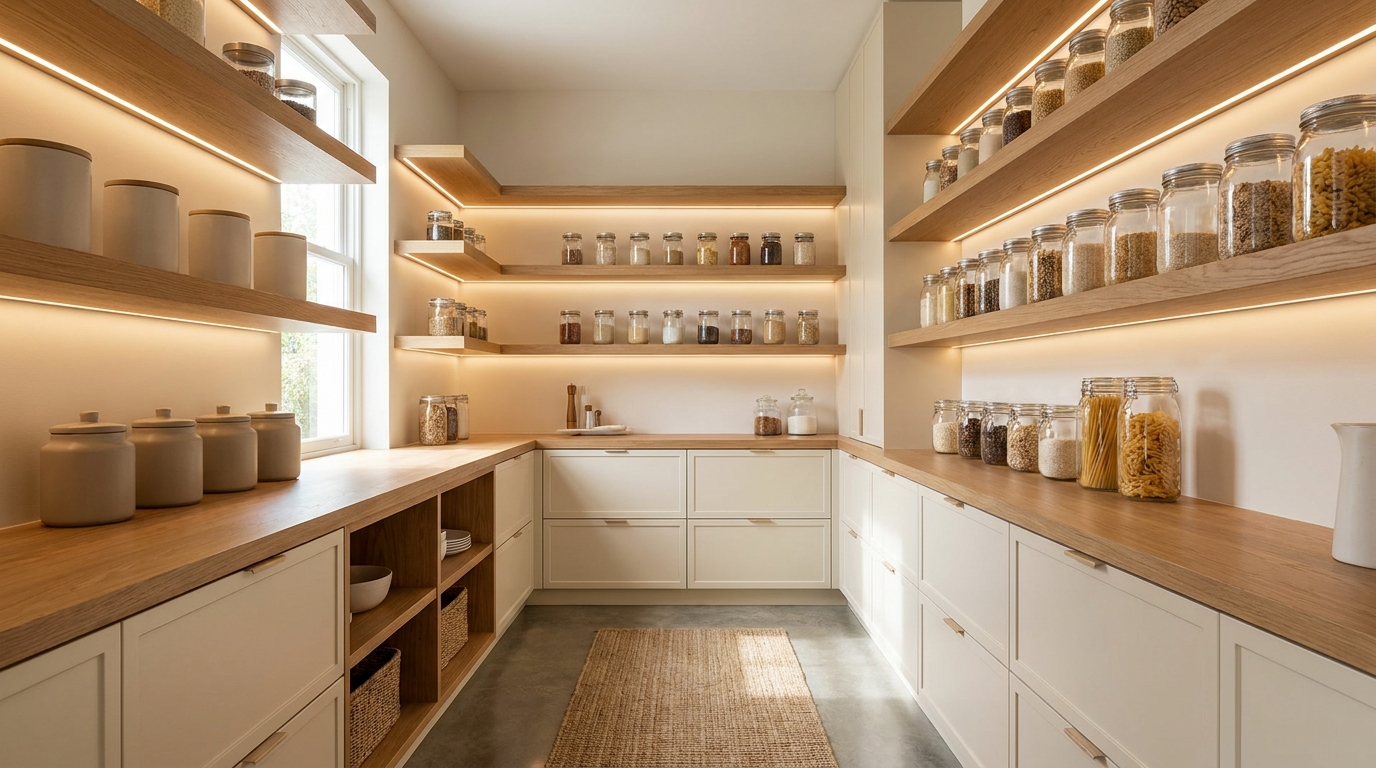
Good pantry lighting puts a clean, even wash on the faces of cans, boxes, and jars so you can read dates and labels without pulling every item out. Layered LED strips at the front of each shelf, a door-activated switch, and shielded pull-out lights fix the dark corners that a single ceiling bulb cannot reach.

A park-and-project garage keeps a real parking stall and still gives you a work surface, vise space, and closed drawers. Tape the car's envelope first, then run garage workbench storage along a side wall so the stall, door swing, and garage-door path stay clear.
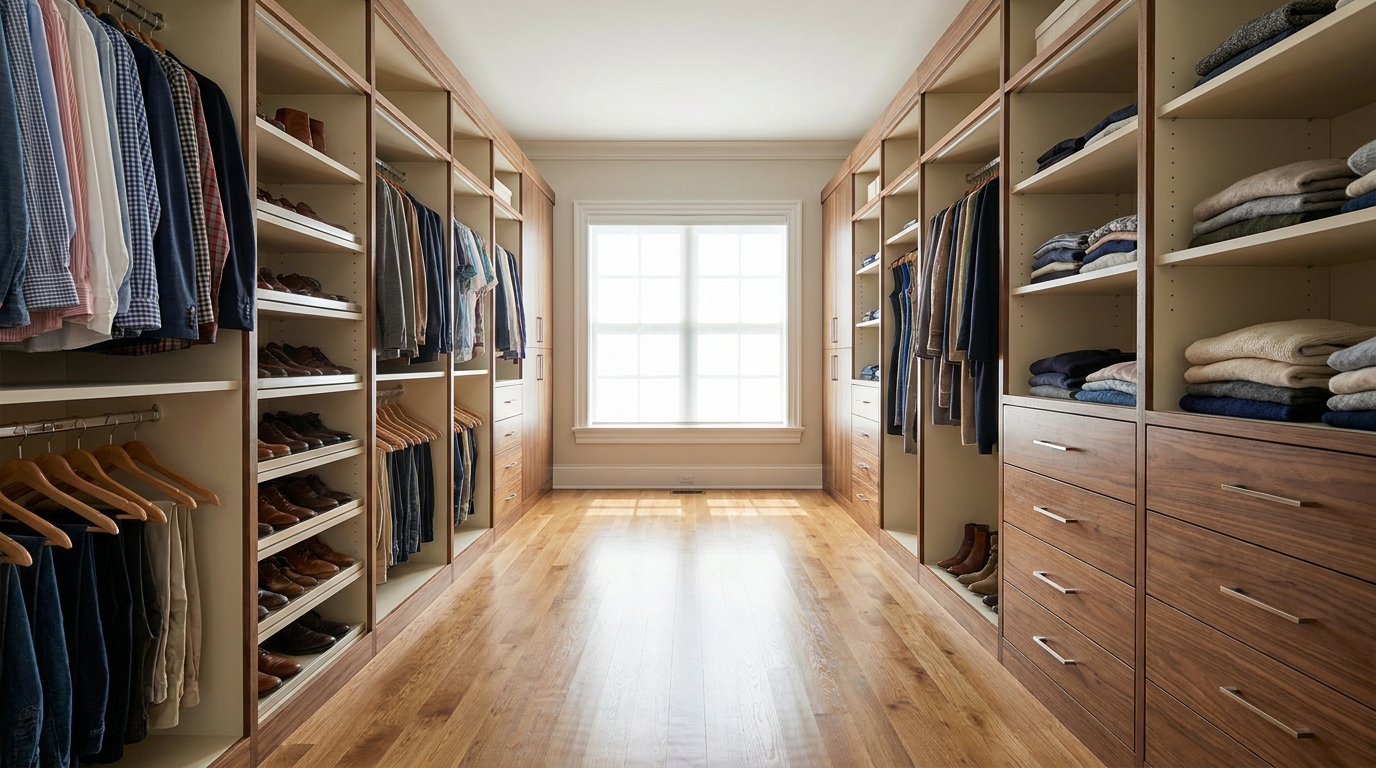
Walk-in closet clearance is leftover empty path after hanging clothes, open drawers, and parked doors. For two people dressing at once, plan 48 inches of remaining path; 42 inches suits one person at the drawers, and 36 inches is a one-person walkway analog, not a closet code.
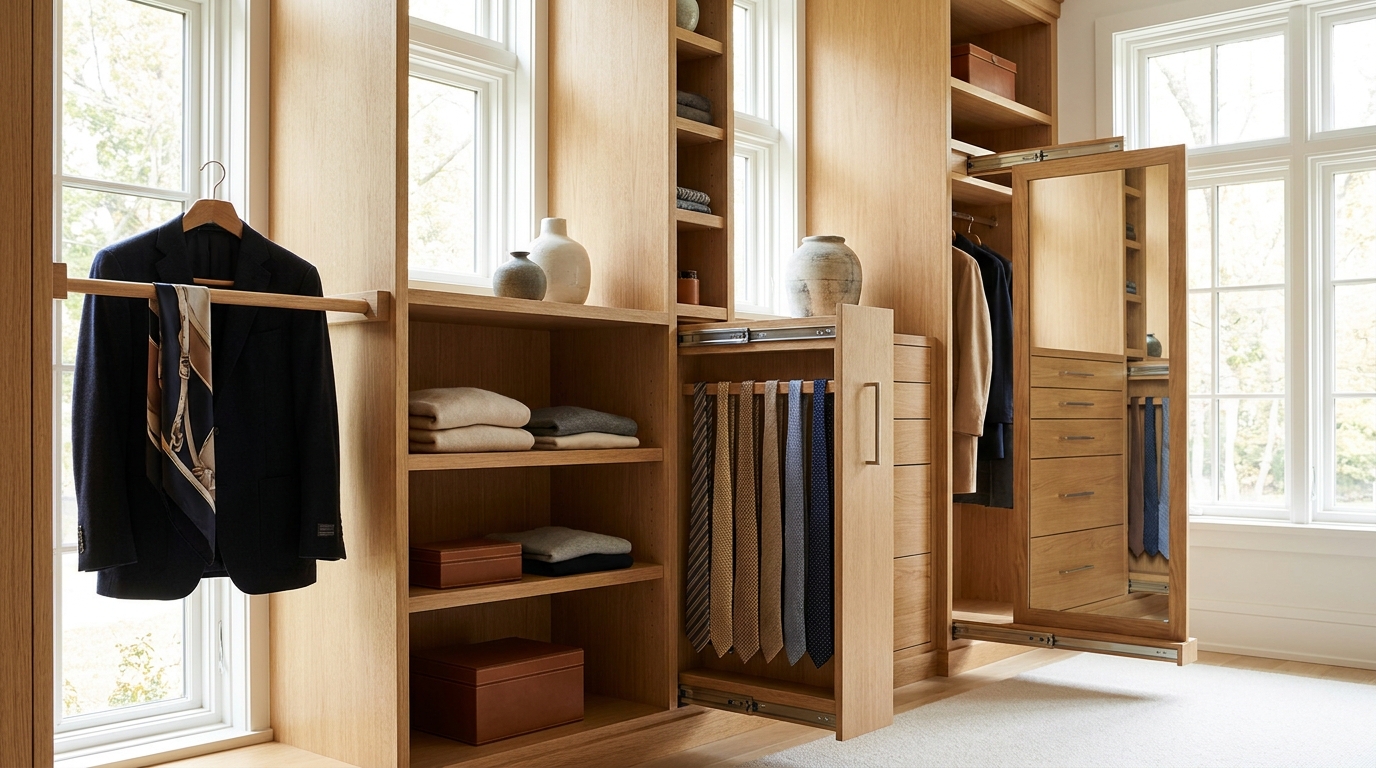
A valet rod, a tie or belt pull-out, and a pull-out mirror are the custom closet accessories that cut morning hunting. Stage the outfit the night before, scan the full row, and check the look without leaving the closet.
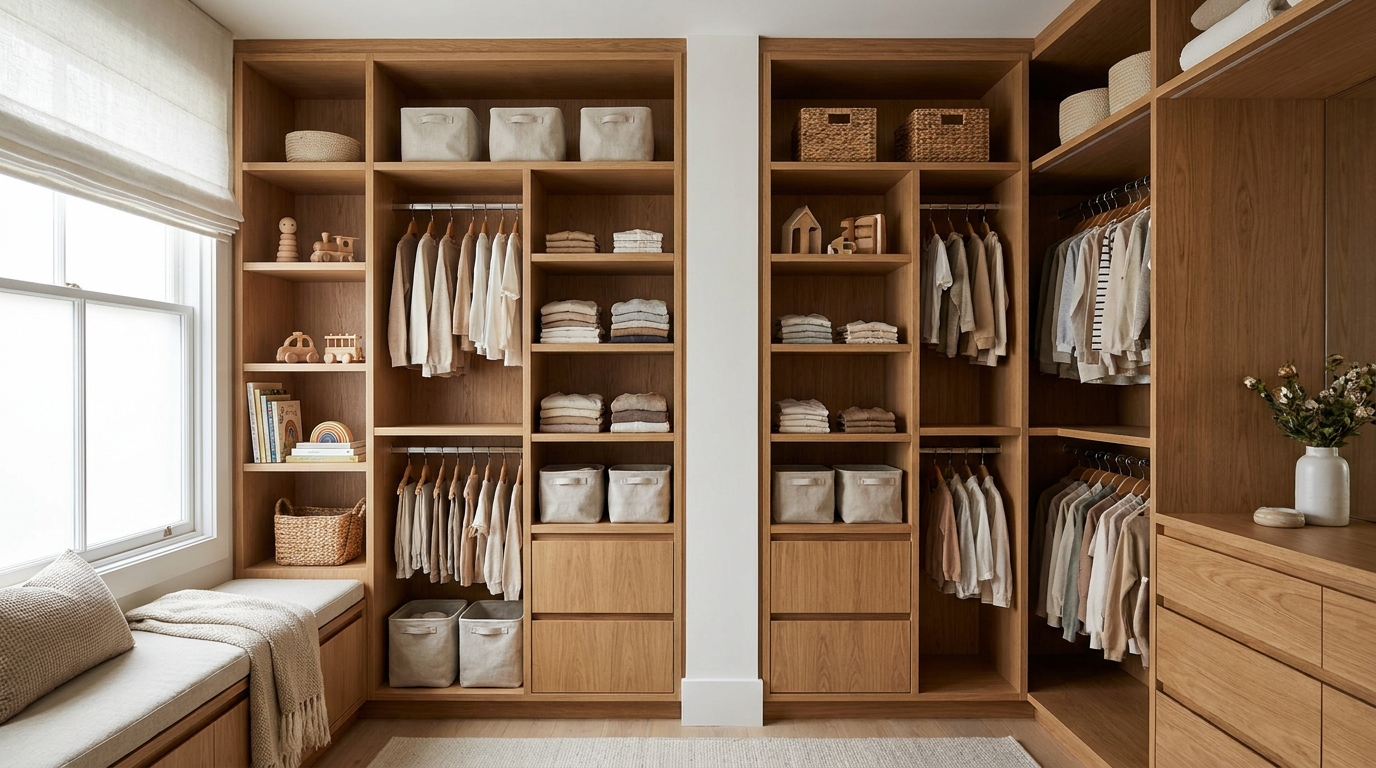
A shared kids closet works when two children each get a true half of the same opening. Split hanging, labeled drawers, and adjustable shelves so each child has a place of their own that can change as they grow.
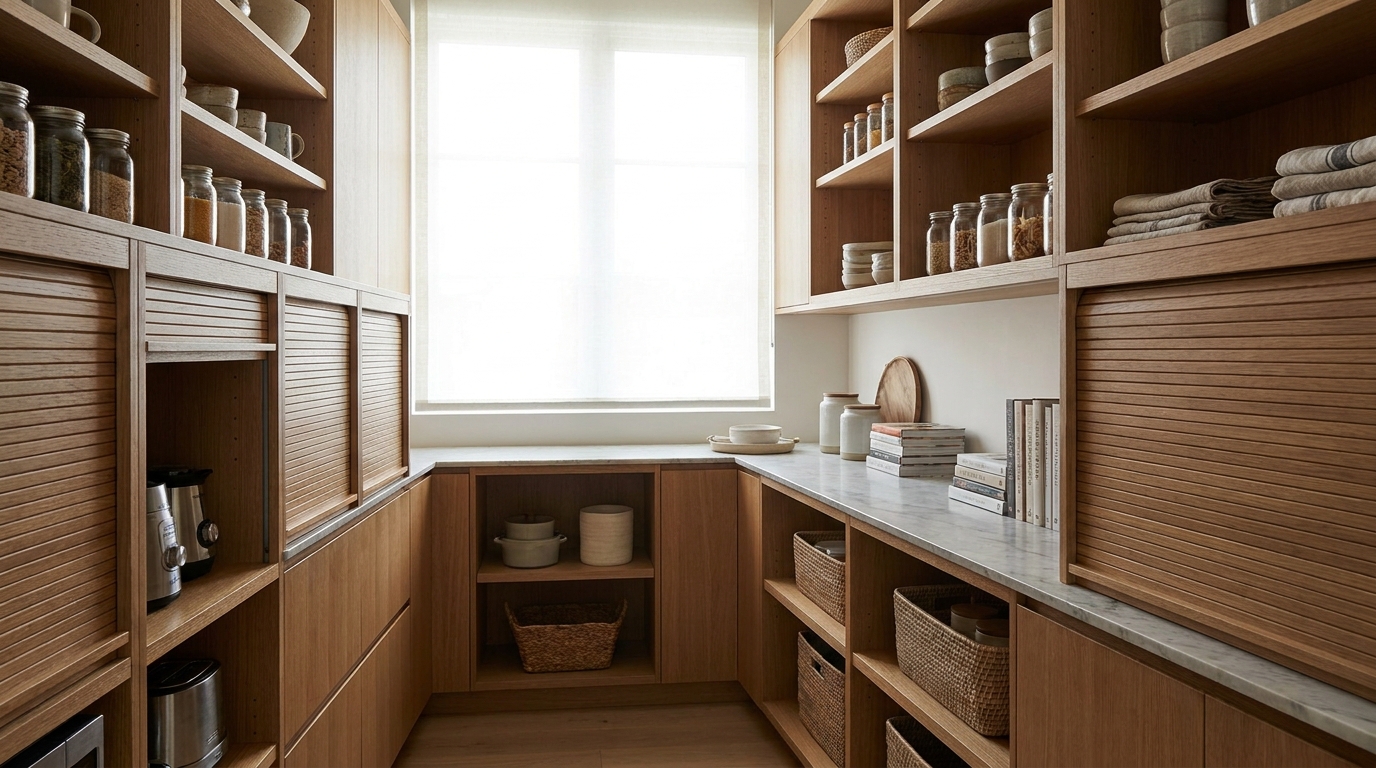
Pantry appliance storage is a closed cabinet plus a counter-height work bay, so mixers, coffee makers, and other small appliances leave the kitchen island. Park the machines in the pantry, work on the bay, then unplug and close the door.
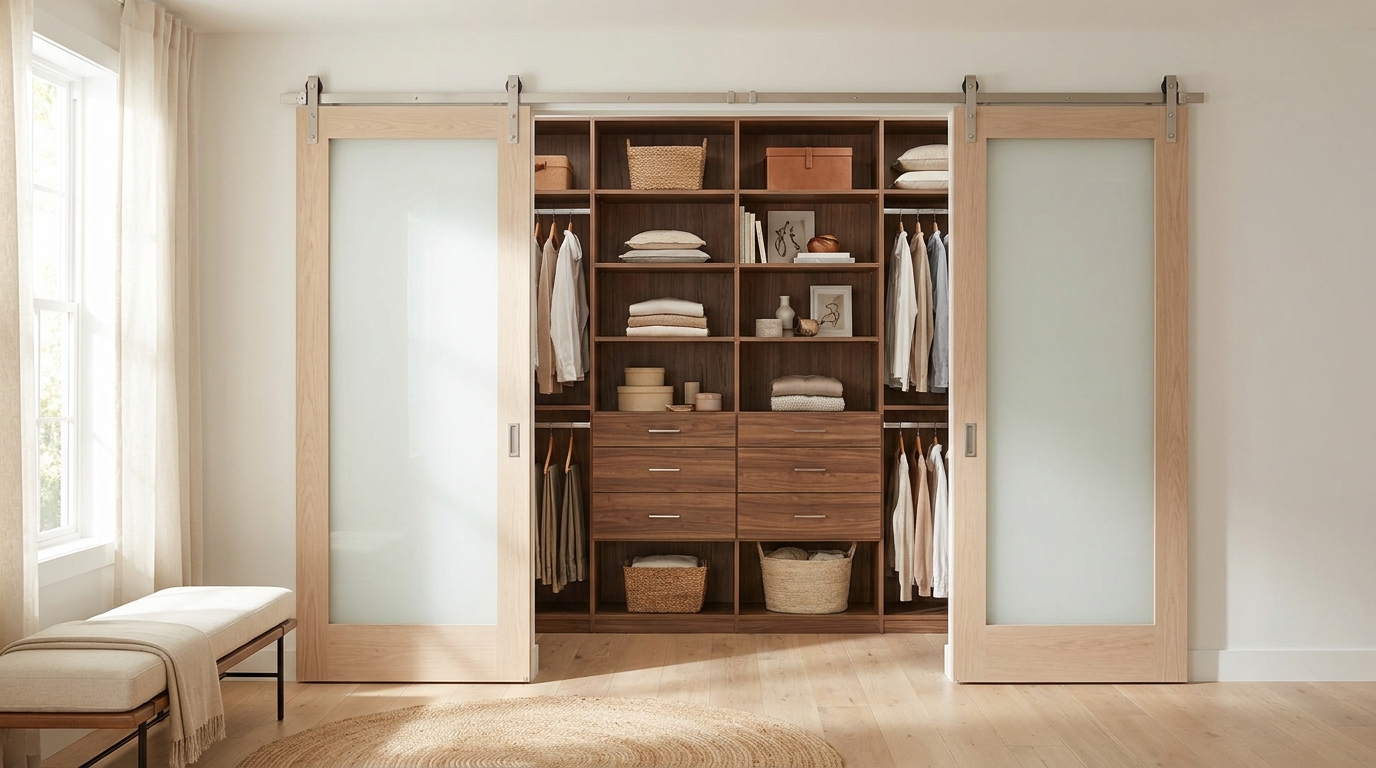
Reach-in closet doors decide how much of the opening you can use and how much bedroom floor you give up. Bypass leaves one panel over half the closet, hinged doors swing into the room, and pocket doors tuck the leaf into the wall.
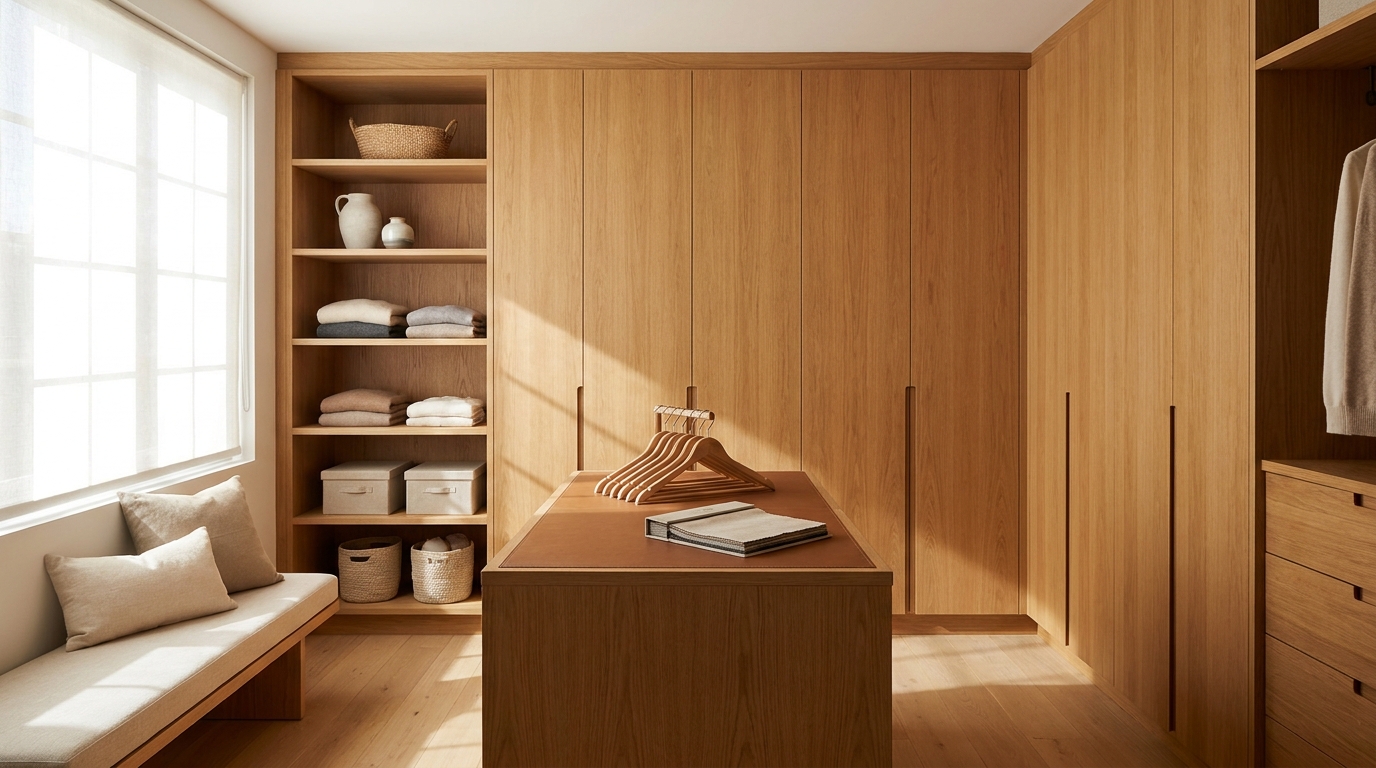
A custom closet design process starts with a free consult and in-home measure, then a 3D layout and finishes you can touch before manufacturing. Get the work, materials, date, and price in writing before anyone orders panels.
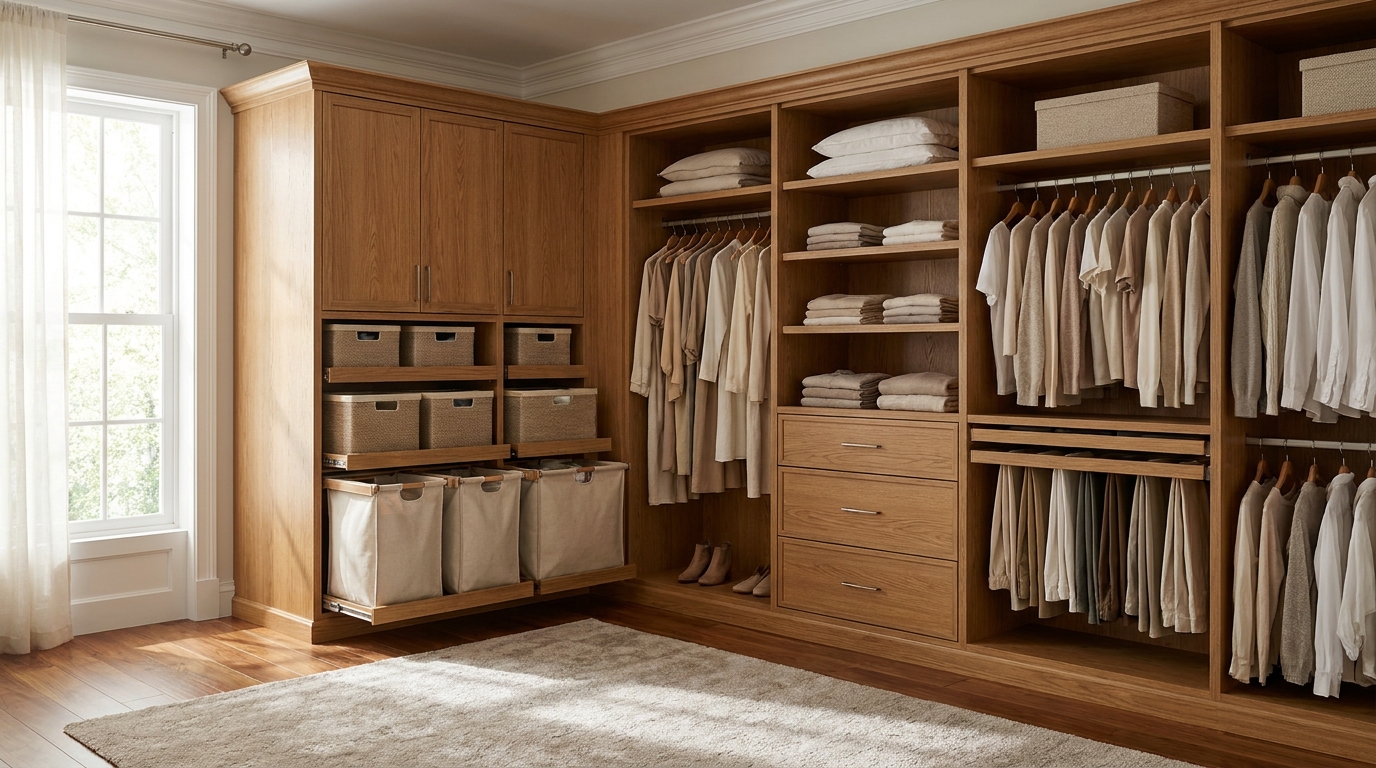
Dedicated closet hamper storage that splits lights, darks, and delicates into ventilated pull-outs, and sits on a short path to the washer, gives dirty clothes a place to land. Dry damp pieces before they drop, and match the closet sort to the laundry-room bins.
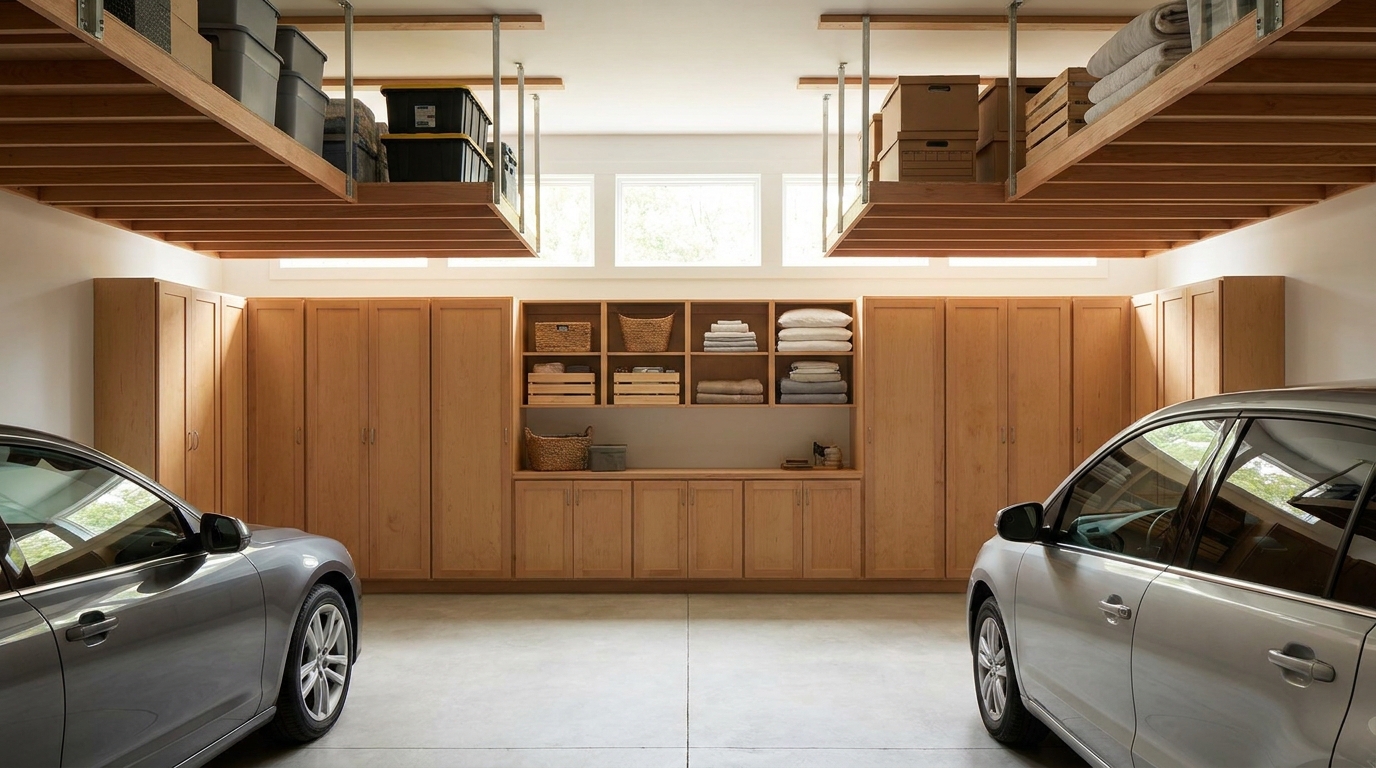
Charlotte-area homeowners can use garage ceiling storage for holiday bins and off-season gear without crowding parking bays if the rack or cabinet stays outside the door path, above the tallest vehicle, and clear of lights and openers. Open racks suit light, lidded bins; closed cabinets contain dusty or odd-shaped items.
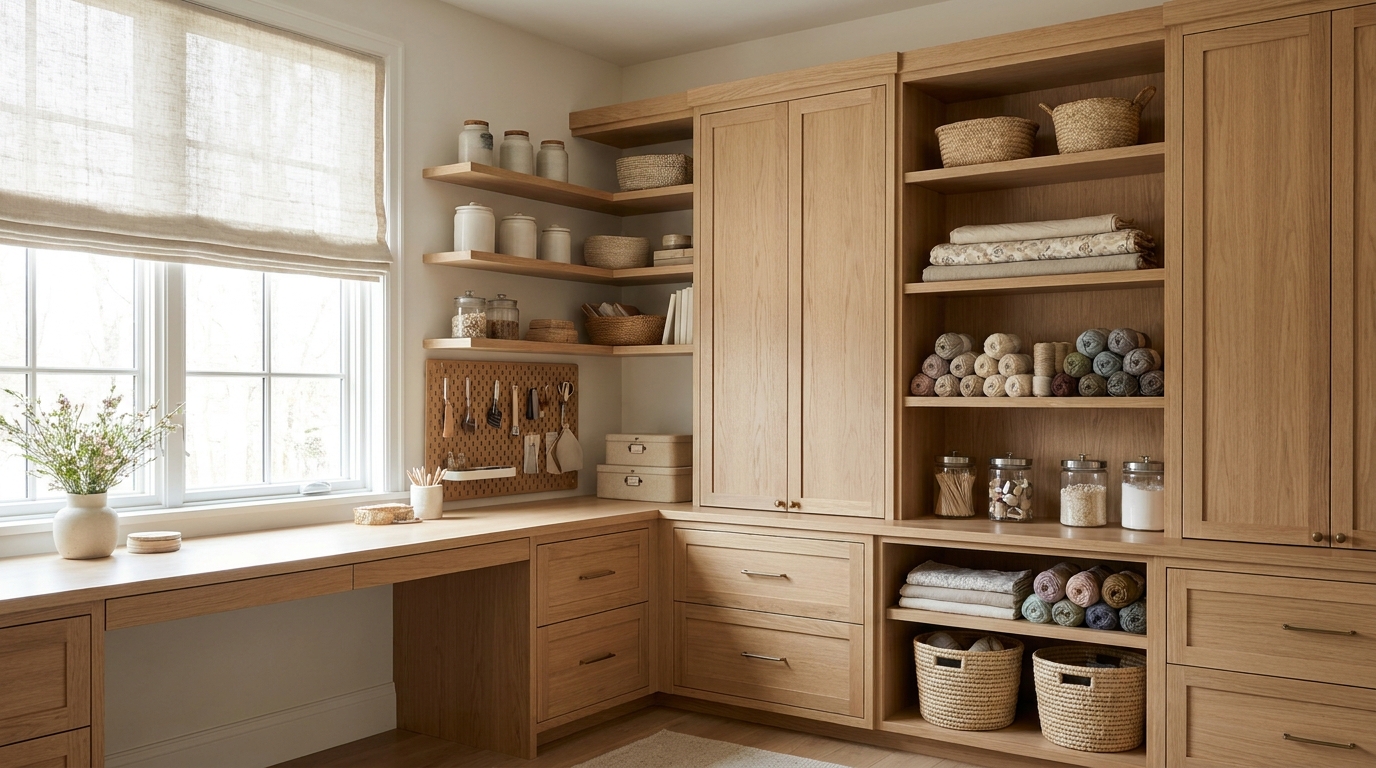
A craft room stays usable when paper, tools, fabric, and kits live in closed, labeled homes and the work surface holds only the project in front of you. Built-in cabinets, drawers, and a lockable box keep inventory off the table.
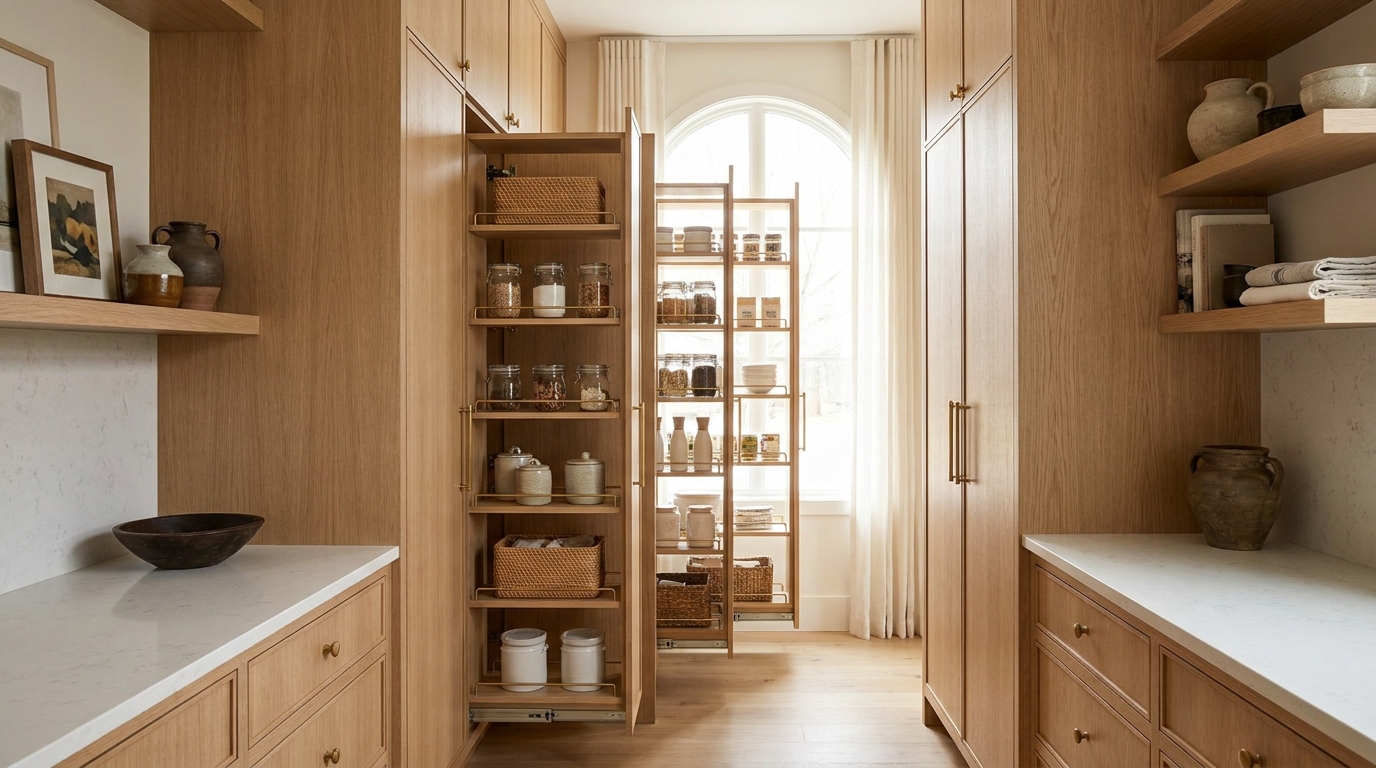
A tall pantry pull-out in a 6- to 12-inch bay can hold a working week of dry goods you can actually see. Treat it as one-deep working inventory, not as a walk-in in disguise.
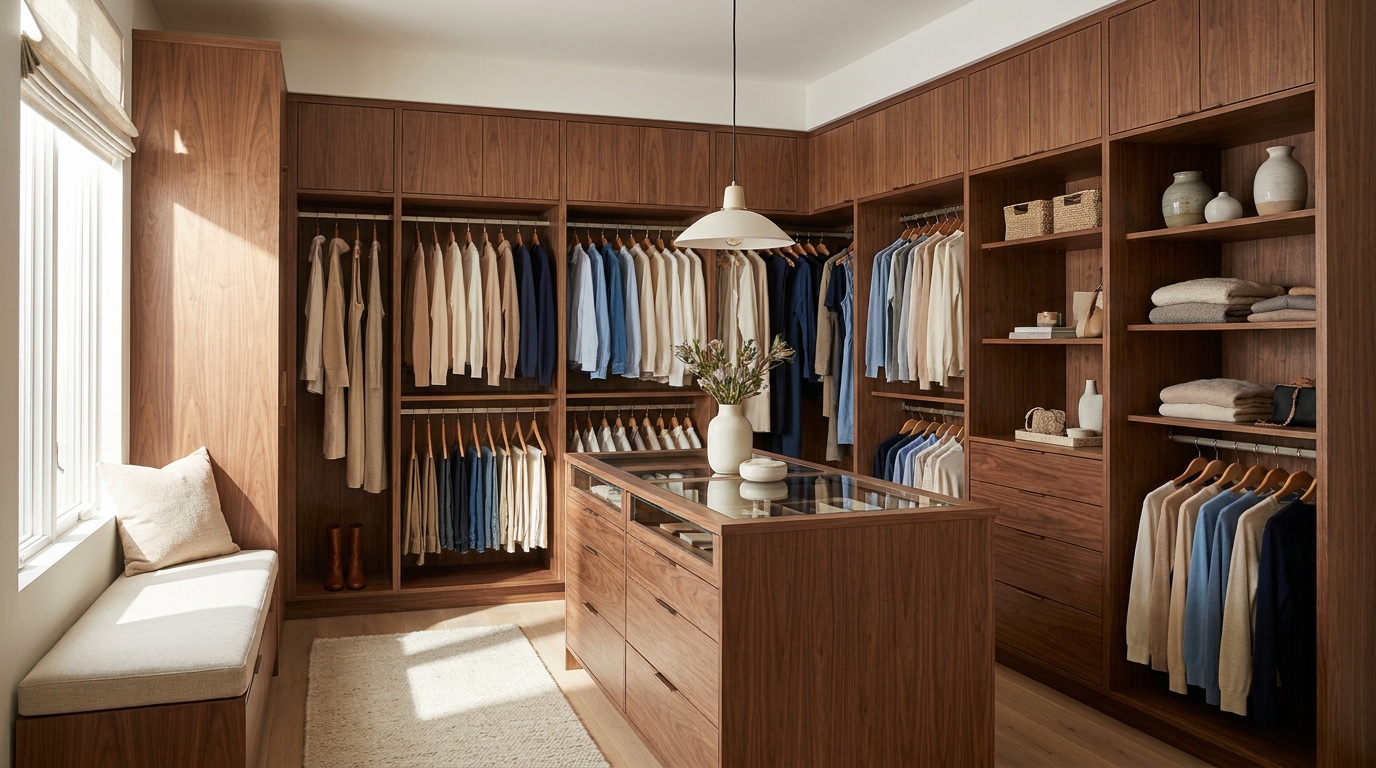
Closet hanging zones work when they match the clothes you actually hang. Count shirts, jackets, trousers, and long garments first, then split double-hang from long-hang so hems clear the floor and the rod above.
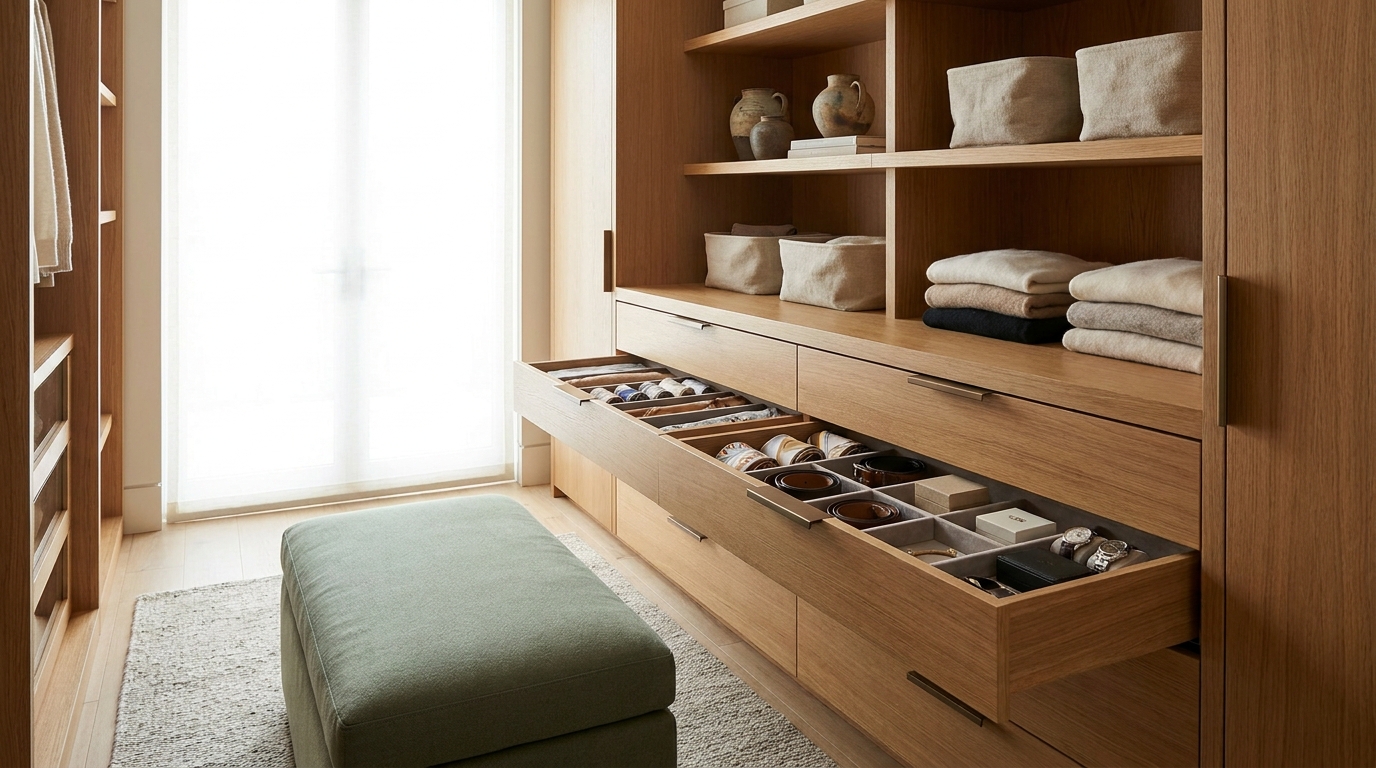
Custom closet drawers keep jewelry, socks, underwear, and chargers in a closed box you can scan in one layer. Match tray cells and drawer height to what you actually own.
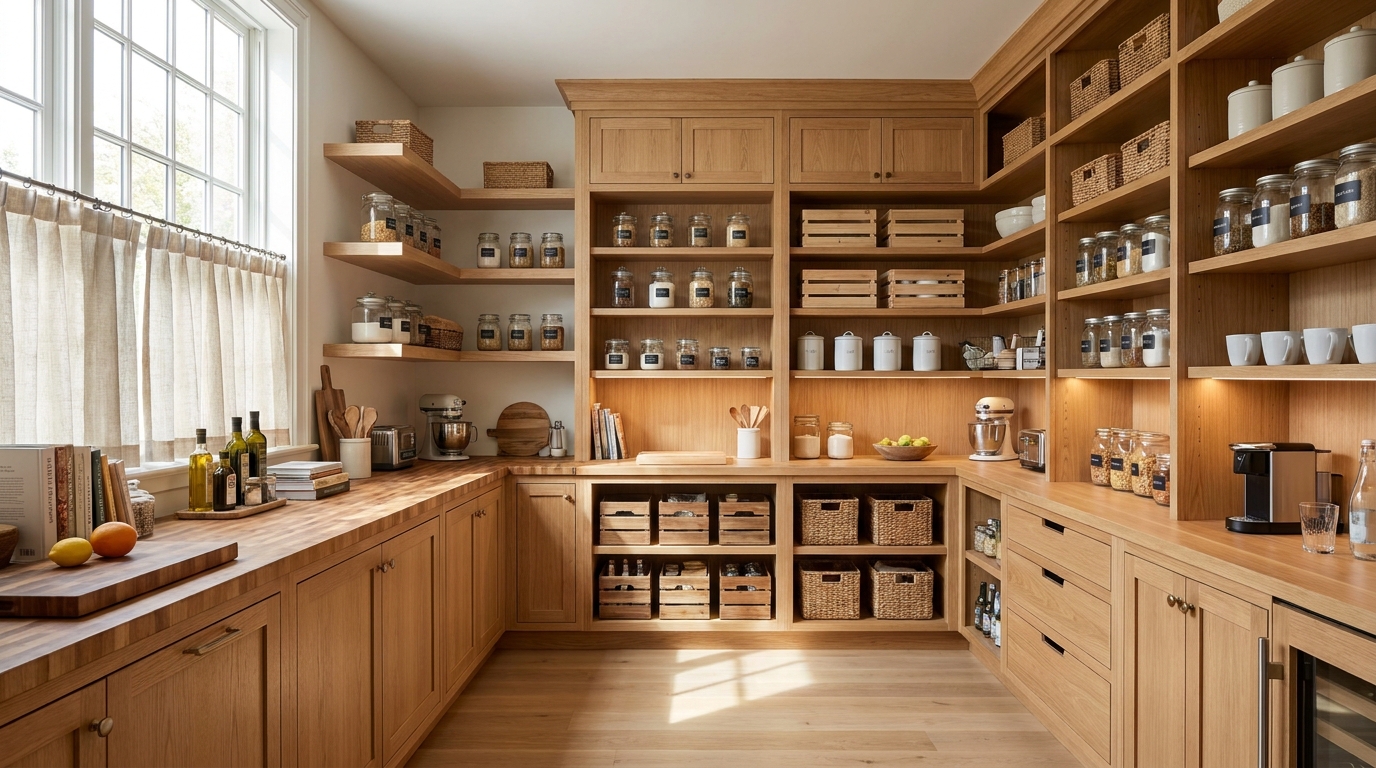
A family pantry cooks faster when it is zoned around real meals: weeknight staples at adult reach, baking in its own run, and a kid-height snack band that is food only. Overflow and bulk stay up high or in a deep pull-out so they do not block dinner.
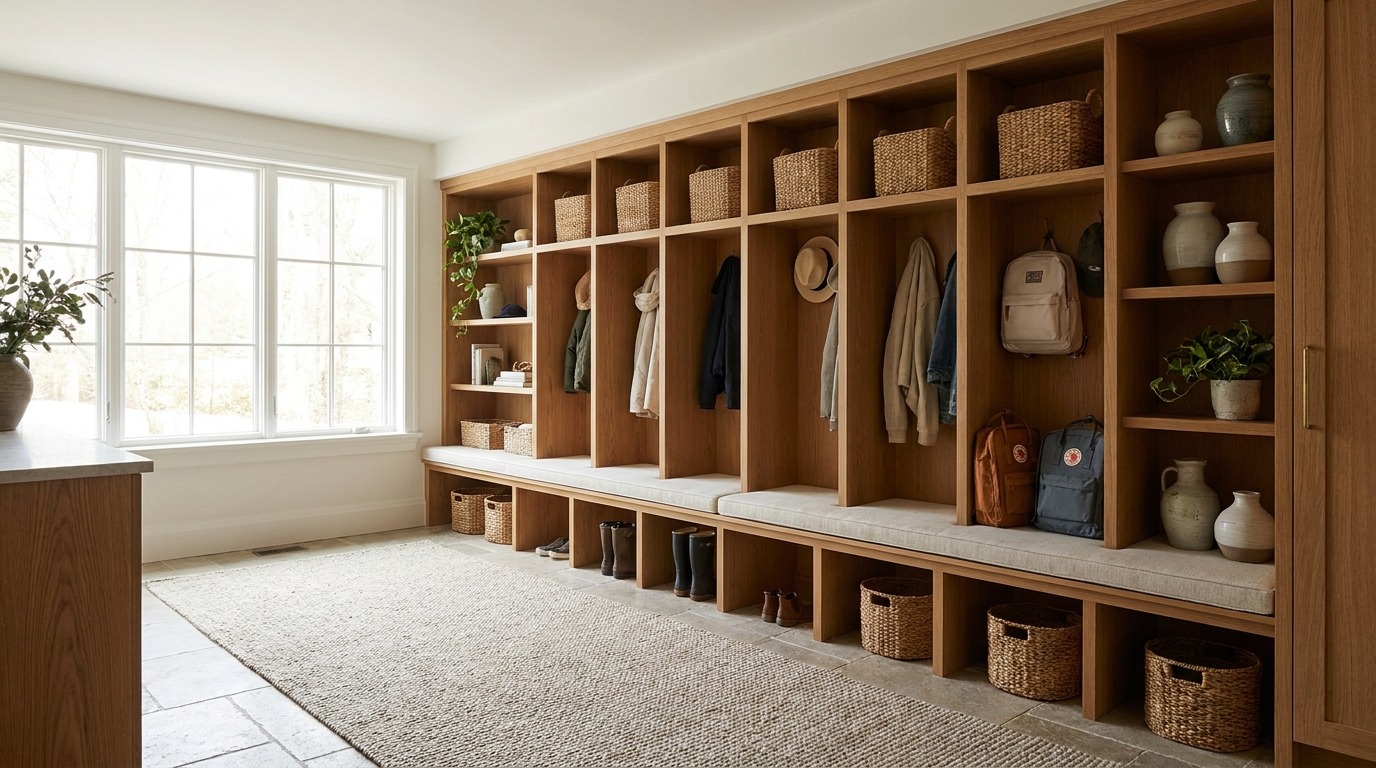
Assigned mudroom cubbies give each person a labeled slot for dry daily gear. Wet jackets and boots go to a shared drying zone with airflow and a boot tray so they do not soak the backpacks next door.
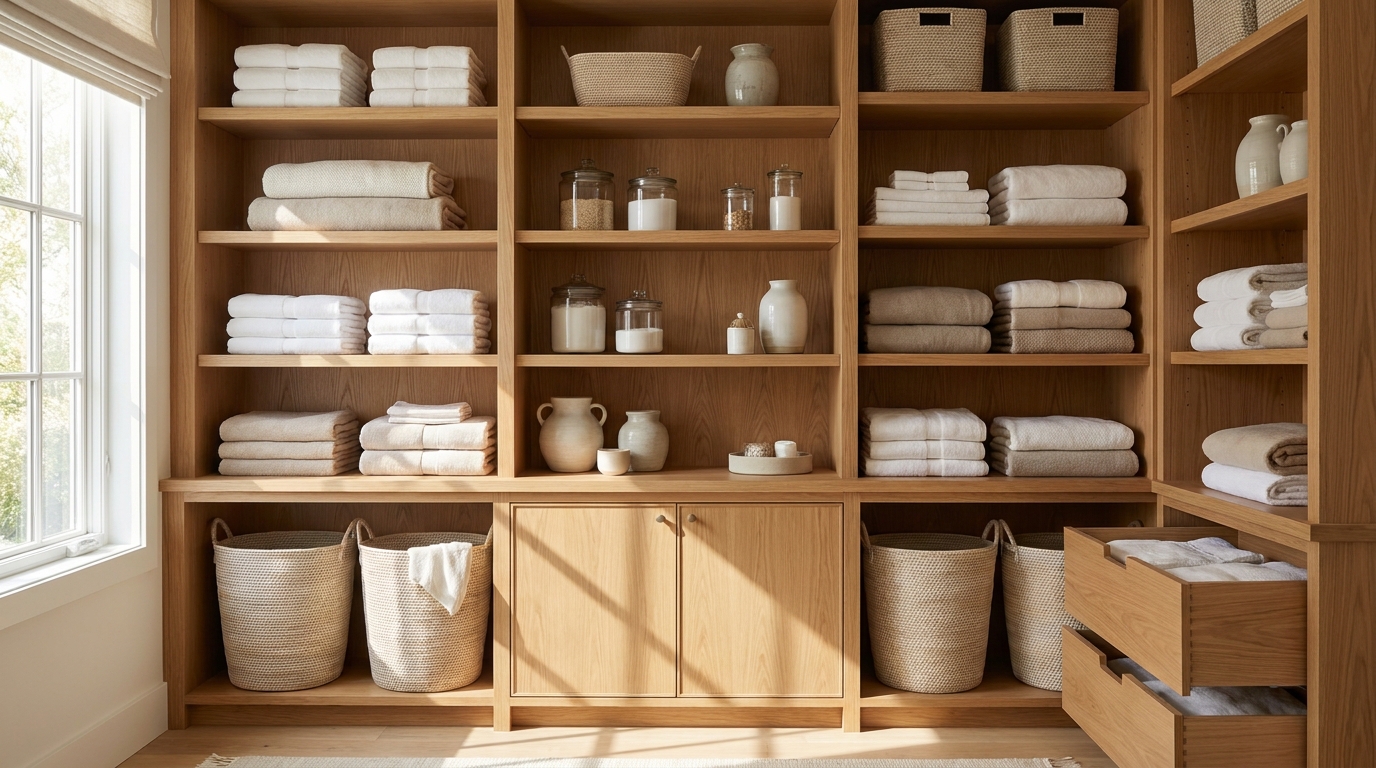
A hall linen closet and a bathroom linen closet do different jobs. Keep this week's dry towels in the bath closet and park extra sheets, guest towels, and blankets as labeled overflow in the hall.
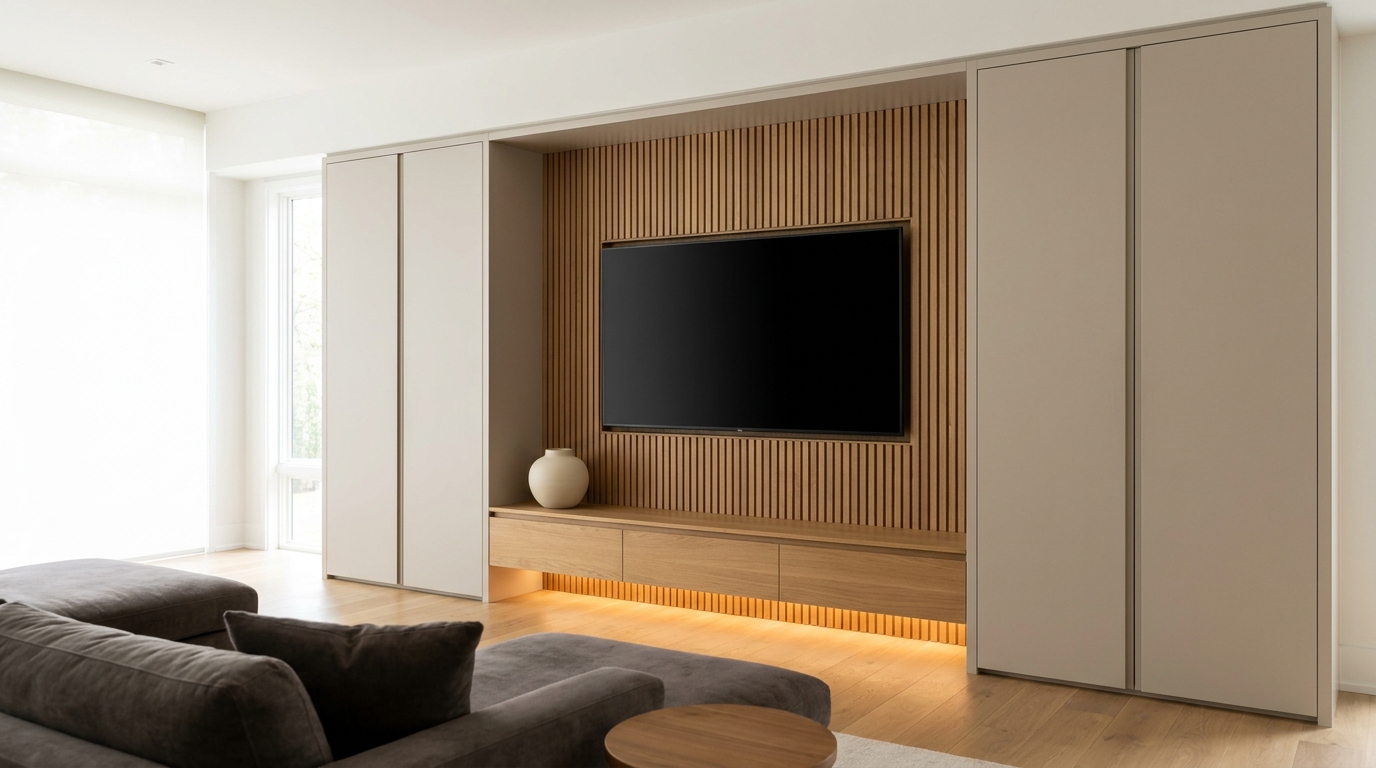
Media wall built-in storage works best when the living room wall is planned like a closet: closed bays hide consoles and cables, open shelves stay limited, and screen scale, ventilation, and tip-over safety are designed in from the first measure.
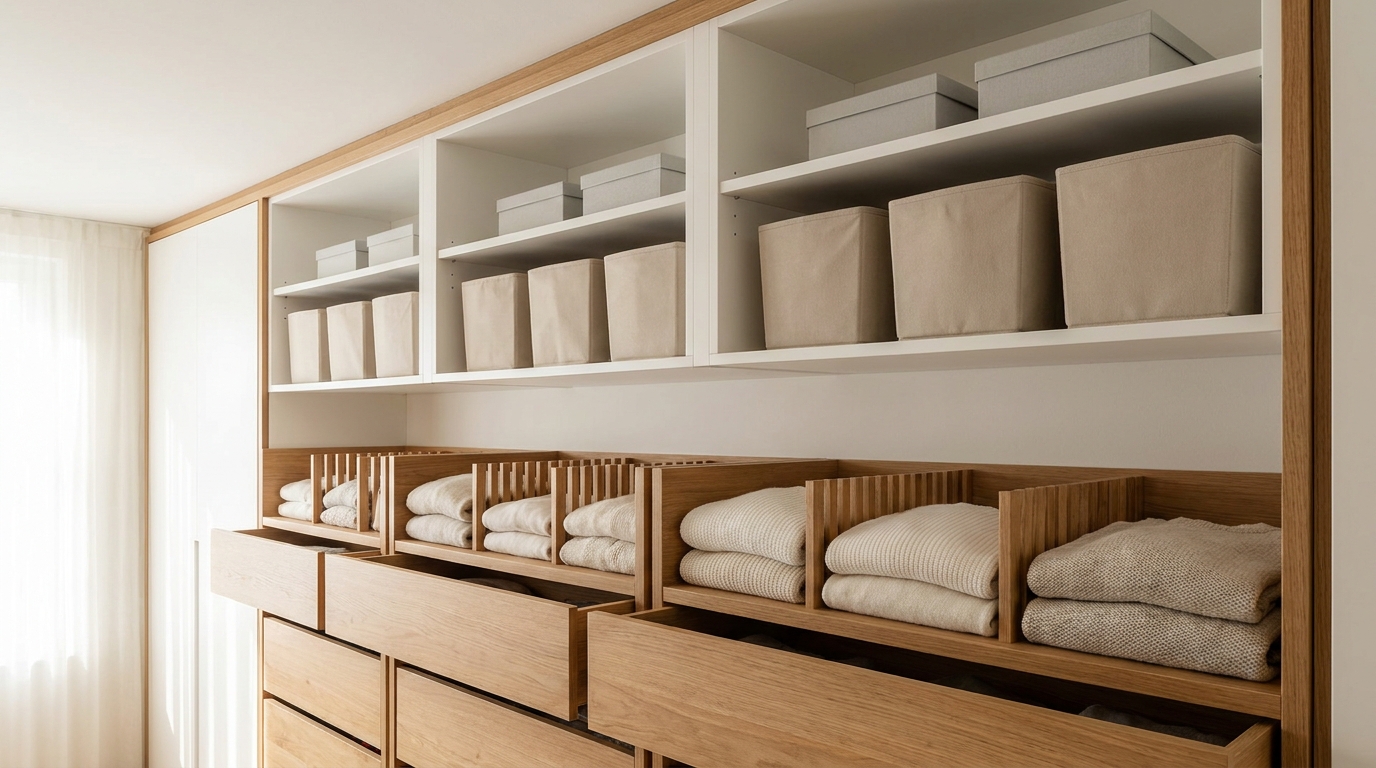
Seasonal closet storage works when off-season clothes live in planned upper zones, deep drawers, and labeled capacity inside the home. Learn how Charlotte-area closets handle humid climates with airflow, clean-dry habits, and rotation-ready design.
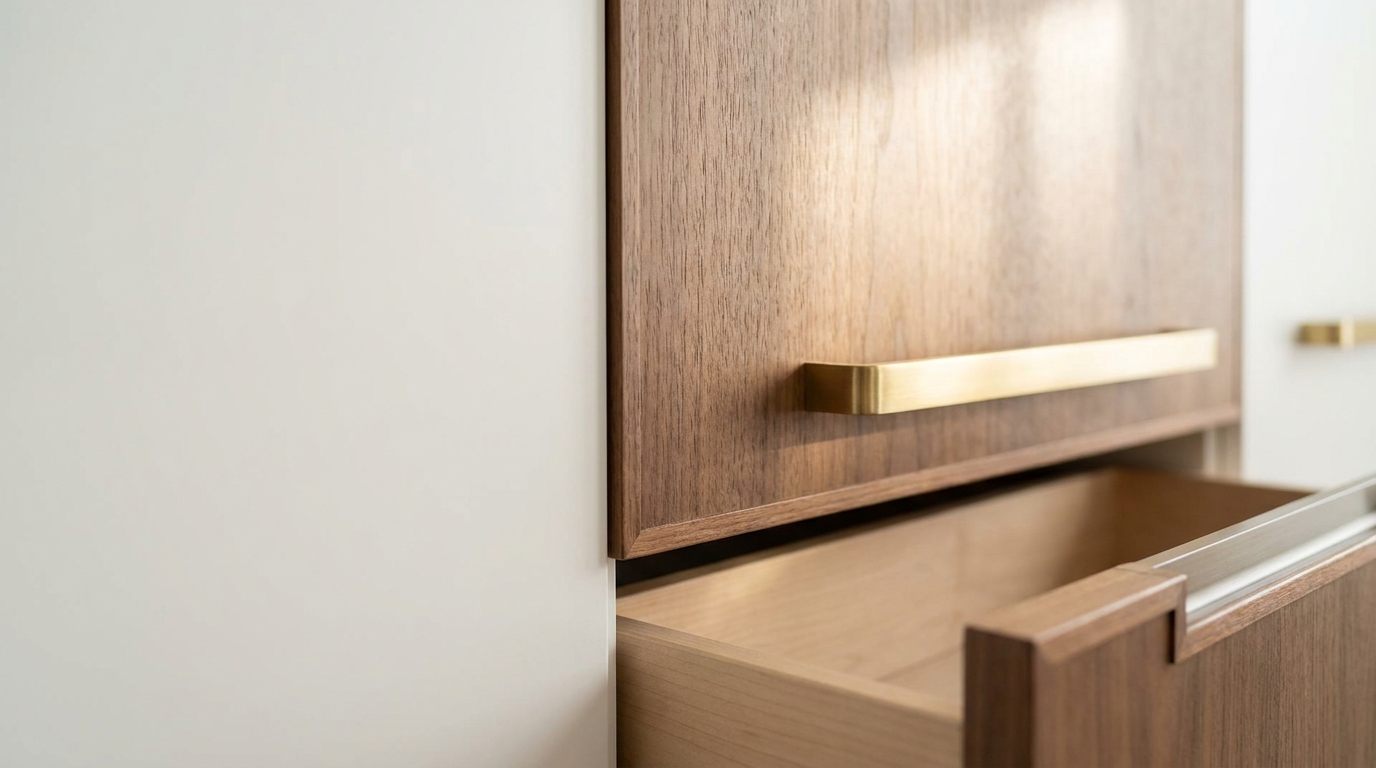
Melamine is usually the workhorse for closet shelves and interiors, while wood veneer is the call when you want real grain and will seal edges and keep humidity steady. Match core, edge banding, and hardware to how you use the space.
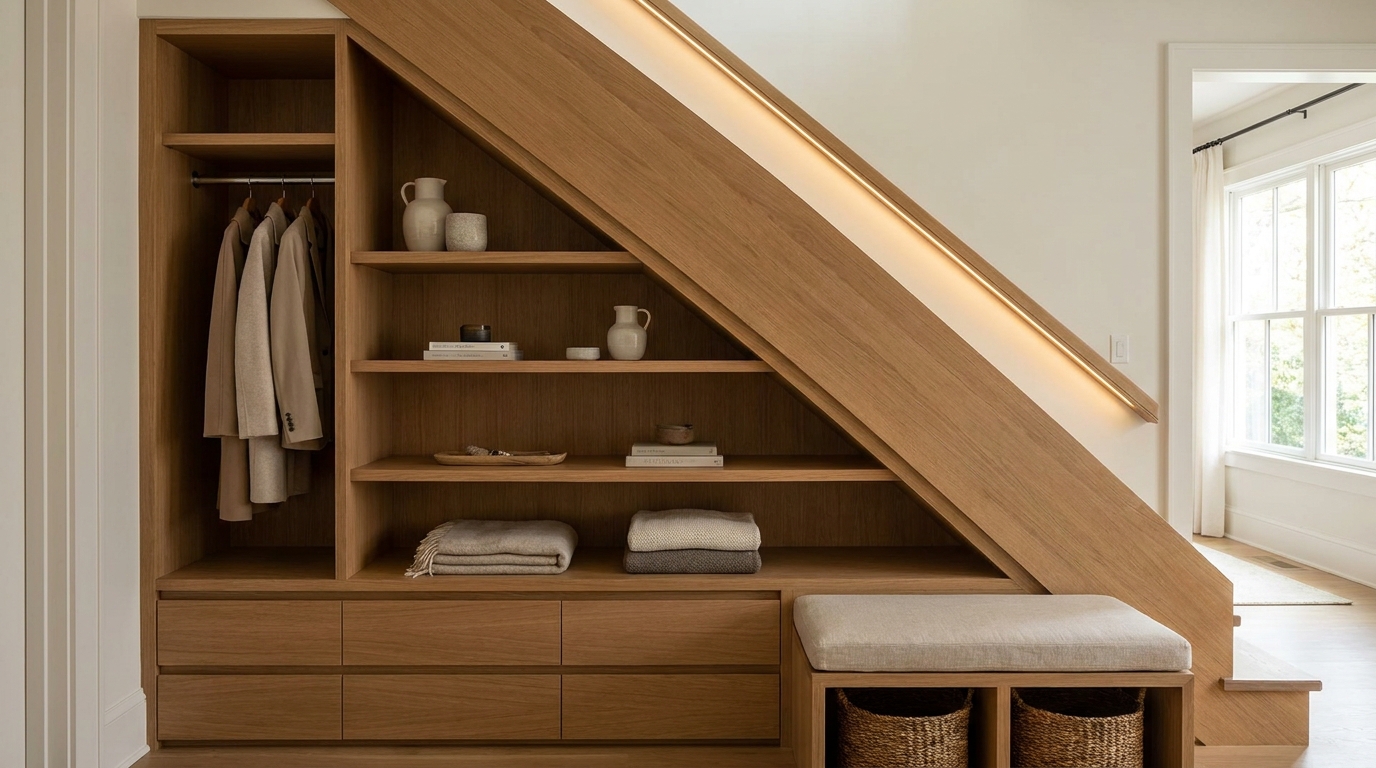
Under stair storage earns its keep when stepped shelves, pull-outs, and height zones follow the slope so coats, pantry overflow, and gear stay reachable instead of buried.
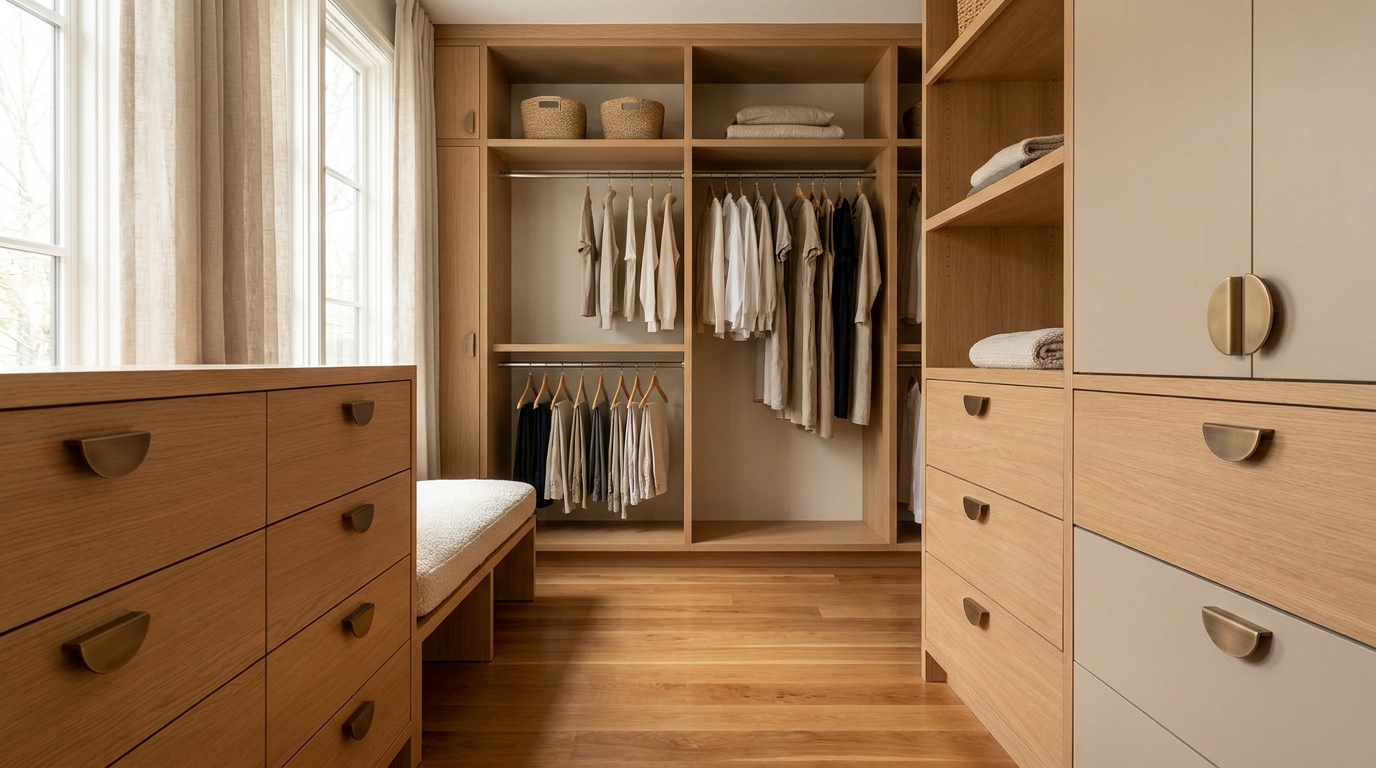
Aging in place closet design plans wardrobe zones for real reach heights, clear floor paths, adjustable storage, and easy hardware so multigenerational households can dress with less risk.
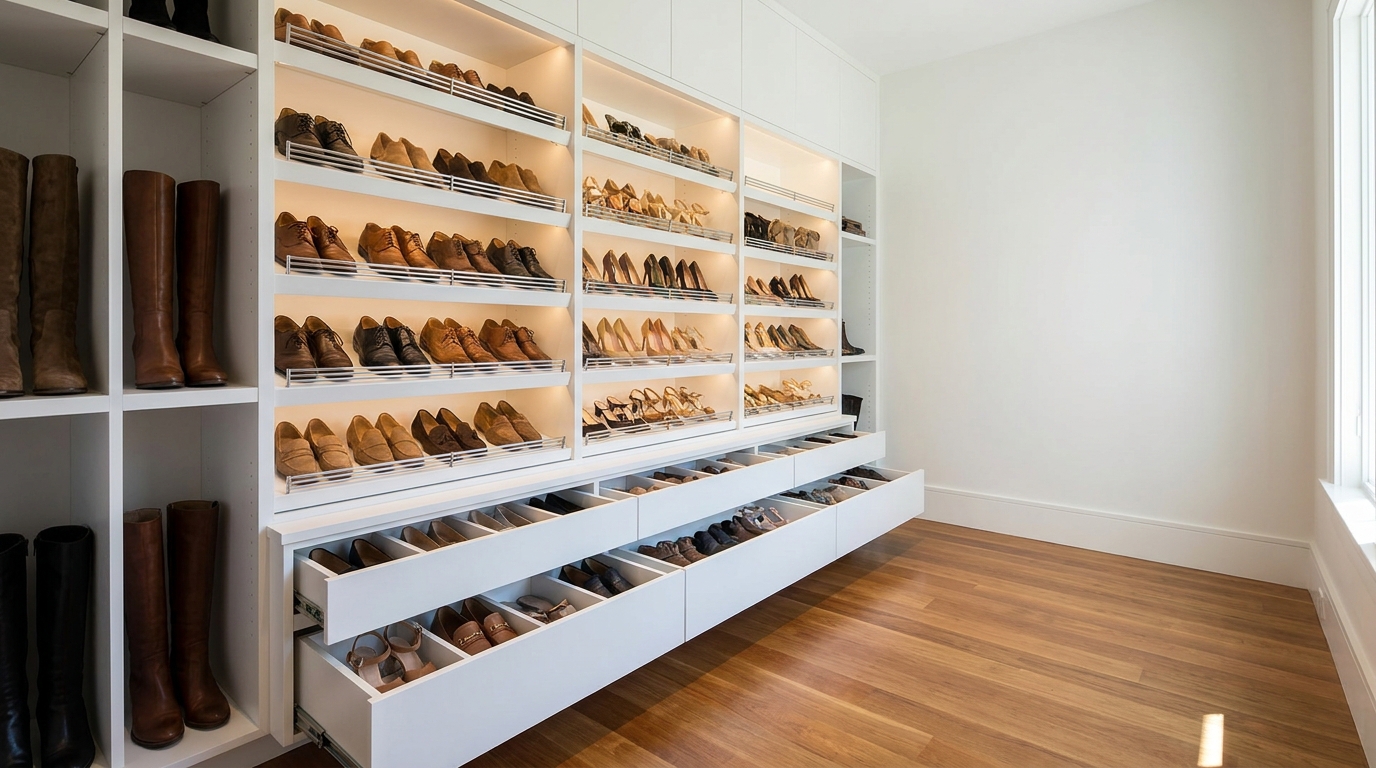
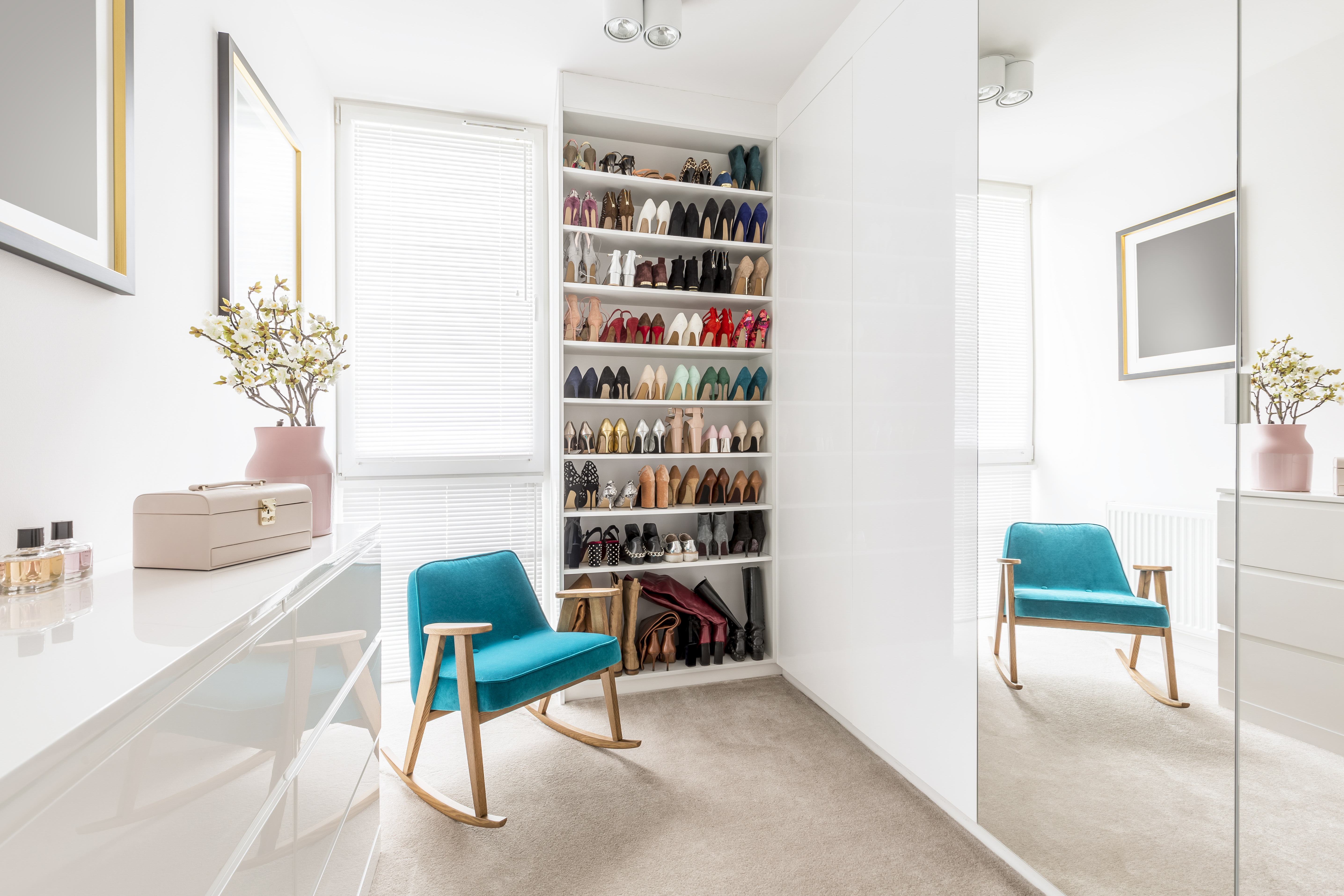
Custom shoe storage works when it matches your pair count, boot heights, and closet footprint. Learn how racks, cubbies, and pull-outs keep floors clear, protect hanging space, and keep shoes dry and easy to grab in Charlotte-area closets.
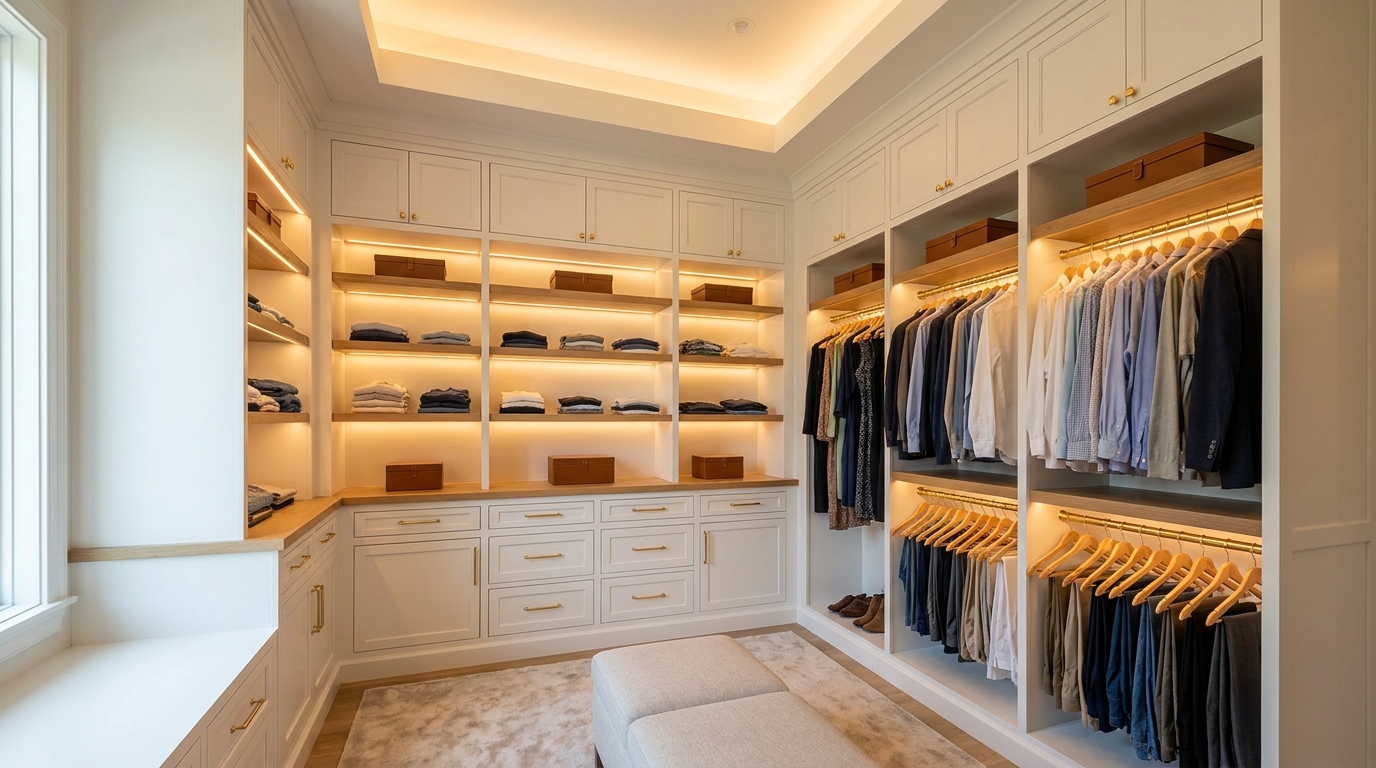
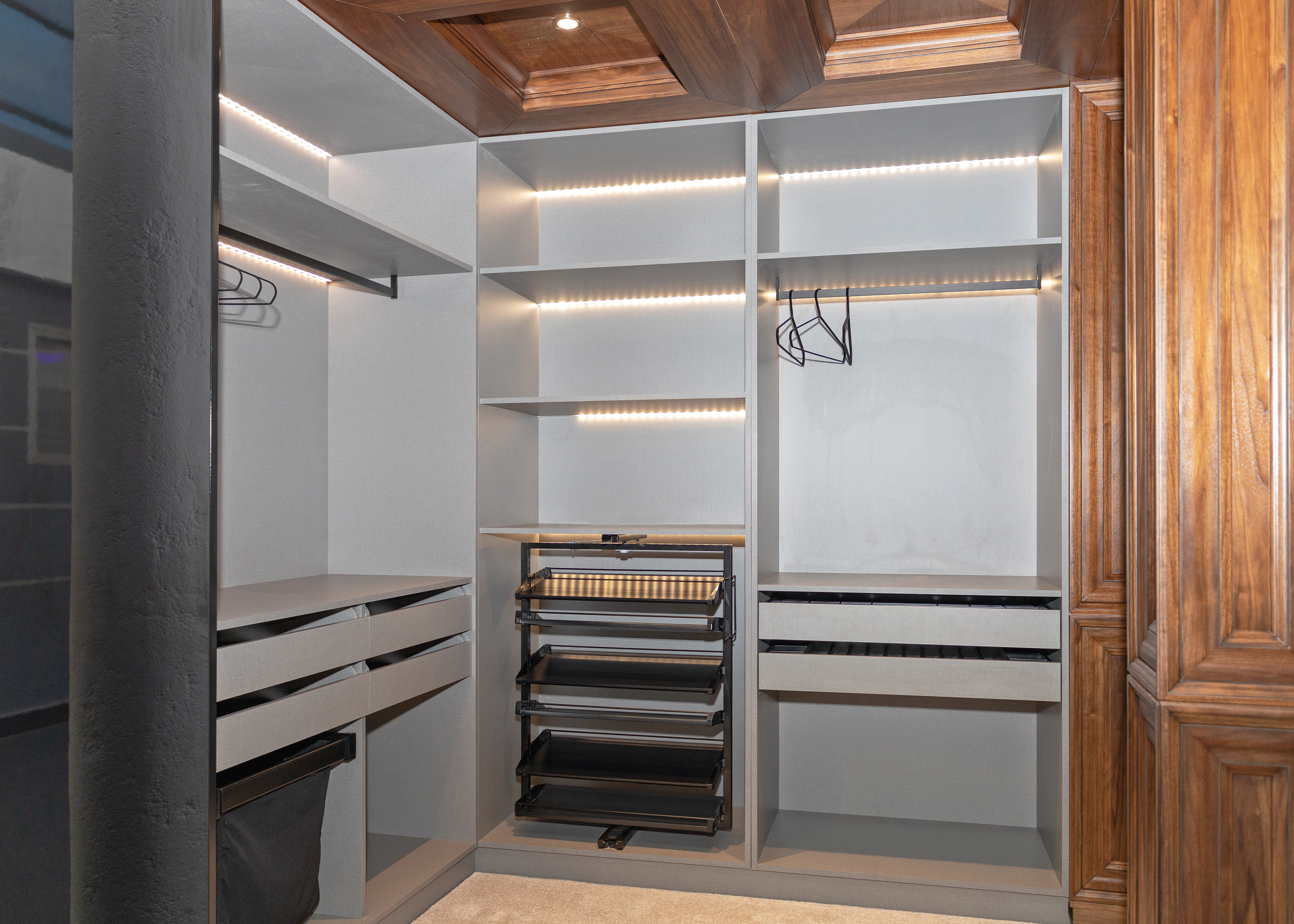
Closet lighting works best as a layered plan: ambient light for safe entry, task light on rods and shelves, and smart controls so the space is bright when you use it and off when you leave.
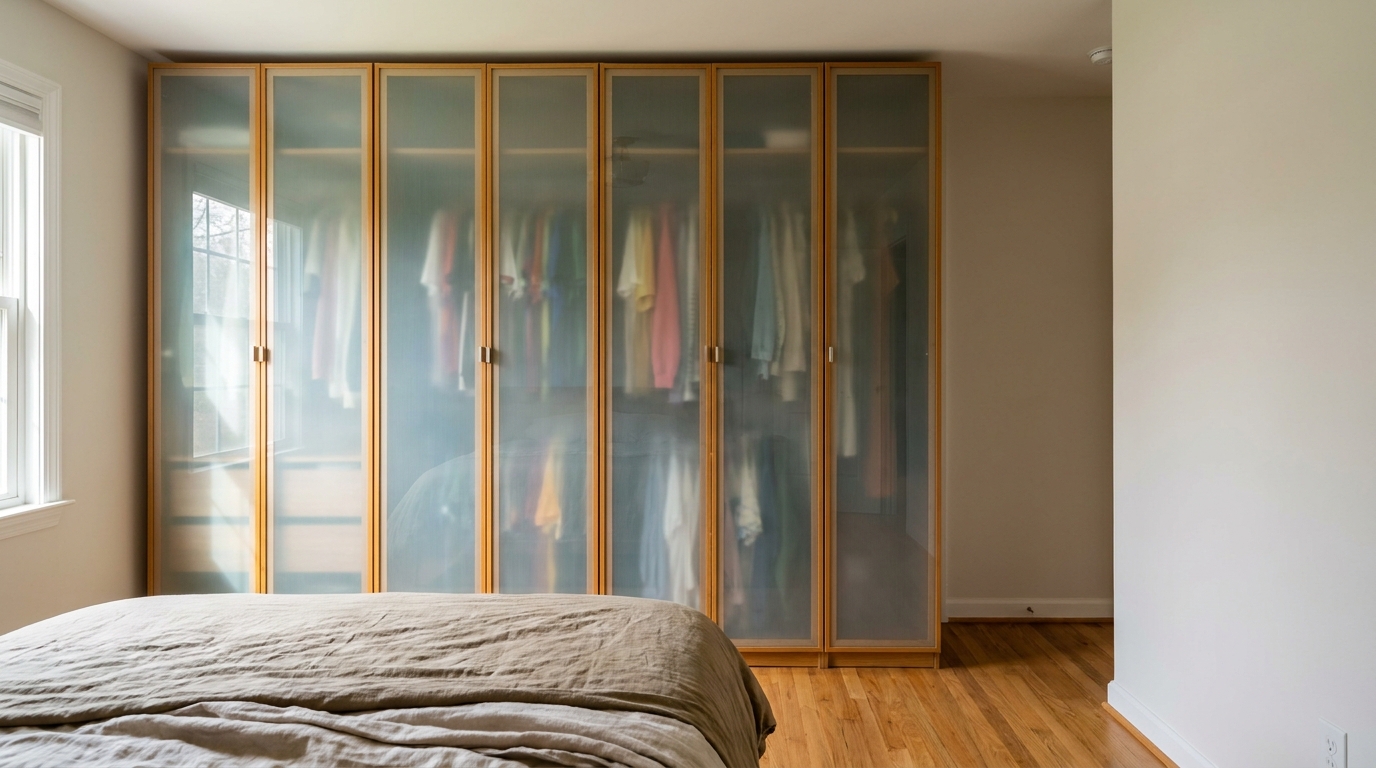
In smaller Charlotte bedrooms, glass-front closet doors usually help light and perceived scale, while solid doors win on visual privacy and clutter concealment. This guide compares clear, frosted, and mirrored glass against solid faces, covers swing, bifold, and bypass tradeoffs, and maps door choices to guest rooms, kids' rooms, and tight secondary suites.
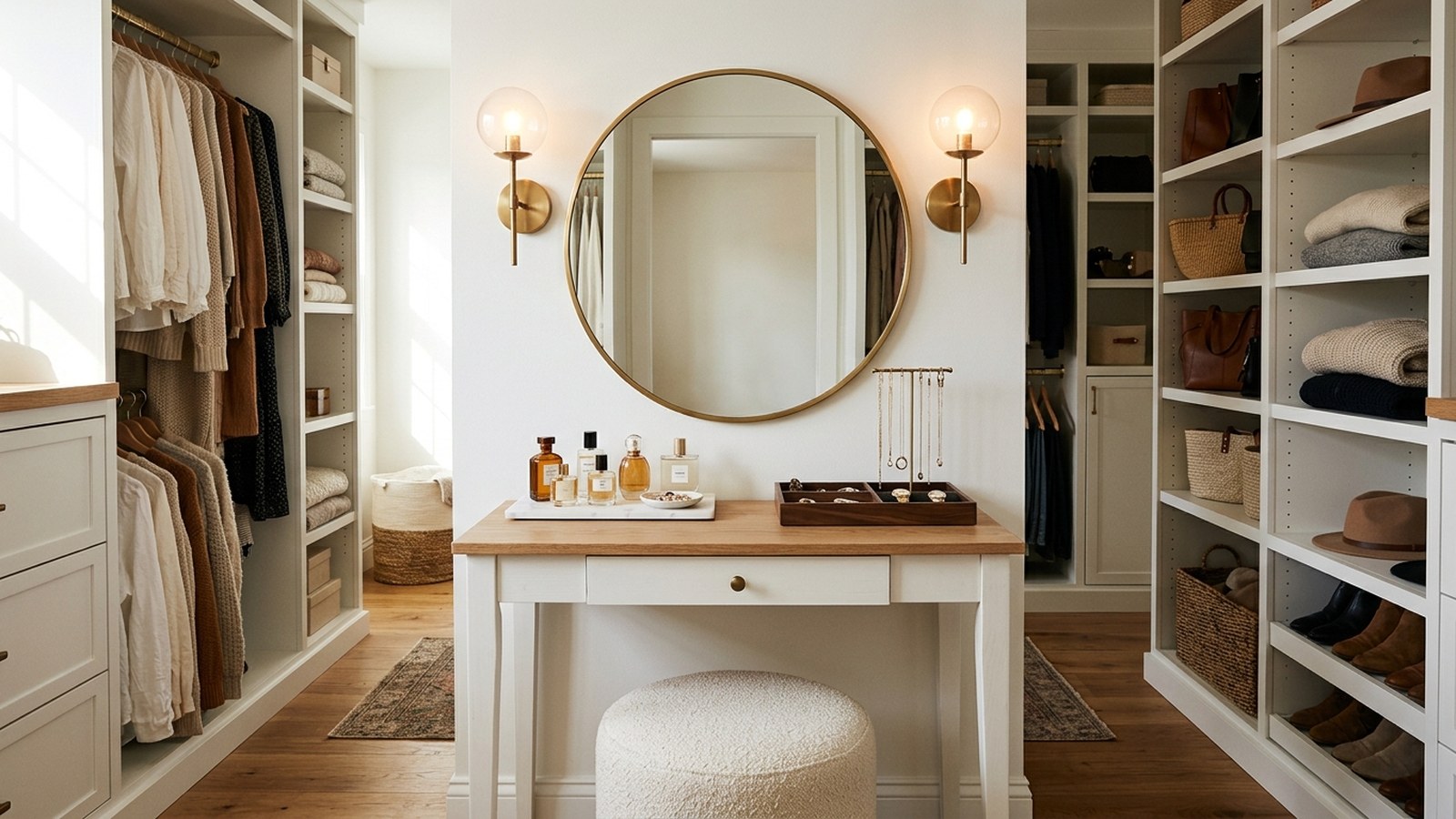
A walk-in closet vanity works when you plan it as a small room with a job: face-level task light, a counter height that matches seated or standing posture, and clear space past the chair. This guide covers fixture heights, knee clearance, power, and storage around a Charlotte getting-ready nook.
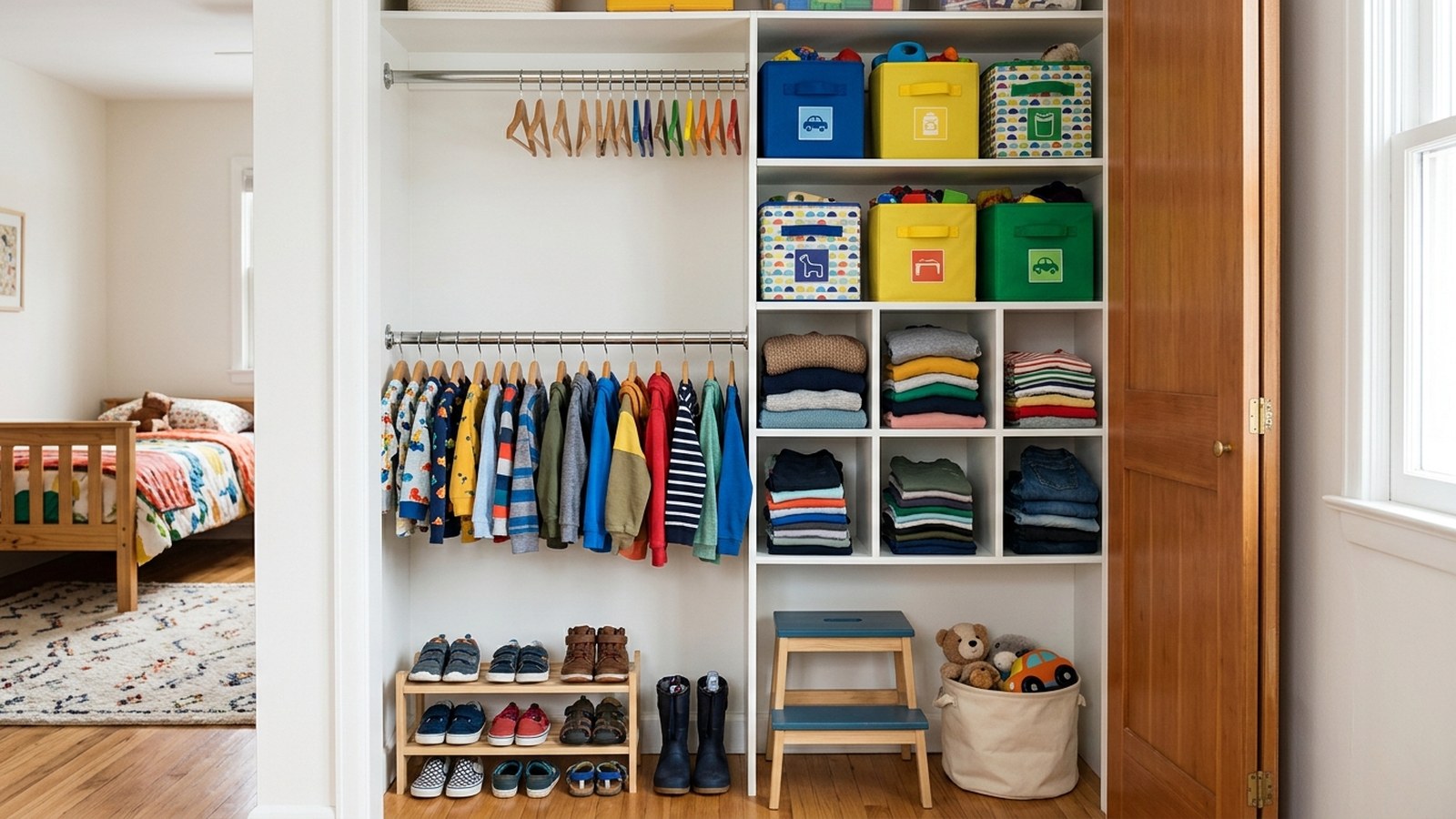
Kids outgrow fixed closet layouts almost as fast as last season's jeans. Smart kids closet design in Charlotte starts with adjustable rods, flexible cubbies, and zones you can reassign as toys give way to sports gear and teen wardrobes.
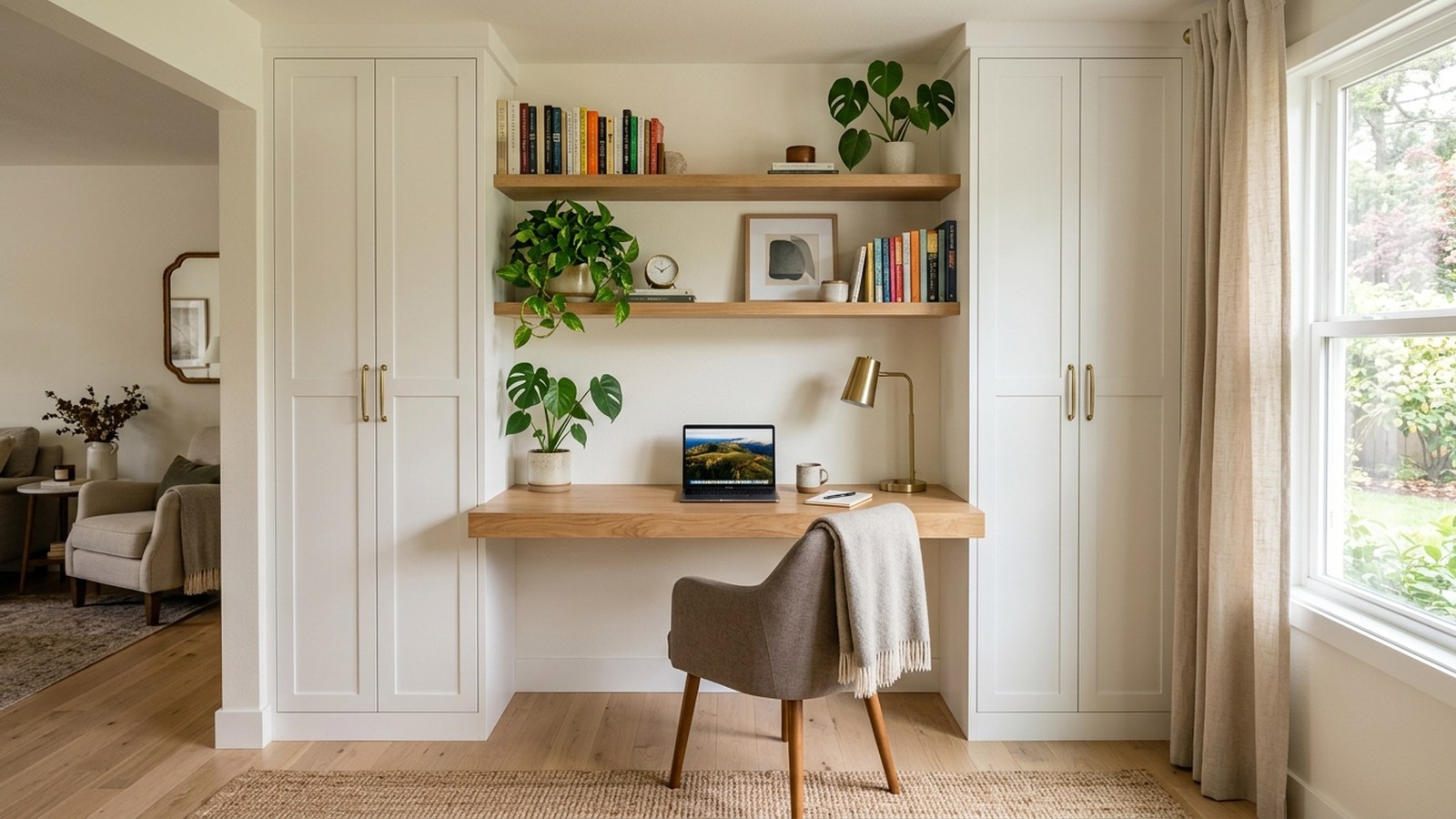
Built-in home office storage works best when a full wall or converted closet becomes the work zone, so files, tech, and supplies stay off the desk. This guide covers wall systems, closet conversions, reach zones, and multi-use rooms for Charlotte hybrid workers.
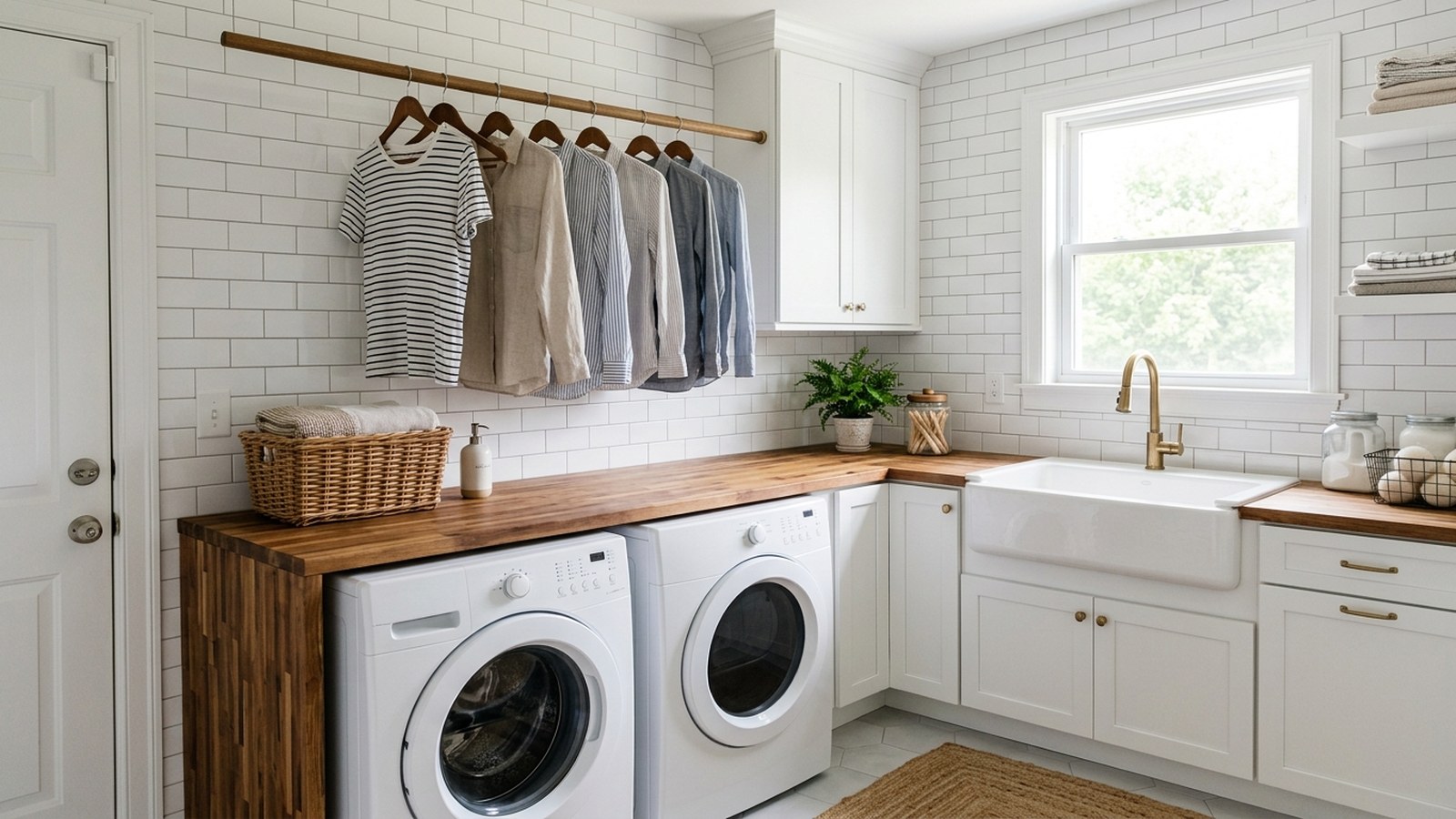
A laundry room that feels designed maps five zones, sort, wash, dry, fold, and supply, so the path matches how your household actually does laundry. This guide covers counters, hang rods, moisture control, and layout patterns that fit Charlotte utility rooms.
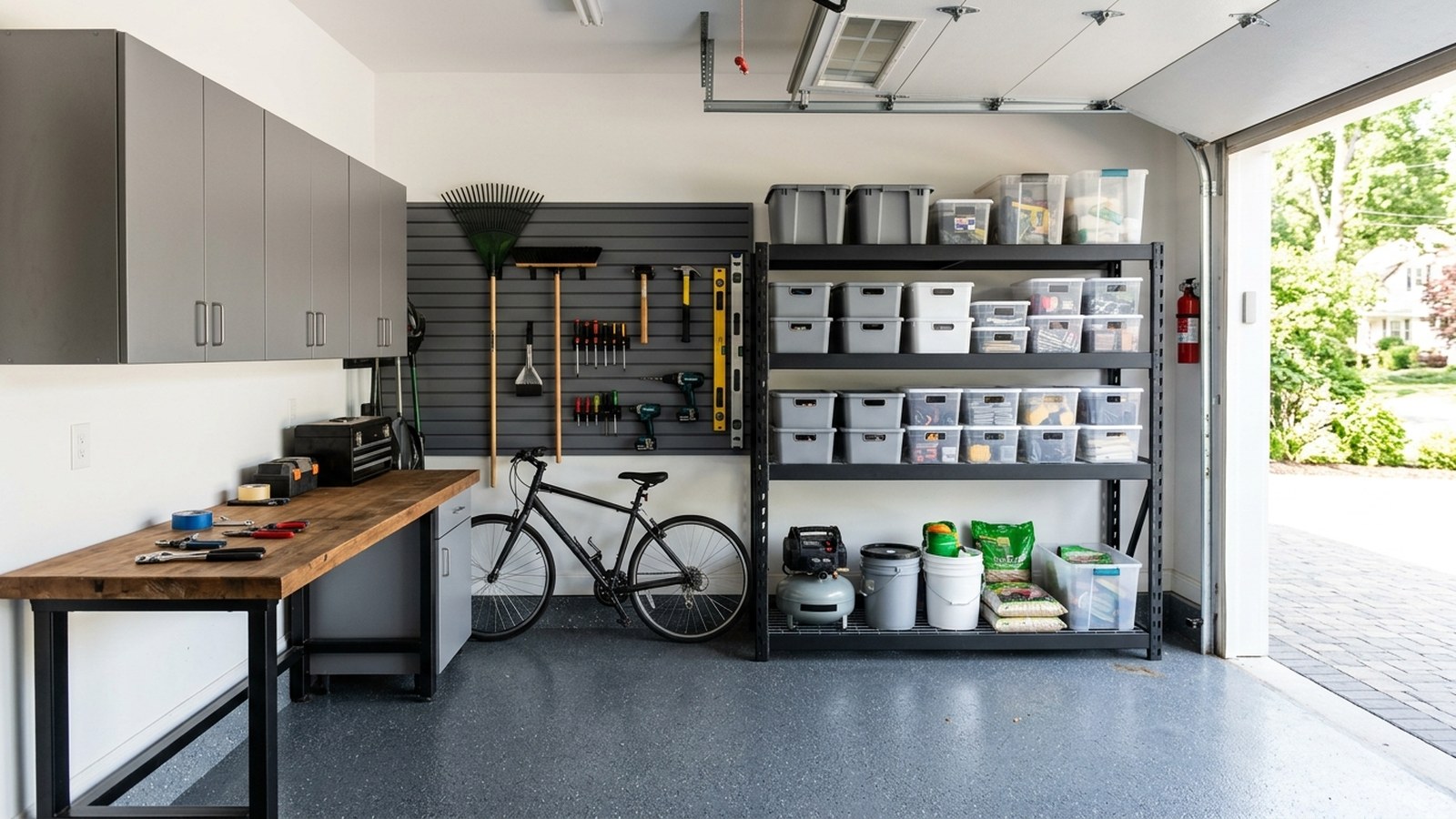
Most Charlotte-area garages work best with a hybrid system: closed wall cabinets for tools and chemicals, plus open slatwall, hooks, and overhead racks for daily sports gear. That mix keeps floors clear for parking and safer walking.
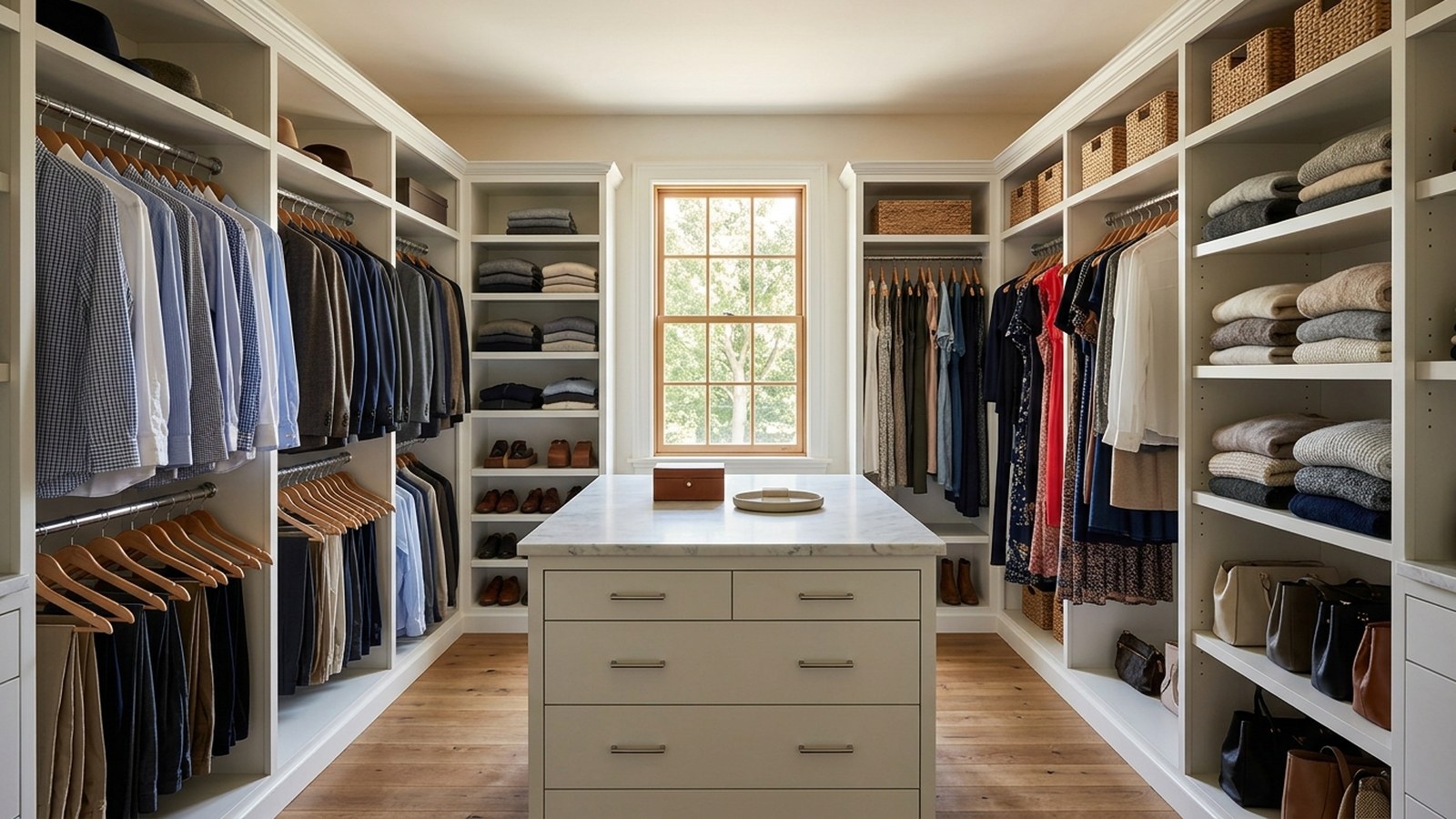
A his-and-hers master closet works when each partner gets a true zone for hanging, drawers, and daily reach, and shared space stays limited to items you both use. This guide covers dual-zone layouts, rod heights, drawer splits, and lighting for Charlotte walk-in suites.
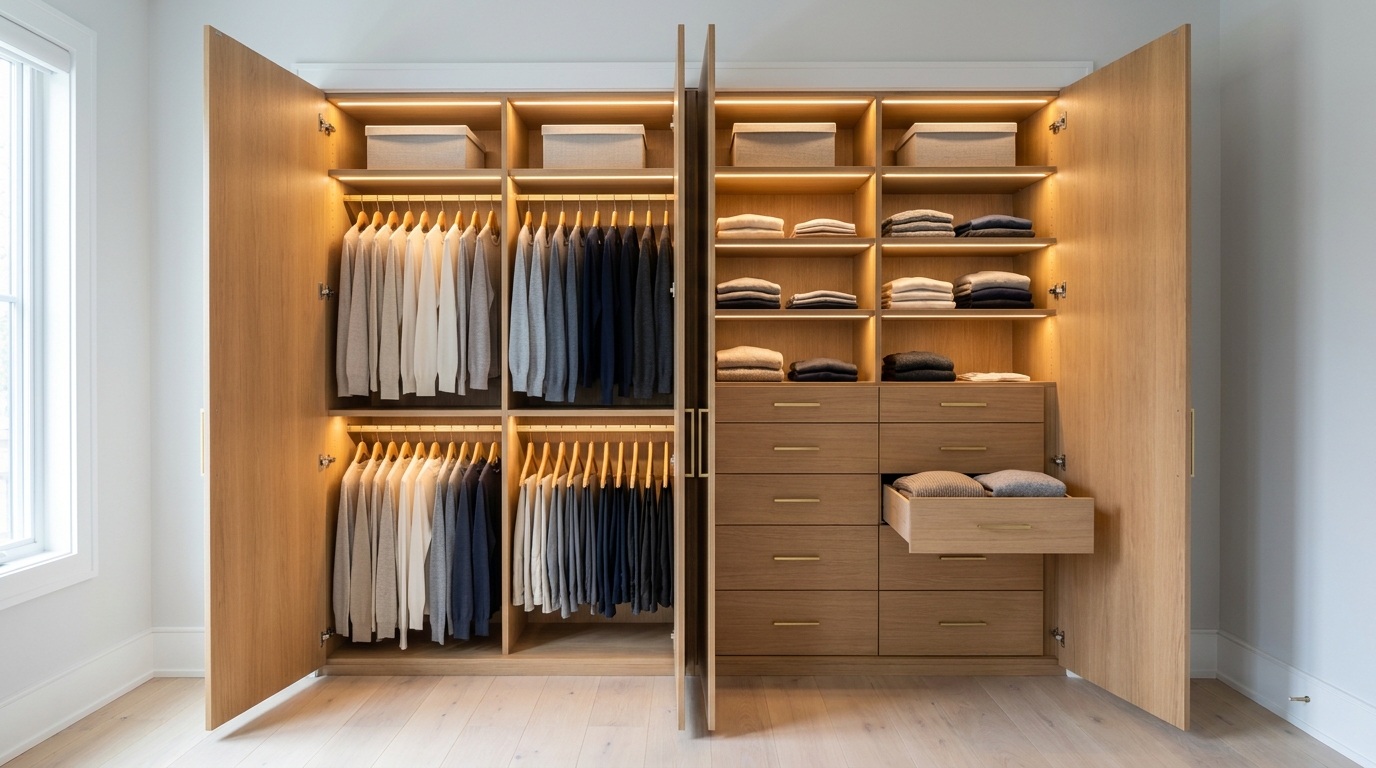
Transform shallow reach-in closets into organized, accessible storage assets. Discover double-hanging, adjustable shelving, and custom finish options in Charlotte.
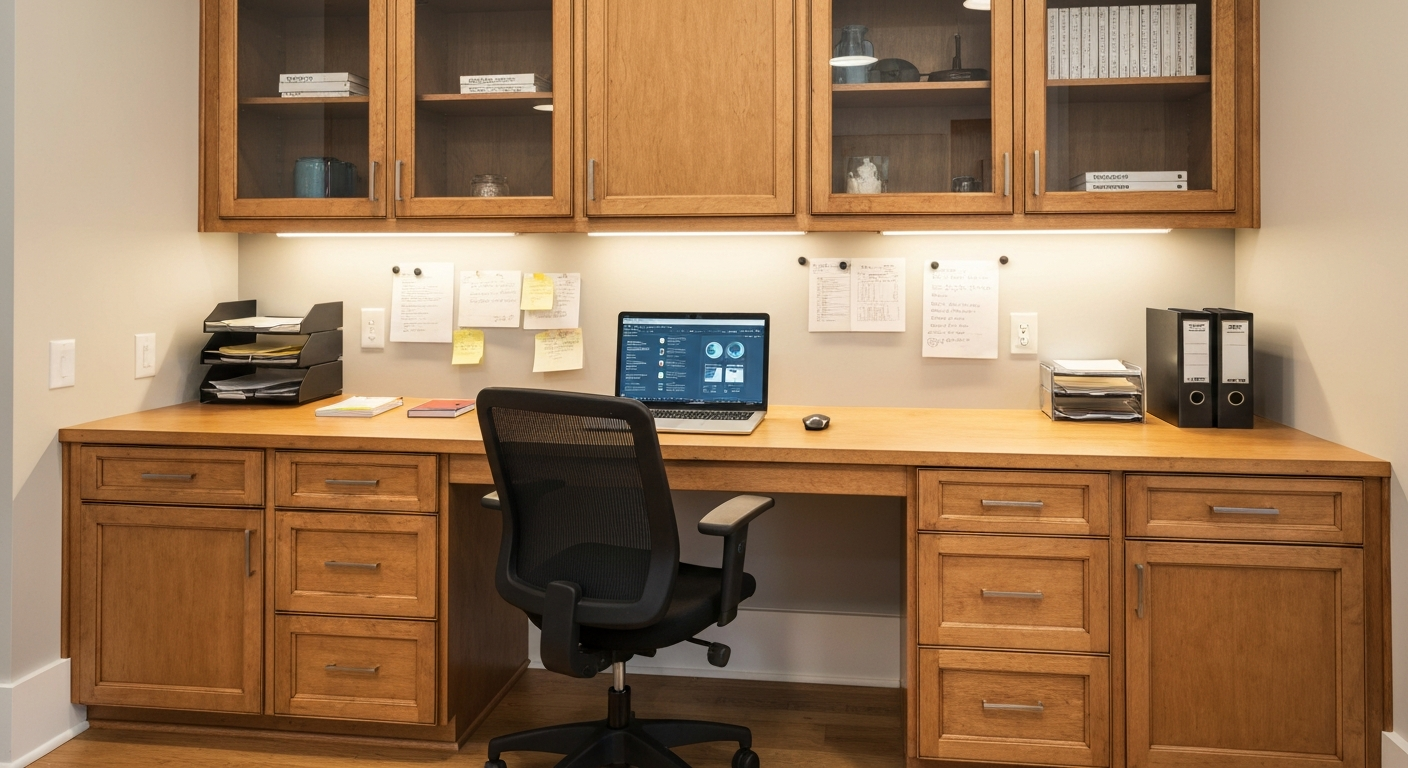
Transform your Charlotte home office with custom built-in storage, executive desk systems, concealed wire management, and LED lighting by The Closet Rehab.
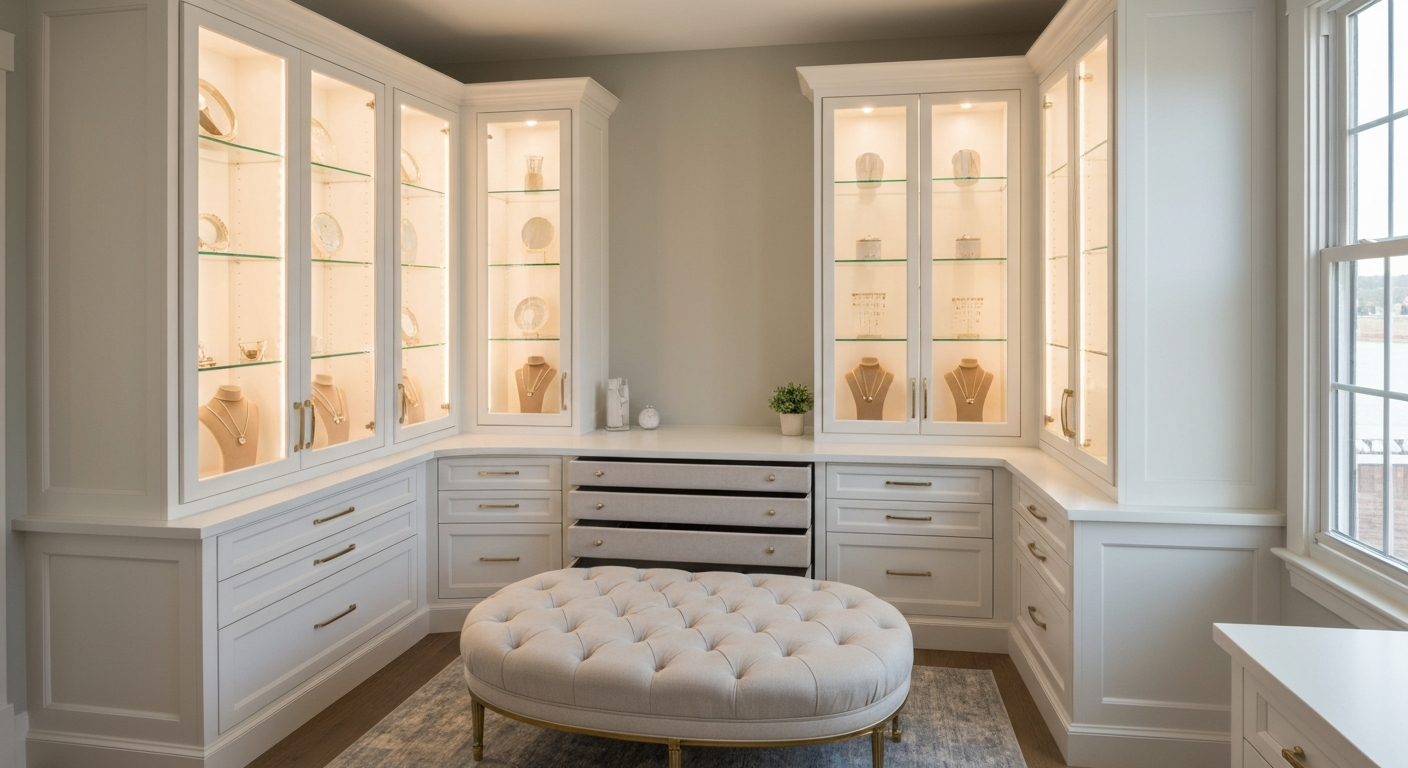
Transform your Charlotte master suite closet into a luxury boutique dressing room with custom center islands, backlit glass display cabinets, velvet drawers, and LED lighting by The Closet Rehab.

Transform your Charlotte master dressing suite with custom walk-in closet island designs featuring jewelry drawers, quartz tops, hidden hampers, and built-in lighting.
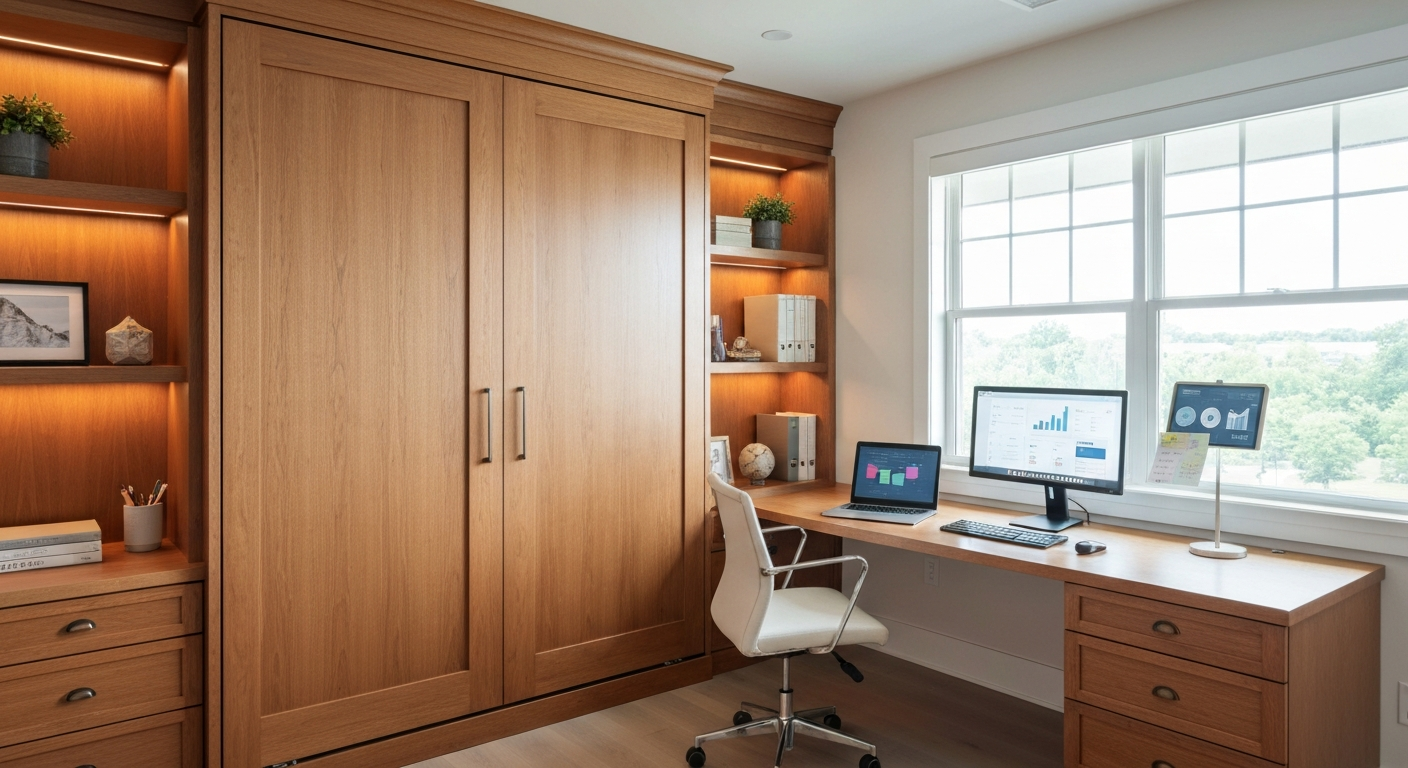
Discover how custom Murphy beds with built-in storage and desks transform guest rooms into executive home offices in Charlotte, NC. Space-saving luxury by The Closet Rehab.

Your front-hall coat closet is really a reach-in closet, which means it can be customized to use every inch. See practical custom coat closet ideas, from double-hang rods to a boot bench, plus how The Closet Rehab designs and installs them across the Charlotte area.