Medicine Cabinet Storage: Toiletries Low, Medicines High
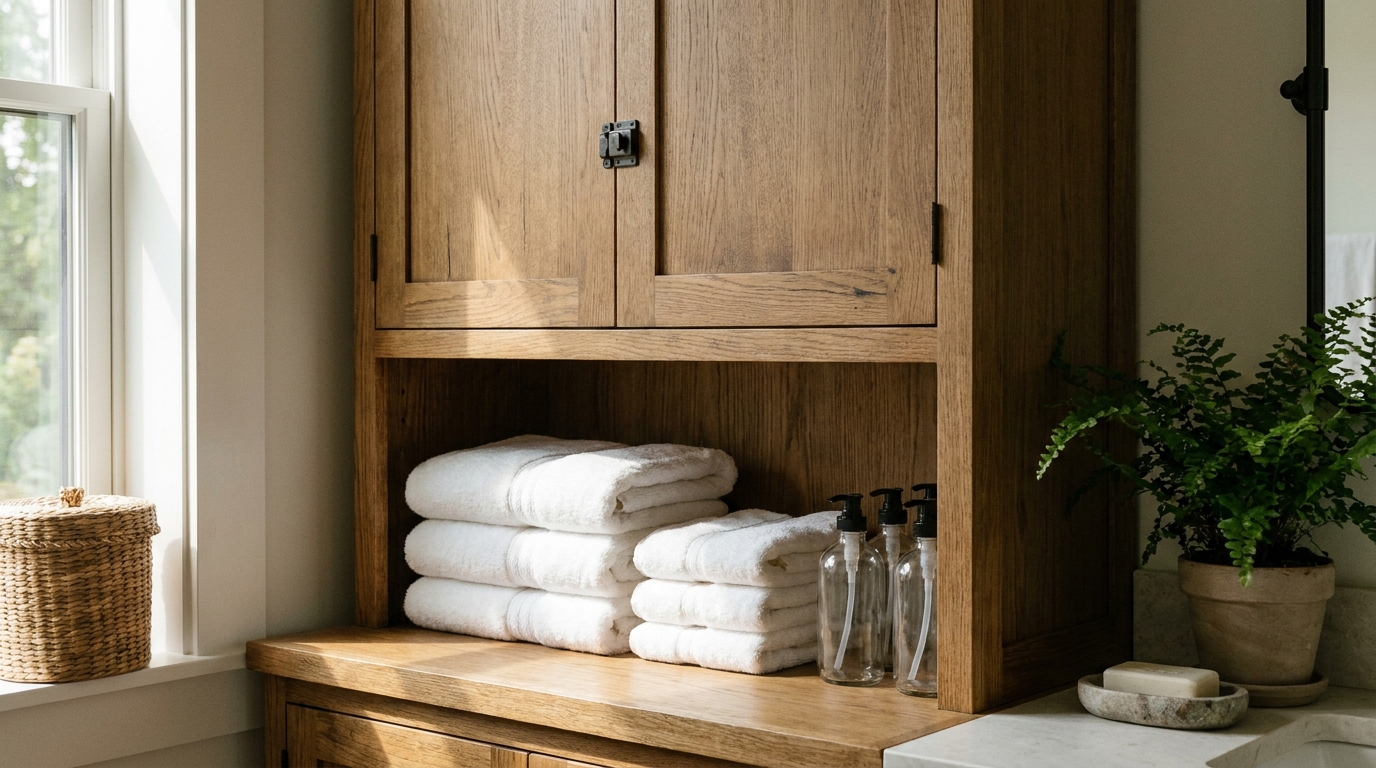
A locked medicine cabinet can keep the morning routine simple and still keep medicines away from children. Everyday non-medicine toiletries belong in an easy reach band. Medicines, vitamins, and supplements belong up high, behind a latch, and out of a child's sight line. CDC materials updated in July 2025 say approximately 100 young children are brought to the emergency room each day because they got into medicines that were left within reach, and they tell caregivers to store those products where young children cannot reach or see them [1].
1. One shelf tries to do two jobs
The usual bath cabinet fails because it is one open box. Toothpaste, a razor, a pain reliever, and gummy vitamins often share a shelf, because that is where someone last set them down. CDC's storage guidance is direct. Keep medicines in a location too high for young children to reach or see, and do not leave medicines or supplements on a counter or at a bedside, even if the next dose is only a few hours away. [1]
Color is part of the problem. Many medicines and supplements, including gummies, look like candy, and CDC notes that it can be hard for young children, and even adults, to tell the difference [1].
In 2024, U.S. poison centers managed 2,092,689 human exposures [3]. In children younger than 6, 99.2% of the exposures reported that year were unintentional, and the peak of unintentional poisoning frequency is among one- and two-year-olds [3].
Among children 5 and under, the substances most often involved in 2024 were household cleaning products (10.1% of substances in those pediatric exposures), pain medicines (9.1%), and cosmetics or personal care products (9.1%) [3]. Dietary supplements, herbals, and homeopathic products were 6.9%, and vitamins were 4.7% [3]. Those shares are based on 851,928 substances reported in pediatric exposures [3]. An easy-reach shelf cannot be a catch-all for every bottle in the bath.
The CDC PROTECT initiative describes unintentional medication overdoses as the leading cause of emergency department visits in young children [2]. Using 2020 data, FDA reports an estimated 36,564 emergency department visits among children aged 5 and under for unsupervised medication exposures [5]. That same page states that over two-thirds of emergency department visits for accidental pediatric medication exposures involve 1- or 2-year-old children, and that nearly 13% result in hospitalization [5]. Do not add the FDA count in that sentence to the daily CDC figure in the opening.
2. Give the cabinet a reach band and a locked upper zone
Split the cabinet by job, not by brand. Medicine cabinet storage works when the lower band holds what you touch at the sink, and a separate upper compartment holds anything a child should not take alone.
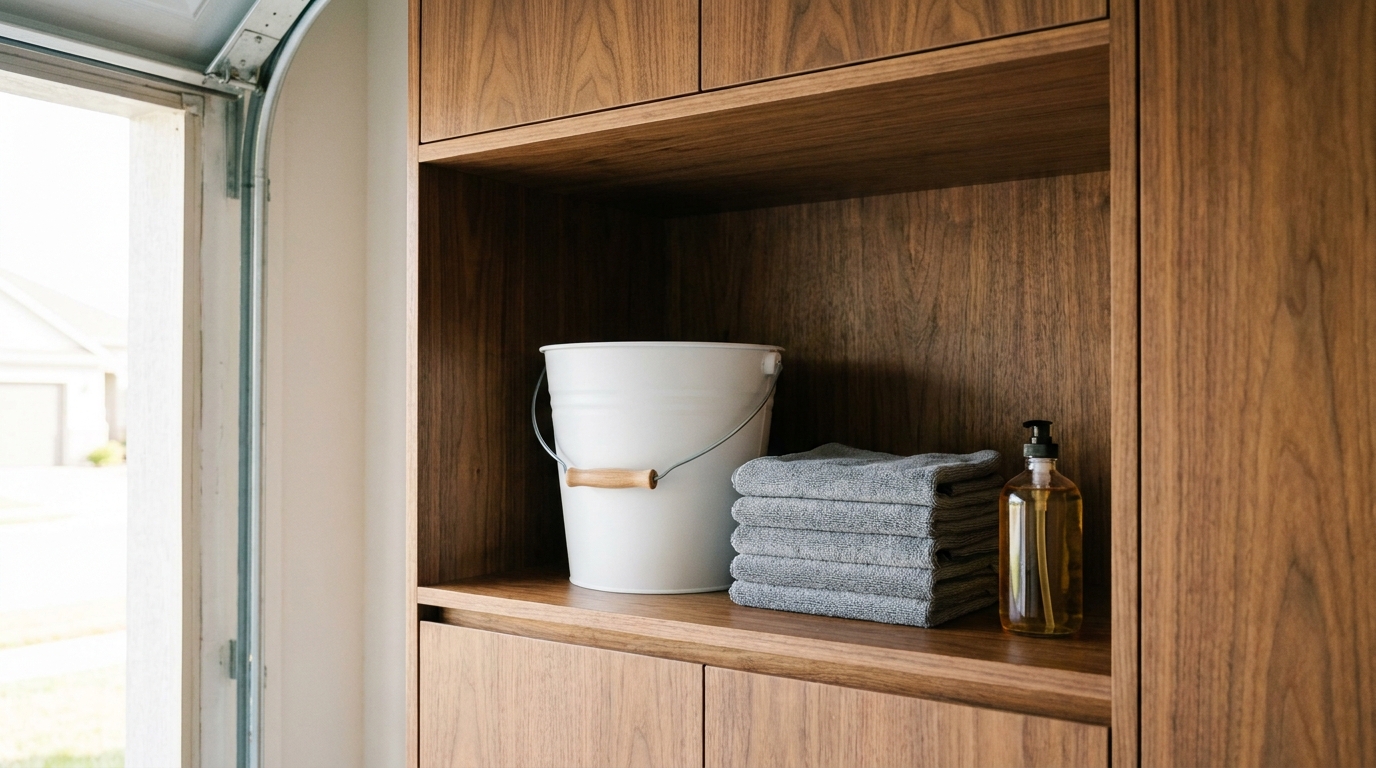
The reach band holds ordinary non-medicine toiletries: toothbrushes, floss, a comb, hair ties, cotton rounds, and washcloths. That door stays simple, so nobody has to defeat a lock to brush their teeth.
The upper zone is the medicine zone. Prescriptions, over-the-counter pain and allergy products, vitamins, and supplements, including gummies, go there. CDC groups all of those together in the up and away and out of sight rule, not only prescription bottles with child-resistant caps. [1] We give that zone a solid or opaque door so the labels stay hidden when the toiletry door is open. We add a latch or lock an adult can work and a young child cannot. MedlinePlus, in a page reviewed in January 2026, tells families to store medicines out of reach and out of sight, and to keep them in a cabinet with a child latch or lock. [6]
There is no single shelf height in inches that fits every home. CDC says different families will have different safe places, and it tells you to walk the house and choose a spot children cannot reach or see [2]. On a visit we check what is visible from a child's height at the open door.
Personal care products need the same honesty. Cosmetics and personal care products ranked with pain medicines in those 2024 pediatric figures, so mouthwash, nail products, and any liquid a child might drink do not belong in the reach band just because they are not prescriptions. [3] If the cabinet also holds cleaners, those belong with the latched items. Household cleaning substances were the most common category on that same list. [3]
If the latch guards the toothpaste as well as the pain reliever, the latch will lose. People leave the door open, or they park bottles on the counter. That counter habit is the one CDC says to stop. [1] The reach band exists so the lock can stay on the items that need it.
3. A safety cap is not the whole plan
Relock the cap, then close the door. A child-resistant cap and a cabinet latch do different work. You want both.
Federal packaging rules call that cap standard special packaging. It must be significantly difficult for children under 5 to open, or to get a harmful amount from, within a reasonable time, and it must not be difficult for normal adults to use properly. [4] The same rule says this does not mean packaging that no child under 5 can open. [4] FDA states the household version: even child-resistant containers cannot completely prevent a child from taking medicines that belong to someone else. [5] CDC adds that children may be able to open safety caps, which is why every medicine still has to be stored up and away and out of reach and sight. [2]
If a cap turns to lock, twist it until it will not turn anymore or until you hear the click, then put the bottle back [1]. Do not leave the next dose on the counter. CDC says the bottle goes away every time, including medicines you use every day, even when another dose is coming in a few hours [1].
Original containers stay. MedlinePlus says to keep medicines in the original container. [6] CDC's travel guidance warns that pill organizers and baggies often lack the child-safety features meant to slow a young child. [7] If your household uses an organizer, it lives in the latched upper zone, not in a drawer at hip height.
4. Put the medicine zone where it stays cool and dry
Keep pills out of the steam. The right cabinet is not always the mirrored box over the sink.
MedlinePlus notes that heat, air, light, and moisture may damage medicines, and it recommends a cool, dry place such as a shelf, a closet, or a cabinet away from a stove, a sink, and hot appliances. [6] It also says what many homes do anyway. People store medicines in a bathroom cabinet. Heat and moisture from the shower, bath, and sink may damage them, so they can become less potent, or they may go bad before the expiration date. [6] Pills and capsules are easily damaged by that moisture [6]. If a pharmacist has given storage instructions for a particular medicine, follow those [6].
That shows up often in Charlotte-area baths, where the shower and the storage share a small room. The toiletry reach band can stay in the bath. The medicine zone often belongs in a tall hall linen cabinet, or in a bath cabinet placed outside the direct steam, with a door that closes tight. CDC's travel materials describe the same kind of spot at home or away: a high cabinet or a high closet shelf, out of reach and out of sight. [7]
Take the cotton ball out of a new bottle. MedlinePlus notes that the cotton pulls moisture in [6]. In a hall linen closet, keep this week's towels at adult reach and put the medicine bay in a separate latched compartment above them. A guest looking for a towel should not have to open that door.
5. Design for the minute you turn your back
Assume the room will be empty for a minute. CDC says children are curious, put all sorts of things in their mouths, and can get into things that could hurt them in less than a minute. [2]
The upper door should latch as it closes, not as a step people skip when they are late. Choose hardware an adult can work. The packaging rule is the model: significantly difficult for a small child, and not difficult for a normal adult. [4]
Guests belong in the plan. CDC asks hosts to remind babysitters, houseguests, and visitors to keep purses, bags, and coats that hold medicine up and away and out of sight [1]. A guest bath still needs a latched shelf that is not the open counter.
CDC also notes that pills can fall and roll out of sight, where a young child or a pet can find them, and it suggests a sweep or a vacuum before young visitors arrive [7]. If you think a child has gotten into a medicine, vitamin, or supplement, call Poison Help at 800-222-1222 right away, even if you are not sure [1].
6. What we measure before we build
We design the split around the people who use the room. On a visit we measure the opening, the door swing, and the path from the sink to the towel. We count daily toiletries and the medicines that have been living on the counter. The steps, from the first conversation through an in-home measurement, are on our how it works page.
The reach band is sized for items you grab with wet hands. The upper zone holds original bottles upright, on adjustable shelves, so the split can move later. Households with toddlers need that zone out of sight and locked. Households with older children may still want the lock when grandchildren visit. CDC's travel notes speak to grandparents as well as parents, and they point to a high cabinet or closet shelf. [7]
The same plan fits a narrow bath in Charlotte or a hall linen closet in Fort Mill. The medicine door is not the door you open for a hairbrush. This is not a bay for hot styling tools, and it is not a full linen overhaul. Daily toiletries stay in reach. Medicines sit up high, latched, and out of sight.
Practical takeaways
- Keep daily non-medicine toiletries in an easy reach band, and keep medicines, vitamins, and gummy supplements behind a solid door up high.
- Choose a spot young children cannot reach or see, then add a latch or lock. A safety cap alone is not the whole plan.
- Prefer a cool, dry closet or a cabinet outside shower steam. Heat and moisture in a bath can damage pills.
- Leave medicines in original containers, relock the cap until it clicks, and put the bottle away after every use.
- Keep cleaners, and personal care liquids a child might drink, out of the open reach band. Give guests a latched place for bags.
- Save Poison Help at 800-222-1222, and call if you think a child got into a medicine. Follow storage instructions on the label or from your pharmacist.
How we can help
Have more questions or want to get in touch?
Our team designs bath and linen cabinets that keep everyday toiletries in reach and medicines latched up high. Tell us about the room on our contact page, call (704) 604-3870, or email design@theclosetrehab.com.
Citations
- Centers for Disease Control and Prevention, "Up and Away Campaign Resources" (2025-07-18)
- Centers for Disease Control and Prevention, "About the PROTECT Initiative" (2024-04-17)
- Poison Control, "National poison center statistics, 2024" (2025)
- Electronic Code of Federal Regulations, "16 CFR 1700.1 Definitions" (2026-10-22)
- U.S. Food and Drug Administration, "Drug Disposal: Questions and Answers" (2024-10-31)
- MedlinePlus, National Library of Medicine, "Storing your medicines" (2026-01-14)
- Centers for Disease Control and Prevention, "Summer Travel Toolkit" (2025-07-14)