Guest Closet Storage: Hanging Bay Plus Overflow
Good guest closet storage splits a spare-room closet into two jobs: a guest-ready hanging bay for overnight bags and empty hangers, and a labeled overflow zone for extra linens so holiday sheets and luggage never dump on the guest bed. This is not an entry coat closet, and it is not a hall or bath linen closet. Humidity still matters in a closet that sits closed for months. The CDC advises keeping indoor humidity no higher than 50 percent all day, and the EPA's target is below 60 percent, ideally 30 to 50 percent. [1][2]
1. A spare-room closet is a different problem
An entry coat closet is a drop zone. Coats and daily jackets live there. A hall linen closet is a restock shelf for Sunday sheet changes. A bath linen closet sits next to steam. None of those layouts answers the spare-bedroom question: how does a guest hang a dress, park a suitcase, and still leave room for the extra queen set and the holiday tablecloths in the same box.
The usual failure is a dump closet. Off-season sweaters, wrapping paper, a vacuum, and pillows fill the rod. When family arrives, the host shoves the pile onto the bed so the guest has somewhere to hang a shirt. That is a closet that never got a split.
We design the spare-room closet as a two-bay room. In Charlotte, Fort Mill, and Ballantyne homes, the guest bedroom is often the last closet anyone planned. The hanging bay is for the visitor. The overflow zone is for the house. Labels keep those jobs from mixing.
2. Split the closet: guest hanging plus labeled overflow
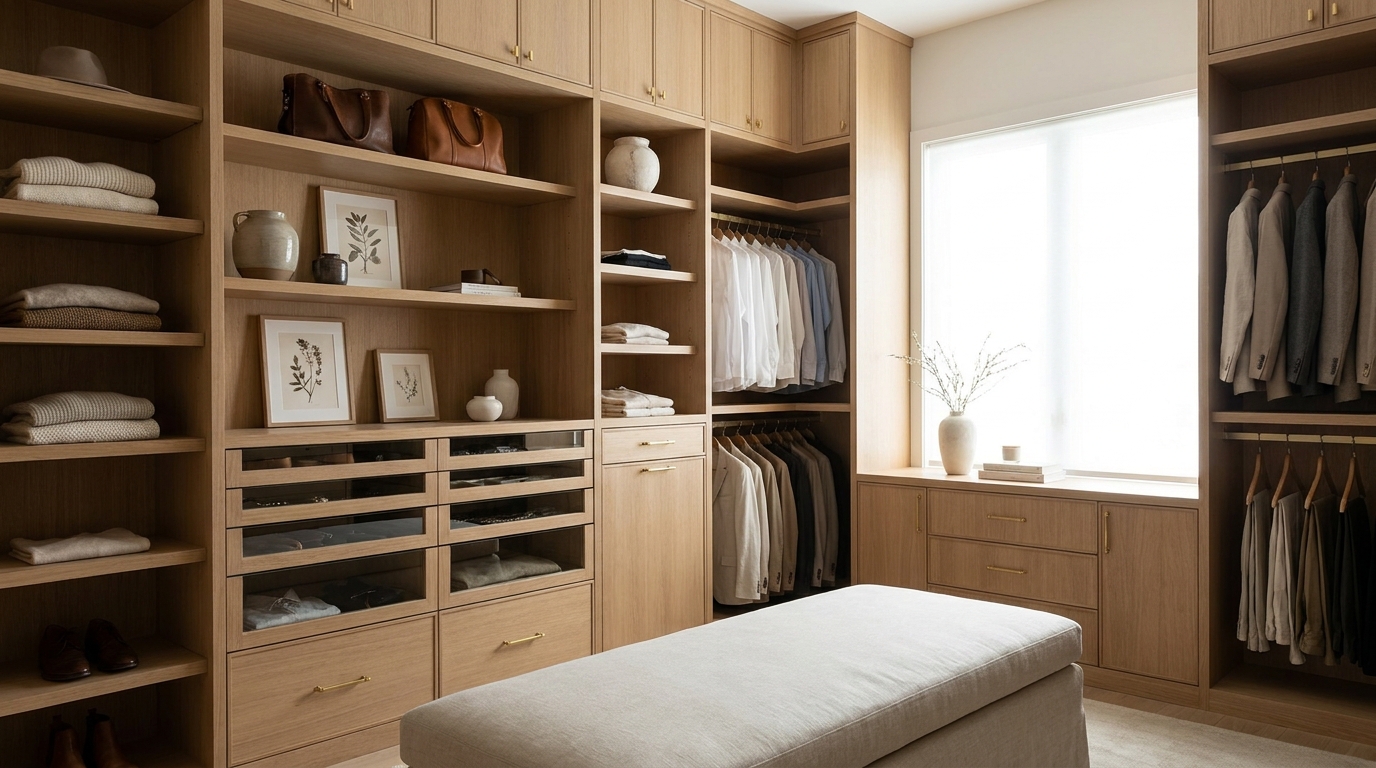
Give the guest a real hang line, then park overflow beside it, not on it. A typical reach-in can take hanging on one side and a shelf-and-bin tower on the other. A small walk-in can take hanging on the long wall and overflow on the short wall. The point is a visible empty rod, not a sliver between bins.
A practical split looks like this:
- Guest hanging bay: a clear rod with empty hangers, enough width for jackets and a dress, and a luggage landing so a suitcase does not land on the mattress.
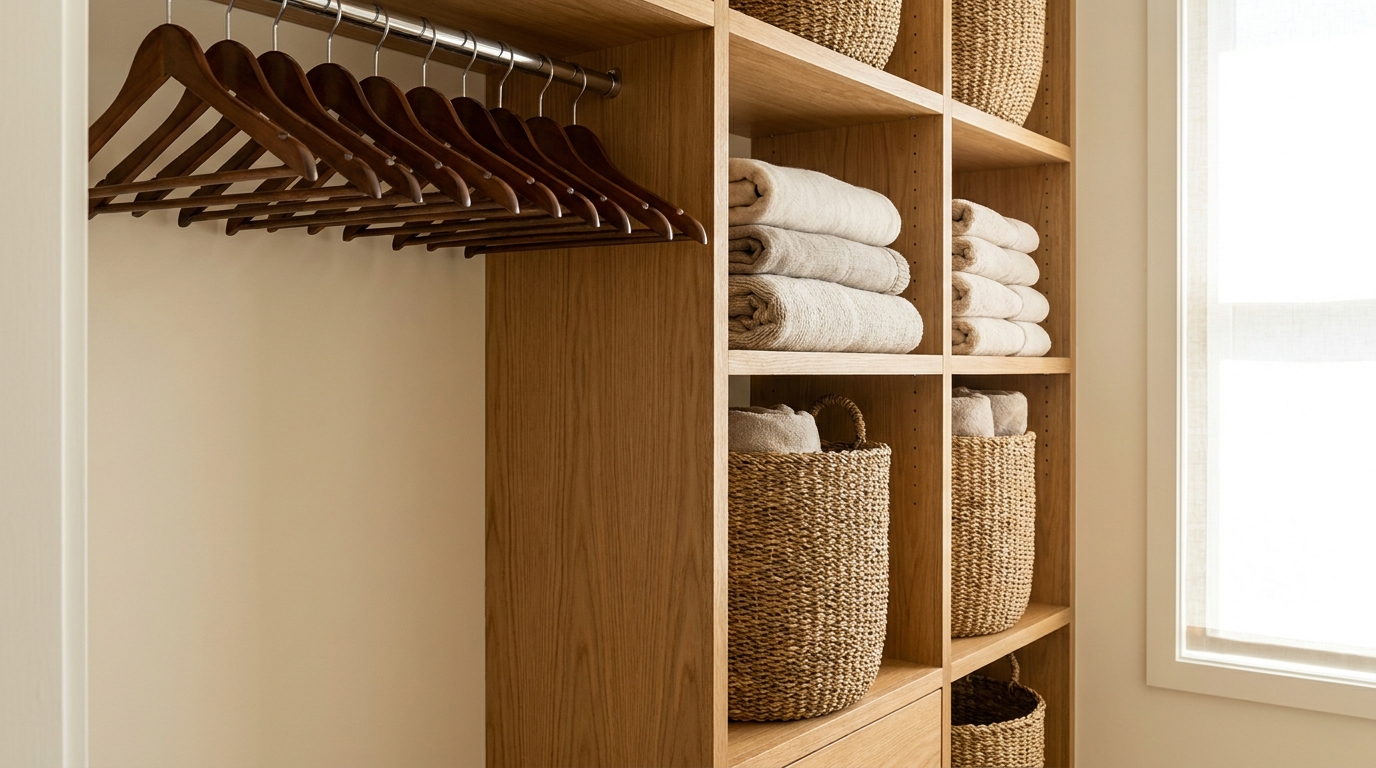
- Overflow zone: labeled shelves or pull-out bins for extra guest sheets, extra pillows, holiday linens, and clean, dry household overflow.
- A small empty-drawer stack: one or two drawers the guest can actually use.
- A keep-out line: household overflow does not hang on the guest rod, and dirty laundry does not live in the overflow bins.
Labels are the difference between a split and a pile. "Queen guest set," "extra pillows," and "guest hangers" beat a pretty bin with no name. A visitor should be able to open the door, find a hanger, and leave the holiday stack alone.
This is still closet work, not hall-linen work. Overflow in the spare room is the extra set for that bed, the extra blanket for that room, and the household items that come out a few times a year. Daily towels belong nearer the bath. Daily coats belong at the entry. We plan the spare-room split on the same visit as other custom closet layouts.
3. Overnight bags need a landing, not the bed
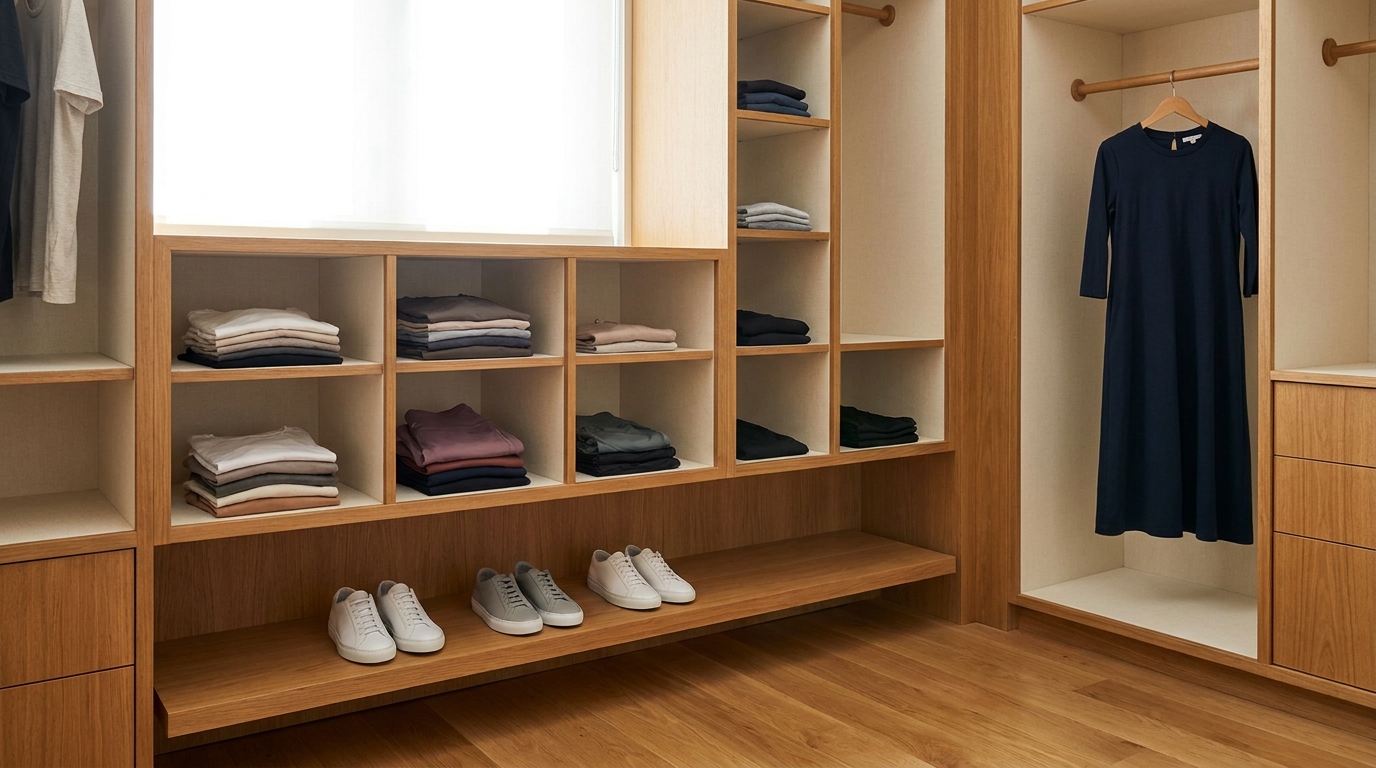
A suitcase on the comforter is the default because the closet has no floor or shelf for it. Plan a luggage landing: a low open bay at suitcase height, a sturdy shelf above shoes, or a short bench-depth shelf that can take a carry-on without blocking the rod. The bag parks, unzips, and the clothes move to the hangers.
Empty hangers have to be obvious. A rod packed with the host's overflow coats tells the guest to use the bed or the door hook. Leave a run of empty hangers at standing height. Double-hang can work for shirts if guests are not hanging a long dress. If they are, keep one section of long hang clear.
Two empty drawers beat a dresser the guest is afraid to open. Label the top drawers "for guests" and put overflow in closed bins on the shelf tower. The vacuum, wrapping paper, and off-season gear can live in that tower if they are labeled and dry. They cannot live on the rod the guest needs at 11 p.m.
We see this in Waxhaw, Wesley Chapel, and Indian Land spare rooms that double as wrapping stations. The holiday gear can stay. It just cannot own the hang line.
4. Extra linens belong in a labeled overflow zone
The overflow zone holds rest, not last week's damp towels. Extra guest sheets, a spare duvet, extra pillows, and holiday table linens can live here if they are clean, fully dry, and easy to pull without blocking the guest hang. Fold sets together (fitted, flat, pillowcases in one labeled bundle) so you grab a complete bed.
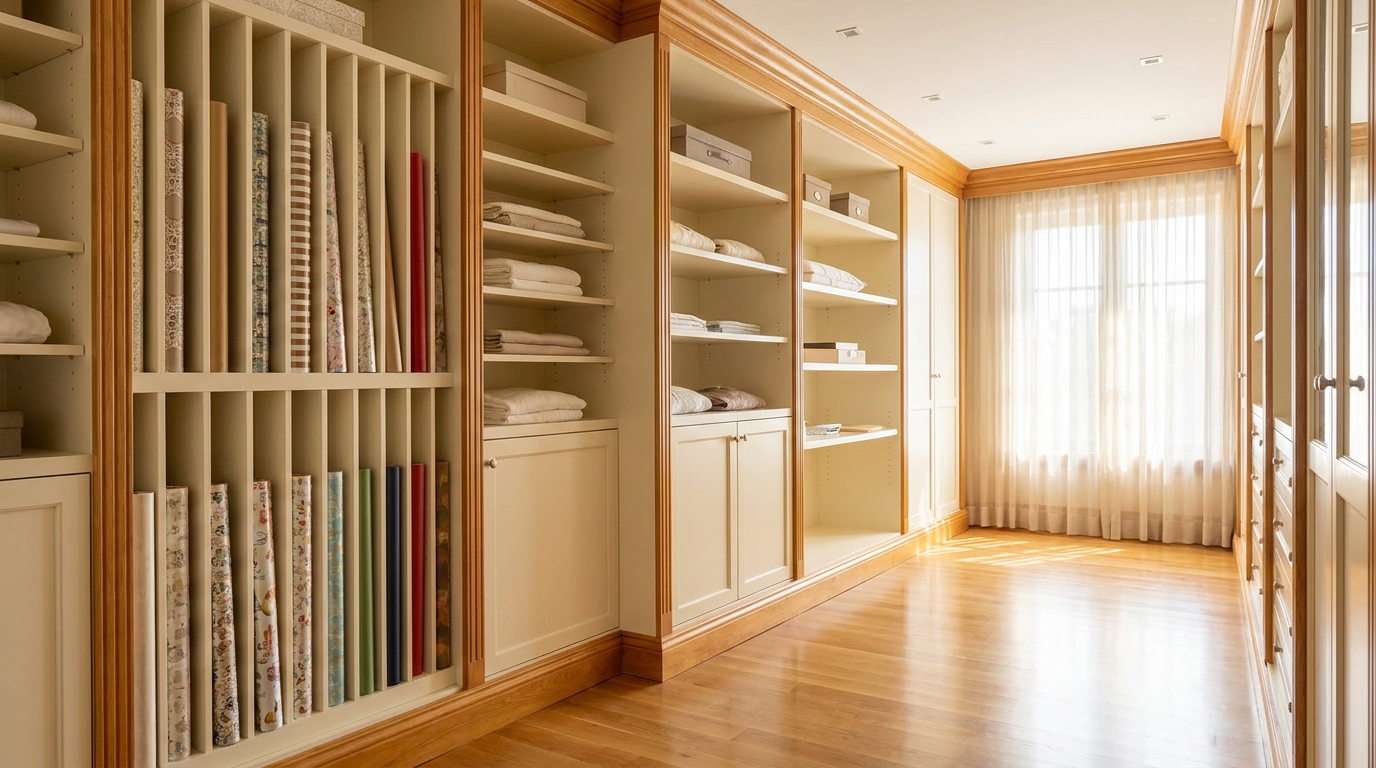
Shelf spacing should match the fold. A deep bay that swallows a comforter needs a bin or a breathable bag with a label on the face. Keep stacks short enough that the middle is still reachable. Holiday linens that come out twice a year can sit higher. The extra guest set for this bed should sit at chest height.
Leave air around the stacks. A closet packed to the door stops circulation. The Smithsonian's Museum Conservation Institute notes that natural-fiber textiles absorb moisture quickly and dry slowly, and that high humidity, warm temperatures, and poor ventilation encourage mold. It also warns that attics, basements, and closets against exterior walls swing in temperature and humidity, and those spaces are not recommended for textile storage. [3] A spare-room closet on an interior wall, with air around the folds, is a better home for extra sheets than a sealed tote in a damp basement.
Do not treat airtight plastic as the default. Cotton, linen, and down need to dry before they go in. The EPA's rule for wet materials is blunt: dry water-damaged items within 24 to 48 hours or mold is likely. [1] A slightly damp guest towel in a closed bin is a small version of the same problem.
5. Why unused guest closets go musty
A closet that sits shut from March to November is a still-air box. Mold does not need a flood. It needs moisture, and it can grow on fabric and upholstery. The CDC also notes that mold from outdoor air can ride indoors on clothing, shoes, bags, and pets, which is worth remembering when a wet suitcase comes in from the rain. [2]
Measure humidity instead of guessing. Keep indoor relative humidity no higher than 50 percent all day (CDC), and if possible below 60 percent, ideally 30 to 50 percent (EPA). A small humidity meter in the guest room tells you whether the closet is in range. Condensation on windows or cold exterior walls is a warning to dry the surface and cut the moisture source. [1][2]
Air movement helps more than a sachet. The EPA lists extra ventilation (opening a door or using a fan when practical) among the steps that prevent condensation. [1] Crack the guest-closet doors after you store a freshly laundered set. Do not pack bins against the door. If the closet sits on an exterior wall, keep extra linens off that cold back panel. Hang last guest's wet towels until they are dry. Open a rain-soaked bag in the room, not inside a closed closet, until the fabric has aired. The CDC's flood guidance (dry out within 24 to 48 hours) is the same clock we use for a soaked duffel. [2]
Rock Hill and Fort Mill summers make this less optional. A closed spare room with no airflow is where extra pillows pick up a musty smell the week before company arrives.
6. Long-term overflow is pest habitat if it sits dirty and still
Clothes-moth larvae prefer dark, undisturbed closets, chests, and boxes where woolens sit for a long time. University of Kentucky Extension notes that clothing and blankets in regular use are seldom infested, and that cotton and synthetics are rarely attacked unless they are blended with wool or heavily soiled with food stains or body oils. Woolens and other susceptible items should be cleaned before long-term storage, because cleaning kills eggs or larvae and removes perspiration odors that attract pests. [5]
A guest closet is a classic undisturbed space. Extra wool blankets, down pillows, and a rarely used throw can sit for months. Clemson Cooperative Extension (updated 2020) makes the same point: fabrics that are used often are not usually attacked. Stored fabrics left undisturbed for long periods are the items most damaged. The best prevention is to inspect animal-fiber materials regularly and store them only after they have been brushed and cleaned. [6]
What that means for the overflow zone:
- Store only clean, dry extra bedding. Do not park a used guest blanket in a bin "until later."
- Inspect the high, still shelves a few times a year, especially wool, silk, down, and feather fills.
- Keep clutter down so you can see the stacks. Clemson notes that clutter also reduces the usefulness of cedar and similar oils. [6]
- Do not confuse cotton guest sheets with wool storage. Clean cotton is a low moth target. A soiled wool throw on the same shelf is not.
Cotton or linen holiday tablecloths still need to be clean and dry. They do not need moth crystals. They do need a label and a shelf you can reach without unstacking the guest hang.
7. Tall overflow towers still need to stay upright
A drawer tower in a guest closet is clothing storage furniture. If children visit, treat it like a dresser. A February 2024 CPSC report, using 2020 through 2022 injury data, estimated 17,800 emergency-department-treated tip-over injuries a year from furniture, TVs, and appliances. About 82 percent of those injuries involved furniture. As of September 1, 2023, newly manufactured clothing storage furniture must meet updated safety criteria, and CPSC still recommends that all clothing storage furniture, no matter when it was made or bought, be anchored and secured. [4]
Put the heavy extra bedding low. The same CPSC reminder tells households to store heavier items on lower shelves and to avoid parking tempting items where a child might climb. [4] Extra pillows and comforters belong in the lower overflow bays. Lightweight sheet sets can sit higher. A freestanding chest should be fastened to the wall. Built-in cabinets secured to the structure behave better than a tall, unanchored tower. Plan the overflow tower so a full-extension drawer does not block the hanging bay or the luggage landing.
8. Light the labels, keep clearance from storage
A guest should not need a phone flashlight to find a hanger. Clothes-closet lighting has its own rules because clothing is fuel. Minnesota's 2023 National Electrical Code inspection checklist, used here as a plain-language NEC summary, defines closet storage space from the floor to 6 feet or the highest hanging rod, 24 inches from the sides and back, then continuing up at 12 inches or the shelf width, whichever is greater. [7]
Clearances from that storage space are not optional:
- 12 inches for totally enclosed surface-mounted incandescent or LED luminaires on the ceiling or above the door.
- 6 inches for totally enclosed recessed incandescent or LED, and for surface-mounted or recessed fluorescent fixtures.
- No open or partially enclosed incandescent lamps, and no pendant fixtures or lampholders, in clothes closets. [7]
Use a listed, enclosed fixture with the right clearance, or a closet-rated luminaire identified for use in the storage space. Door-activated lighting helps a guest who arrives after dark. Closet branch circuits also need listed combination-type AFCI protection under the same checklist. [7] Do not let extra linens creep into the fixture's keep-out zone. That gap is measured to the nearest point of storage, including a stuffed comforter on the top shelf.
Practical takeaways
- Split the spare-room closet on purpose: guest hanging on one side, labeled overflow on the other. Do not use the guest rod as household storage.
- Give overnight bags a landing so the suitcase never defaults to the bed. Leave empty hangers and one or two empty drawers.
- Store extra linens clean, fully dry, and labeled by set. Keep stacks short, with air around them.
- Hold indoor humidity at or below 50 percent (CDC), ideally 30 to 50 percent (EPA), and air the closet after you store freshly laundered goods. [1][2]
- Inspect wool, down, and other animal-fiber overflow a few times a year. Clean before long-term storage. [5][6]
- Anchor drawer towers and keep heavy bedding low. CPSC wants clothing storage furniture secured, regardless of purchase date. [4]
- Light the closet with a listed, enclosed fixture that keeps the NEC clearance from storage. [7]
How we can help
Have more questions or want to get in touch? Visit our contact page, call (704) 604-3870, or email design@theclosetrehab.com. Our team will measure the spare-room closet and design a guest hanging bay plus a labeled overflow zone that keeps overnight bags and extra linens off the bed.
Citations
- U.S. Environmental Protection Agency, "A Brief Guide to Mold, Moisture and Your Home" (updated 2026-02-18)
- Centers for Disease Control and Prevention, "Mold" (2024-09-26)
- Smithsonian Museum Conservation Institute, "Mold and Mildew on Textiles" (updated 2023-09)
- U.S. Consumer Product Safety Commission, "Ahead of Sunday's Game, CPSC Reminds Families to Tackle the Deadly Hazard of TV and Furniture Tip-Overs" (2024-02-08)
- University of Kentucky Entomology, "ENTFACT-609: Clothes Moths" (revised 2026-03)
- Clemson University Cooperative Extension, Home & Garden Information Center, "Fabric Pest Control" (HGIC 2416, updated 2020-04-23)
- Minnesota Department of Labor and Industry, "Electrical Inspection Checklist for One-Family Dwellings, Based on the 2023 National Electrical Code (NEC)" (2023)